en.Wedoany.com Reported - Oregon State University is constructing the first mass timber laboratory building on the West Coast at its Corvallis campus—the Jensen Huang and Lori Mills Huang Collaborative Innovation Complex, expected to open in 2027, aiming to set a new standard for meeting stringent laboratory research requirements.
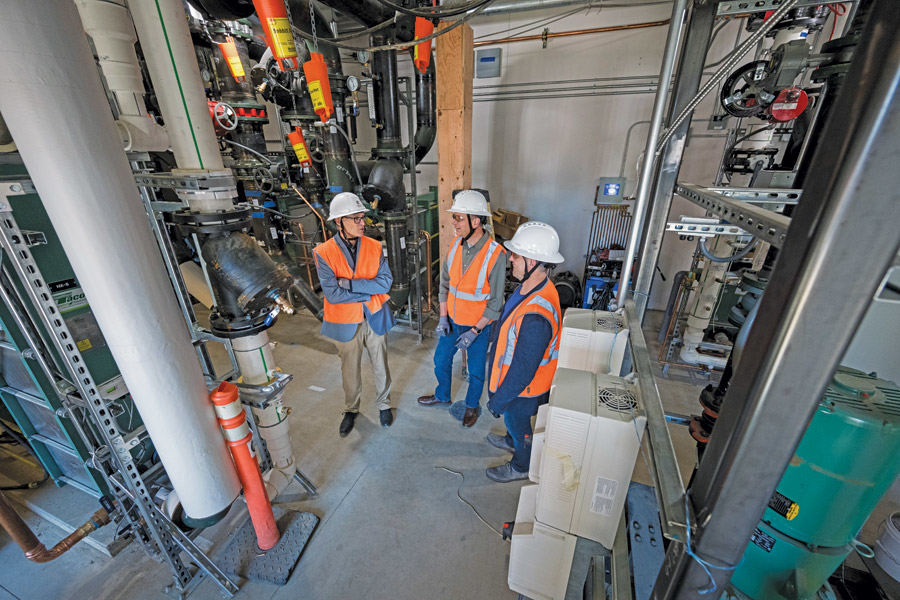
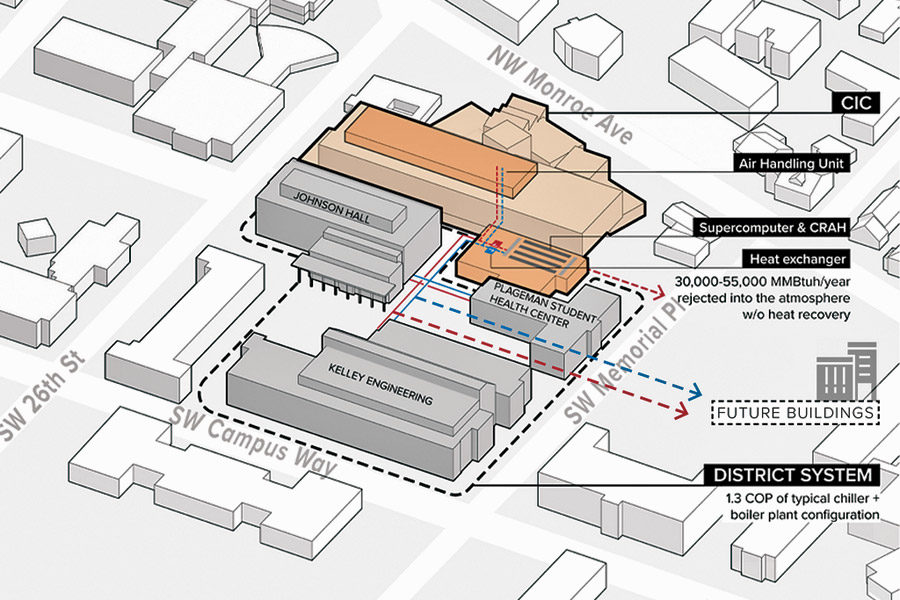
The $200 million, 143,000-square-foot complex broke ground in December 2023. The use of wood was not a mandate from the university but a core focus of the design team. The building includes an atrium, offices, laboratories, and a supercomputer that will connect to the university's central utility system, capturing computer heat for campus energy supply.
The greatest challenge in constructing a mass timber research building is meeting the vibration requirements of laboratory equipment. Design firm ZGF Architects and engineering company KPFF solved the issue of wet lab floor vibrations needing to reach 2,000 microinches per second by using large-format mass plywood panels. This all-plywood product is made by gluing and pressing multiple layers of density-graded Douglas fir veneers, forming 1-inch-thick laminations that can be made into panels, columns, and beams. Panels can reach lengths of up to 40 feet, allowing a single material to construct the entire structure. Freres Engineered Wood, based in Oregon, is the only manufacturer of such large-format mass plywood panels in the United States.
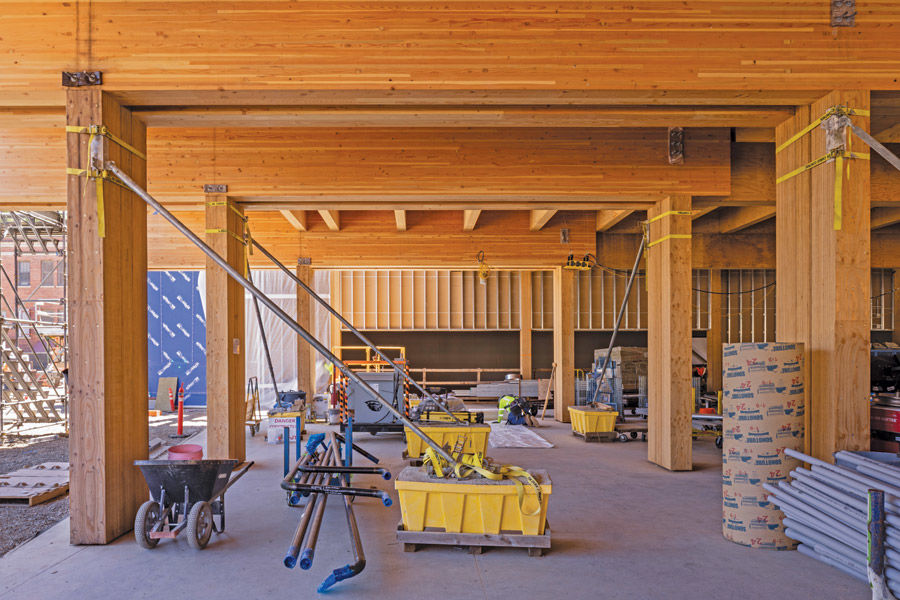
Tom DeLuca, Dean of the College of Forestry at Oregon State University, stated that the complex proves mass timber can be used for building types traditionally reliant on steel and concrete, including highly sensitive laboratory and research spaces. Iain Macdonald, Director of the TallWood Design Institute, noted that using large-format mass plywood panels as structural composite lumber columns is one of the first commercial applications of the material, and the engineering team's solution to vibration issues opens up entirely new building types for mass timber, such as data centers and life sciences.
The design team also proposed a stacked beam solution, maintaining the same floor height as concrete while using wood, and creating natural routing channels for mechanical systems. Through a cascading air system, the design moves air from offices to laboratories, reducing air exchange requirements by 30% and eliminating the need for additional exhaust ducts.
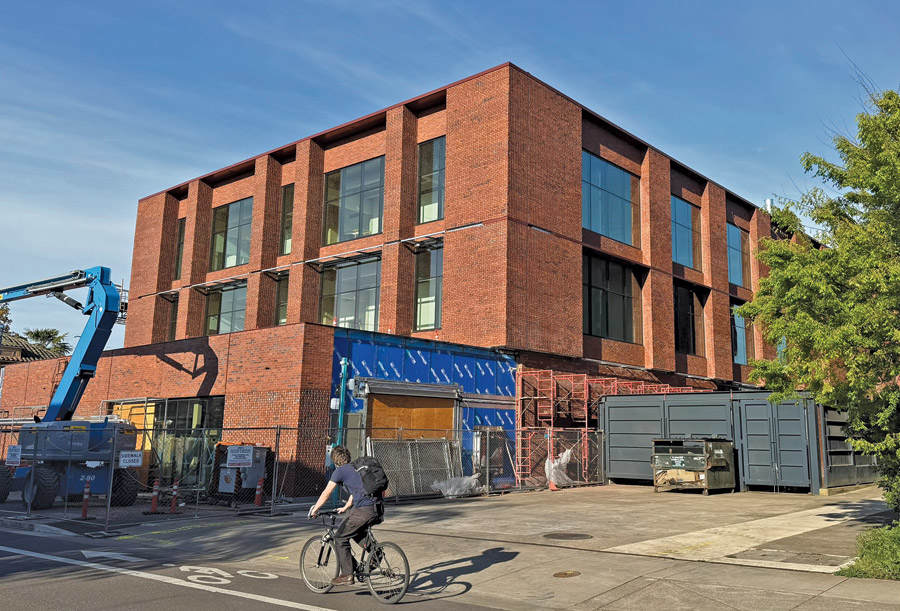
A significant portion of the project's wood comes from Oregon and the Pacific Northwest, including large-format mass plywood panels and other engineered wood products. About 5% of the wood comes from the university's own research forest, located just 10 minutes from campus. The building's exterior uses custom-shaped bricks from a brick factory in Gresham, Oregon, to match the campus master plan, while the wood is exposed in cantilevered sections.
Oregon was the first state in the U.S. to produce commercial cross-laminated timber panels and leads in the number of mass timber manufacturing facilities. Oregon State University is one of the first universities in the U.S. to make significant investments in mass timber research and education, with the Emmerson Advanced Wood Products Laboratory opening in 2019 and a new fire testing facility under construction. The university expects the building to achieve operational carbon neutrality by 2030.
This article is compiled by Wedoany. All AI citations must indicate the source as "Wedoany". If there is any infringement or other issues, please notify us promptly, and we will modify or delete it accordingly. Email: news@wedoany.com