en.Wedoany.com Reported - BYD recently announced that it will provide full loss coverage for vehicles using its "City Navigation Assisted Driving" feature. This move aims to further boost the usage rate of assisted driving in complex urban road conditions and assume full responsibility for accidents.
After announcing this coverage last month, the usage rate of the LiDAR-based "God's Eye" automatic parking system surged from 21% to 93%. Currently, over 3 million BYD vehicles equipped with this system have accumulated more autonomous driving hours than manual driving, though this was previously concentrated on highways and parking scenarios. Following the launch of urban driving coverage, the usage rate of vehicles equipped with the LiDAR-based "God's Eye" A and B systems in cities rapidly increased by 50%, and these vehicles are now primarily driving autonomously in urban areas.
Unlike conventional insurance, BYD's urban driving coverage covers all liabilities in an accident. When an accident occurs, claims are processed through BYD's after-sales service rather than an insurance company. Additionally, BYD assumes risk through its own underwritten insurance products, directly exposing its balance sheet to potential compensation liabilities. In 2023, BYD acquired Yian Property Insurance, later renamed BYD Insurance, and obtained approval for nationwide compulsory traffic insurance business in 2024. In 2025, BYD Insurance achieved insurance revenue of 2.871 billion RMB and a net profit of 93.624 million RMB, with revenue increasing by 112.56% year-on-year. Its average premium per vehicle dropped from approximately 4,900 RMB in the second quarter of 2024 to about 3,800 RMB by the end of 2025.
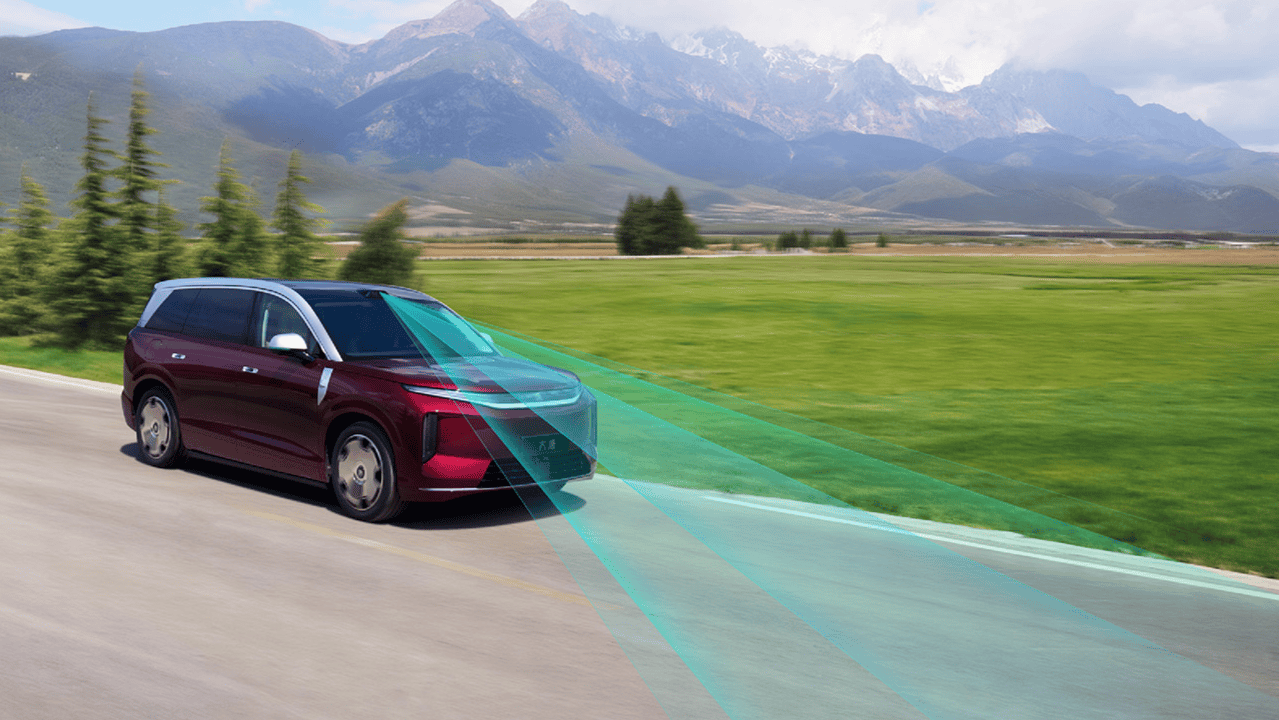
The decline in premiums is partly attributed to the direct sales model, with 100% of premiums generated through direct channels, eliminating commissions or agency fees. At the same time, the introduction of the "God's Eye" system is positively correlated with the concurrent reduction in premiums, as improved safety is overall lowering insurance costs. Data shows that BYD's expense ratio of 5.21% in 2025 was approximately one-fifth of the industry average. Through telemetry data from millions of vehicles, BYD has been able to build precise pricing and risk models. The system was launched in 2024 and is currently used by over 3.15 million vehicles. According to Yang Dongsheng, Senior Vice President of BYD Group and Dean of the Automotive New Technology Research Institute, the probability of a serious accident (based on airbag deployment) when using "God's Eye" has dropped to one-sixth of that for manually driven vehicles, and minor accidents during parking have been reduced to one-fifteenth, "surpassing human safety levels." In 2025, BYD Insurance's comprehensive loss ratio decreased from 233.92% to 97.28%, demonstrating stronger control over claims costs.
After BYD assumed responsibility for urban driving, the increased adoption rate of "God's Eye" will provide more data for intelligent driving system improvements, aiding the progression towards L3/L4 level operations. Taking responsibility for the system also ensures that safety is a genuine priority, rather than a marketing gimmick. Through high vertical integration, BYD has already assumed greater responsibility for the system, and this responsibility will be further enhanced with the introduction of the newly launched 4-nanometer "Xuanji A3" AI chip and sensors. Having a single company assume responsibility avoids protracted legal battles between claimants, manufacturers, and suppliers, and incentivizes the design of vehicles that are easier to repair and ensures parts availability. BYD employs over 120,000 R&D engineers, a scale far exceeding the industry average.
Overall responsibility reflects BYD's broader product strategy: no surcharges or subscription fees are charged for potentially life-saving systems, and features are fully available if the hardware is already included in the vehicle. Through these coverage measures, BYD eliminates user anxiety when using intelligent driving functions in complex traffic; by lowering average premiums, the company is not pursuing massive profits. Building safer, easier-to-repair, and lower-cost vehicles helps the company establish long-term customer loyalty. Although BYD may not be able to offer equivalent coverage in other markets, product advancements driven by taking responsibility can still benefit markets that import its vehicles.
This article is compiled by Wedoany. All AI citations must indicate the source as "Wedoany". If there is any infringement or other issues, please notify us promptly, and we will modify or delete it accordingly. Email: news@wedoany.com