en.Wedoany.com Reported - On June 10, Yu Lei, head of China's Dreame ecosystem brand Eclix, revealed that Eclix's first AI phone is expected to be released in September 2026, with plans to go on sale before Double 11. The product is positioned in the high-end market, priced above 5,000 yuan. Core research and development work is nearly complete, and the device is about to enter the whole-machine testing phase.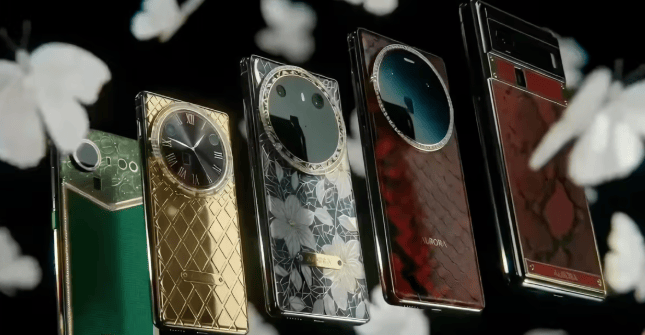
The Eclix phone team was formed by Yu Lei, former vice president of Gionee Group. Yu Lei joined MOVA in March 2026, responsible for mobile phone and AI hardware business; subsequently, Eclix will operate independently as a Dreame ecosystem brand, no longer under the MOVA brand system. The team currently has about 60 members, with core members primarily having backgrounds in AI or operating systems, and will continue to expand its R&D and product teams.
The core selling point of this AI phone is its "app-free" interaction. Eclix aims to make the AI Agent the core of the native system, completing tasks through natural language, multimodal interaction, and intent prediction, rather than having users open individual apps on the desktop and click through layers to perform operations. When a user makes a request, the system will directly call the corresponding atomic service and prompt the user for confirmation at key steps.
For example, in local life scenarios, users do not need to open food delivery or lifestyle service apps; they only need to state their specific needs, and the system will call upon integrated service capabilities, automatically matching user preferences, addresses, tastes, and other information, before the user gives final confirmation. Eclix hopes to reduce the process of switching, searching, filling in, and repeated confirmation in traditional phone operations.
Eclix's first AI phone has established deep cooperation with leading domestic large model manufacturers. This collaboration will cover the full process development and testing from voice commands to atomic service calls, with initial functions prioritizing high-frequency life scenarios such as dining and entertainment. Multiple mainstream commonly used apps have also completed adaptation and integration, providing basic service support for the launch of the first-generation product.
In terms of system architecture, Eclix adopts a cloud-device collaborative solution, internally referred to as a "dual-brain architecture." One type of model is responsible for execution tasks such as placing orders, querying, setting, and calling services, emphasizing accuracy, stability, and fast response; the other type handles long-term conversations, emotional companionship, and multimodal interaction, focusing on user status, preference memory, and continuous communication. By separating execution tasks from dialogue tasks, the team hopes to reduce the impact of large model hallucinations on critical operations.
Being app-free does not mean the first-generation product completely breaks away from the traditional mobile ecosystem. Yu Lei also acknowledged that compatible entry points for some super apps and banking apps still need to be retained. The first-generation product will feature a traditional app interface as a backup option, but Eclix views this as a transitional design, aiming to gradually promote more app capabilities to be integrated as atomic services in the future.
The first-generation product will not pursue large-scale distribution. Eclix plans to control the initial shipment volume to between 50,000 and 100,000 units, with the online launch channel on the JD.com platform, targeting primarily geek-oriented pioneer digital enthusiasts. The team hopes to refine the product experience through small-batch delivery and accumulate real user feedback for subsequent iterations.
The profit model will also differ from traditional phone hardware. Eclix plans to rely more on subscription revenue from AI computing power services, rather than solely on hardware margins. In the future, users may be billed based on the number of Tokens consumed when using different large model functions, and pay through a prepaid recharge method, with the overall logic resembling a combination of operator data billing and large model subscription services.
For the Dreame ecosystem, the Eclix AI phone represents a significant step in expanding from smart hardware to AI-native terminals. Whether subsequent products can truly change user operating habits will depend on the number of atomic service integrations, model response accuracy, permission and privacy management, stability in key scenarios, and compatibility with traditional apps. After the first-generation product launches, whether users are willing to pay for AI computing power subscriptions will directly impact the sustainability of this route.
This article is compiled by Wedoany. All AI citations must indicate the source as "Wedoany". If there is any infringement or other issues, please notify us promptly, and we will modify or delete it accordingly. Email: news@wedoany.com