European Flax and Hemp Composites Enter Automated High-Performance Industrial Applications
en.Wedoany.com Reported - European flax and hemp biocomposites are entering high-performance industrial applications through automated, precision manufacturing technologies, replacing traditional hand lay-up processes.
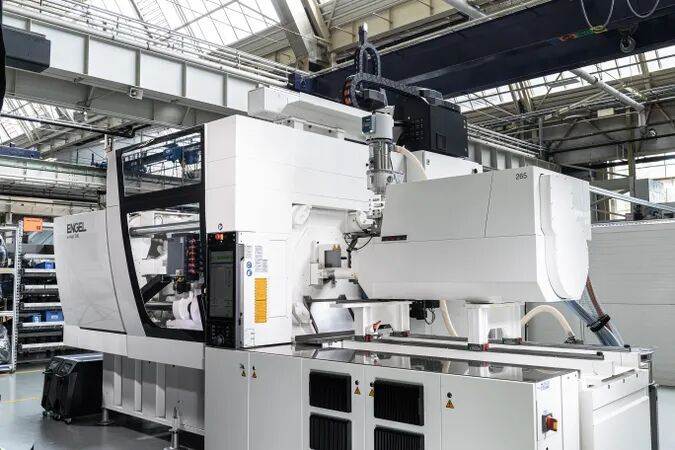
Recent advances in thin-ply prepreg technology enable flax rovings (such as those developed by Depestele) to be transformed into ultra-lightweight, high-performance composite structures. Leveraging the "thin-ply effect," these materials exhibit enhanced damage tolerance, while automated prepreg systems and back-injection molding processes are driving their efficient, high-volume production in sectors such as automotive.
In terms of technological innovation, coreless filament winding is expanding the application boundaries of natural fiber composites. This robotic process precisely winds resin-impregnated flax fibers into complex three-dimensional geometries without traditional molds, significantly reducing material waste and enabling optimized structural design. The FIBRAS project at Eindhoven University of Technology is using this technology to develop specialized handling methods that address the inherent variability of natural fibers in highly controlled manufacturing environments, thereby creating lightweight, resource-efficient, and more sustainable building structures for the construction industry.
The DynaMill project, led by ContiTech AVS France (a subsidiary of OESL-Automotive), Nautix, and ComposiTIC (a technology center affiliated with the University of Southern Brittany), with co-funding from the Brittany region and support from ID4Mobility and EMC2 clusters, has successfully developed and mechanically validated a lightweight automotive engine support link. This link uses injection molding and automated fiber placement technologies, employing flax fiber reinforcement and a bio-based PA11 matrix. Building on the lightweighting work of the previous Dynafib project, this project demonstrates the potential of high-performance bio-based composite structures combining renewable materials, weight reduction, and scalable manufacturing technologies for automotive applications.
The ICD/ITKE at the University of Stuttgart, with support from Safilin, has developed the "Con[knit]uous Rubble" process. This process uses continuous circular knitting to encase untreated construction waste in a seamless flax fiber structure, enabling the construction of self-supporting architectural forms such as arches and columns without adhesives or mortar, and allowing for complete disassembly and material reuse. Future integration of bio-based resins will further enhance durability and performance.
In the field of additive manufacturing, continuous flax fiber-reinforced 3D printing, by co-extruding flax yarn with thermoplastics such as PLA, offers mechanical properties comparable to those of traditional composite processes, opening new opportunities for rapid prototyping and custom structural components. Hybrid flax fiber filaments are also gaining traction in conventional 3D printing applications.
In the design field, French designer Alyssa Cartaut won the City of Hyères Prize for Fashion Accessories at the 40th International Festival of Fashion, Photography and Accessories. Her series "The Cushion Issue" features footwear components 3D-printed from European flax fiber-reinforced PLA filament, offering a bio-based alternative to traditional materials. The alliance supported this project by facilitating access to certified fibers and connecting designers with material experts.

In the field of 4D printing, researchers are developing materials that respond to stimuli such as heat or moisture, enabling structures to adjust their shape and function over time. Professor Antoine le Duigou at the Institut de Recherche Dupuy de Lôme, in collaboration with Coriolis Composites, is focusing on research into biomimetic materials for decarbonization applications.
In hemp processing, long-fiber hemp pultrusion technology has enabled the development of high-strength structural elements, such as the 3.3-meter architectural prototype "Hemp Halo Canopy" exhibited at JEC World. This structure, developed as part of the EU-funded RAW project (associated with Terre de Lin, Safilin, and Linificio Canapificio Nazionale), combines pultruded hemp profiles with CNC-woven hemp surfaces to form a fully bio-based, lightweight, and structurally efficient system, demonstrating the possibility of waste-free construction.
Composites Edge GmbH has introduced an adaptive sound-absorbing panel made from natural fibers and thermoplastic resin. The panel, less than one millimeter thick, can be manufactured using automated fiber placement (AFP), is fully recyclable and waterproof, and can absorb up to 95% of low-frequency noise. This innovation was named a finalist for the Most Creative Application in the CAMX Awards.
Bruno Pech of the Alliance for European Flax-Linen & Hemp stated: "European flax and hemp are redefining the possibilities of biocomposite manufacturing, moving from traditional lay-up to highly automated processes such as winding, prepreg systems, and additive manufacturing. These innovations are unlocking new levels of precision, design freedom, and performance, proving that natural fibers are ready for advanced industrial applications."
This article is compiled by Wedoany. All AI citations must indicate the source as "Wedoany". If there is any infringement or other issues, please notify us promptly, and we will modify or delete it accordingly. Email: news@wedoany.com
Related Products

QLZNGJ Intelligent Steel Reinforcement Trolley
Luoyang China Railway Qiangli Machinery Co., Ltd.

CAP1400 main feedwater flow nozzle flowmeter.
Jiangsu Hongda Instrument Technology Co., LTD.
Standard Nozzle Flowmeter
Jinggong Automatic Control Instrument Complete Technology Development Company
Industrial and Commercial Point-Type Gas Detector
Jinan Benan Technology Development Co., Ltd.