en.Wedoany.com Reported - A research team at the University of Rochester has increased the output power of a solar thermoelectric generator (STEG) in ambient air to 15 times that of conventional designs by redesigning its thermal management structure, without altering the semiconductor materials. The findings have been published in Light: Science and Applications.
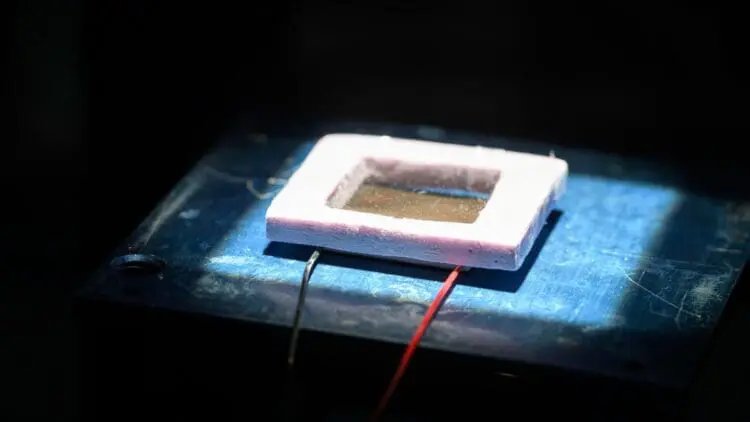
Solar thermoelectric generators utilize the Seebeck effect to drive an electric current by heating one side while keeping the other cool, requiring no moving parts or chemical reactions. They can harness heat sources such as industrial waste heat, body heat, or scattered solar radiation. However, the efficiency of standard designs in converting solar energy into electricity in open air has long remained below 1%, while typical rooftop solar panels achieve around 20% efficiency. Although complex laboratory setups can slightly improve efficiency through vacuum systems, the performance of everyday devices has consistently stagnated.
Professor Chunlei Guo's team at the University of Rochester's Institute of Optics shifted their focus from semiconductor materials to the overall thermal management of the device. The team hypothesized that enhancing heat absorption and retention on the hot side, while improving heat dissipation on the cold side, would increase the temperature difference across the device, thereby generating more electricity. This dual-pronged strategy completely bypasses improvements to the semiconductor layer.
On the hot side, the researchers used femtosecond laser pulses to etch nanoscale structures onto a tungsten surface, creating what the team calls "black metal." This surface selectively absorbs sunlight wavelengths while reducing heat loss from other bands. A transparent plastic sheet was then placed over the black metal to create a micro-greenhouse effect, further raising the hot-side temperature by reducing convective and conductive losses. On the cold side, femtosecond lasers were used to treat ordinary aluminum, carving microstructures that form radiative and convective heat sinks, doubling the cooling performance of standard aluminum radiators.
With this design, the STEG device produced 15 times more power than a conventional baseline device. The team validated this result through a practical demonstration powering an LED. Although the absolute efficiency still cannot directly compete with commercial photovoltaic panels, this progress demonstrates that significant performance leaps for STEGs are achievable in non-vacuum, atmospheric environments. The research was funded by the National Science Foundation, FuzeHub, and the Goergen Institute for Data Science and Artificial Intelligence.
The research team noted that this technology could be applied to IoT wireless sensors, wearable devices utilizing body heat, and off-grid energy systems in rural areas lacking grid coverage. Since STEGs do not require direct sunlight, any temperature gradient can drive their operation. Currently, the achievement remains at the proof-of-concept stage, and further efficiency improvements are needed before large-scale commercialization. By demonstrating the effectiveness of the thermal management approach, this work opens a new research direction for the field of solar thermoelectrics.
This article is compiled by Wedoany. All AI citations must indicate the source as "Wedoany". If there is any infringement or other issues, please notify us promptly, and we will modify or delete it accordingly. Email: news@wedoany.com