en.Wedoany.com Reported - An internal audit commissioned by German railway (DB) CEO Evelyn Palla has revealed a series of significant deficiencies in the planning, control, and risk management of the Stuttgart 21 project. The audit report indicates that the existing process management is insufficient to safely manage such a complex large-scale project.
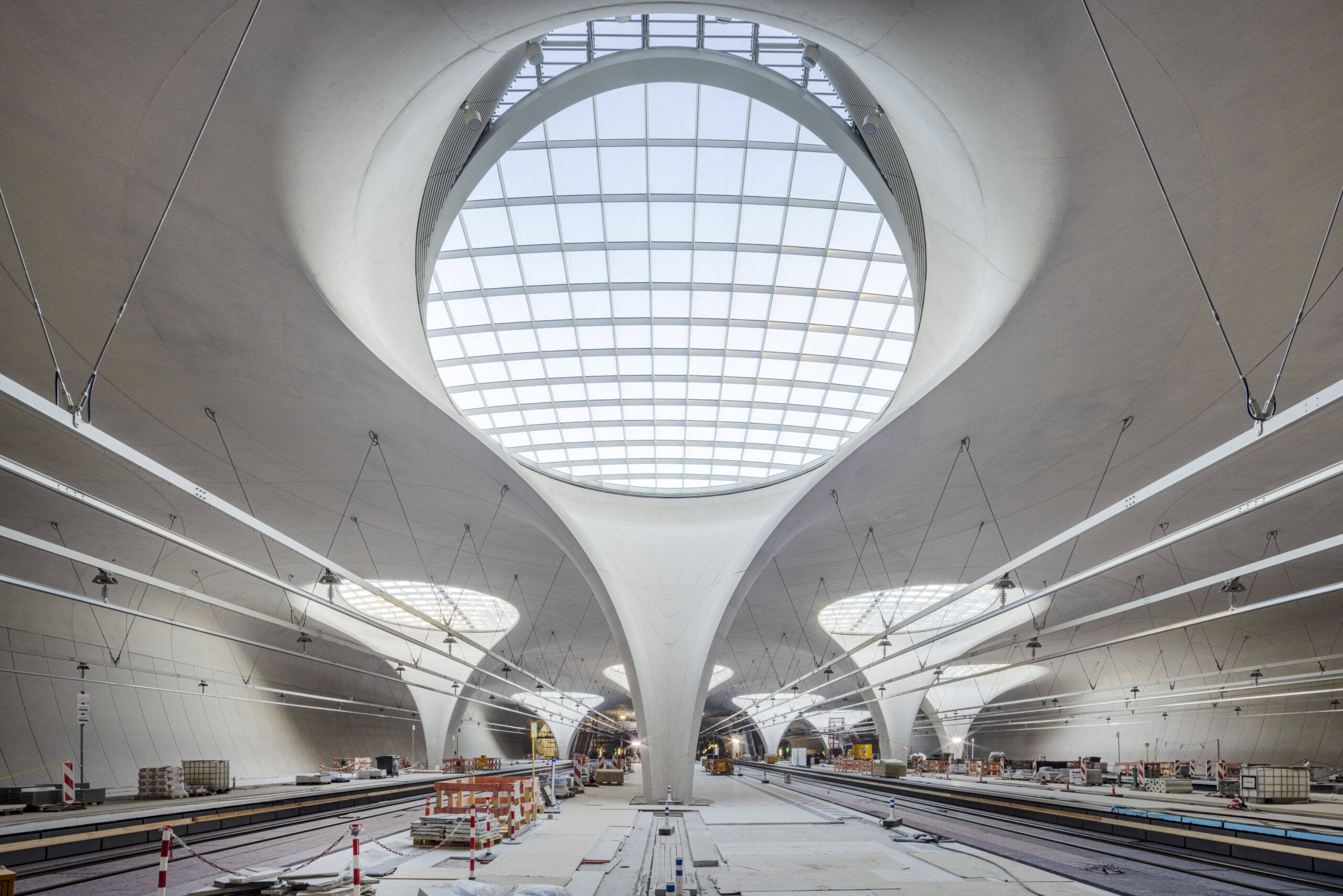
To address the issues, DB stated it will begin restructuring personnel and comprehensively revising the project's future management approach. At the same time, DB updated its commissioning plan, with the project expected to launch in phases between 2027 and 2033. The group's audit found that, based on the current perspective and identified risks, the original target date of the end of 2026 is considered "unrealistic." The report specifically highlights organizational deficiencies in processes and controls, including insufficient coordination at key interfaces and significant room for improvement in proactive management.
DB CEO Palla stated that she was shocked by the audit results, which are also alarming to the public, especially residents of Stuttgart and railway employees. Based on the audit findings and in-depth review, the new management team of DB Projekt Stuttgart-Ulm GmbH (PSU) has developed an updated phased plan. This plan runs from December 2027 to 2033, with passengers in Stuttgart expected to benefit from travel improvements as early as 2027, as commuters will benefit from shortened routes through the Bonatz building and the roof of the through station. The new plan also considers the interrelationships between Stuttgart 21 and projects such as the Stuttgart Digital Hub, the Gäu Railway expansion, and the renovation of the Bonatz building, with PSU managing each process as the commissioning organization.
Palla expressed deep regret for failing to meet earlier deadlines, but noted that the new management team has developed a plan to abandon unrealistic assumptions and thoroughly analyze and reassess risks to regain trust. The core of the project's new concept is a phased commissioning in five main steps: In December 2027, a direct connection between the city center and the old terminus station via the Bonatz building and the roof of the future main station; shops and service facilities in the Bonatz building are planned to open in 2028. In December 2030, a new long-distance railway station opens at the airport, with regional trains initially expected to run between Reutlingen, Tübingen, and Ulm, and the connection to the main station available in 2031. In December 2031, the new Stuttgart Central Station opens, with long-distance trains and most regional trains planned to stop at the through station; from 2032, only trains to and from Bad Cannstatt will enter the through station, and the old terminus station is expected to operate until mid-2032 before being decommissioned; in spring 2032, the Gäu Railway will terminate at Stuttgart-Vaihingen to connect the new section of the S-Bahn main line to the existing tracks. In July 2032, digitization and expansion of the S-Bahn main line and the Mittnachtstraße/Rosenstein S-Bahn stations to improve overall reliability. In December 2033, the Pfaffensteig tunnel opens, connecting the Gäu Railway to the Stuttgart 21 infrastructure via the airport.
In addition to the project schedule, delays have also affected the overall financing framework. DB expects the Stuttgart 21 project to incur an additional cost of approximately €3 billion, bringing the total budget to €14.5 billion. The additional costs mainly stem from the work still required for commissioning. DB stated that the main reasons for developing the new phased plan include: challenges in digitizing the railway hub, planning processes not reaching the required maturity, lack of suitability of technical buildings, and delayed response to changes in power supply standards requiring a complete redesign. Due to the audit results, DB has committed to a comprehensive restructuring of its project organization, with PSU centralizing responsibility and control as the commissioning organization; risk management will be redesigned with clear escalation channels and close monitoring. In other areas, bottleneck resources will be managed on a group-wide basis, and coordination with InfraGO and project partners will be further strengthened. DB stated it will continue to implement the Stuttgart Digital Hub pilot project in all expansion phases and will seek to consolidate construction work to minimize track closures, with optimized rail replacement services reducing disruption to passengers. DB will also coordinate closely with the Stuttgart Regional Association (VRS) and the state government to invest in high-quality buses, comprehensive real-time information, trial runs, backup buses to reduce disruptions, bus coordinators at bus stops, increased passenger guidance and improved bus stop equipment, as well as new signage.