en.Wedoany.com Reported - Recently, the 711 Research Institute under China State Shipbuilding Corporation Limited officially signed a supply contract with Jiangsu Zhenjiang Shipyard (Group) Co., Ltd. for the methanol dual-fuel electric propulsion system and fuel supply system of a 9,000-ton cement carrier. This vessel is the world's first methanol dual-fuel powered cement carrier, ordered by Germany's Hartmann Company, and will operate along the Norwegian coast, with delivery expected by the end of 2027.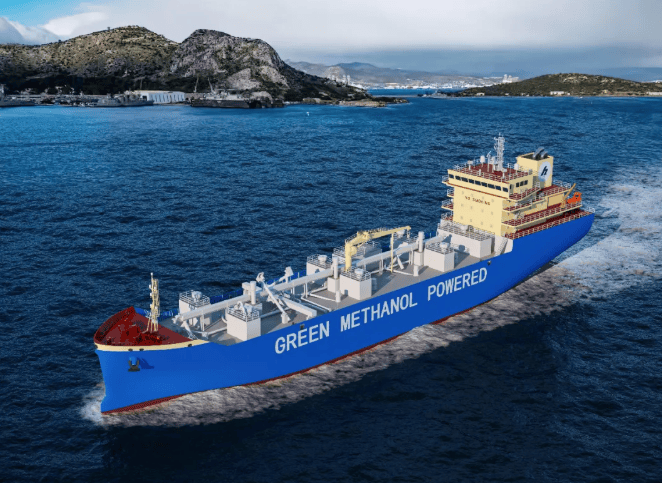
The vessel has an overall length of 120 meters and a deadweight of approximately 9,000 tons, capable of using diesel and green methanol fuel. When operating on green methanol, it is expected to reduce carbon dioxide emissions by approximately 80%, equivalent to an annual emission reduction of about 6,000 tons compared to ships currently using fossil fuels.
The equipment scope provided by the 711 Research Institute for this vessel includes methanol dual-fuel generator sets, methanol fuel supply system, selective catalytic reduction system (SCR), main switchboard, main/side propulsion converters, main/side propulsion motors, thrust bearings, and propulsion remote control system. Among these, the methanol dual-fuel engine, methanol fuel supply system, SCR, propulsion drive control unit (DCU), and thrust bearings are all independently developed products of the 711 Research Institute.
The main propulsion system of this vessel adopts a low-speed permanent magnet coaxial dual-motor with thrust bearing direct-drive propeller configuration, offering core advantages such as high operational efficiency, strong system redundancy, and excellent cargo adaptability. The vessel is equipped with three 6-cylinder CS21DF-M methanol dual-fuel generator sets, each with a rated power of 1,100 kW. These are the first domestically produced marine medium-speed engines utilizing methanol direct injection technology, achieving a methanol substitution rate of up to 90%, where 2 tons of methanol can replace 1 ton of diesel, with near-zero methanol slip. When paired with the SCR, emissions meet the International Maritime Organization (IMO) Tier Ⅲ regulations. The methanol fuel supply skid not only ensures that the methanol entering the main engine remains within the appropriate pressure and temperature range but also stabilizes pressure fluctuations within the main engine's requirements during load changes, ensuring efficient and stable operation of the power system. The SCR system, tailored to the low exhaust temperature characteristics of the methanol engine, achieves successful integration through adjusted control strategies and logic.