Kioxia Begins Sampling 10th-Generation BiCS FLASH 3D NAND
en.Wedoany.com Reported - On July 3, Kioxia announced that it has officially begun delivering samples of its 10th-generation BiCS FLASH 3D NAND flash memory. The new generation is designed for high-performance, high-capacity, and low-power storage applications, and will be used in subsequent verification of SSDs, mobile devices, data centers, and AI-related storage products.
The 10th-generation BiCS FLASH continues Kioxia's technological roadmap for 3D NAND flash memory, advancing storage cells toward greater vertical stacking, higher density integration, and lower power access. Unlike traditional planar NAND, 3D NAND increases per-chip capacity by vertically stacking storage layers, enabling higher storage density without solely relying on smaller process node line widths. Kioxia's commencement of sampling indicates that the new generation of flash memory chips has entered the customer evaluation phase, allowing downstream manufacturers to conduct tests on controller chips, firmware, packaging forms, power consumption control, and system compatibility. The sampling stage does not immediately equate to mass market availability, but it represents a critical milestone before flash memory chips enter terminal product design, customer certification, and mass production preparation.
The core focus of the new product centers on three key metrics: performance, capacity, and power consumption. For SSDs and embedded storage devices, the interface speed, read/write efficiency, and energy consumption of the flash memory chips directly impact overall system storage throughput, battery life, thermal management, and long-term operational stability.
AI applications are reshaping the demand structure for NAND flash memory. Large model training, inference services, video generation, log analysis, vector databases, and enterprise data archiving continue to drive demand for high-capacity storage and high-speed data access. While data centers have traditionally focused on computing chips and high-bandwidth memory, a substantial volume of model parameters, training samples, cached data, and business data still relies on NAND flash memory. Client PCs, smartphones, automotive systems, and industrial equipment are also increasingly incorporating local AI capabilities, requiring larger capacity, lower power consumption, and more reliable embedded storage. With Kioxia's 10th-generation BiCS FLASH entering the sampling phase, whether subsequent products can be adopted in mainstream SSDs and terminal devices will depend on customer validation results, yield ramp-up, cost control, and the ability to offer a range of capacity configurations.
Kioxia has long been deeply involved in NAND flash memory, with BiCS FLASH being one of its core product lines. The commencement of sampling for the 10th generation indicates that the company has advanced its next-generation 3D NAND from technology demonstration to customer validation. As the storage industry enters the AI cycle, competition among NAND manufacturers will increasingly hinge on stacking architecture, per-unit-area capacity, power efficiency, interface speed, production yield, and platform compatibility with customer systems.
Related Products

Automatic Aiming Laser Remote Obstacle Removal Robot
Pinggao Group Weihai High-Voltage Apparatus Co., Ltd.

Industrial and Commercial Point-Type Gas Detector
Jinan Benan Technology Development Co., Ltd.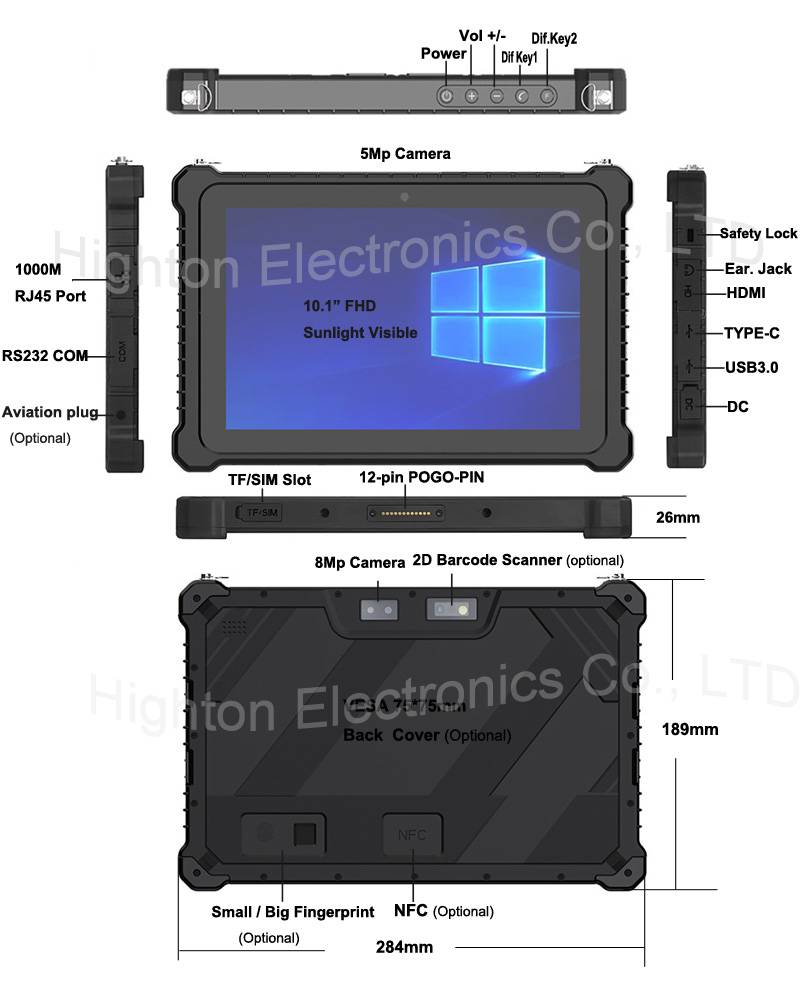
Hot Selling 10 Inch Intel N5100 I5 I7 FHD 8 +128GB 16+256GB Win10 Pro Win11 Pro 4G 5G Rugged Tablet PC Pad with NFC Barcode
Highton Electronics Co., Ltd.
20 Inch 1600*900 Full HD 60Hz TFT LED Monitor with VGA and DP Interfaces for Desktop Computers-Business Use
Guangzhou Zanying Optoelectronics Technology Co., Ltd.
GYTA Type Non-Self-Supporting Aerial/Duct Optical Cable
TONGDING INTERCONNECTION INFORMATION CO., LTD.

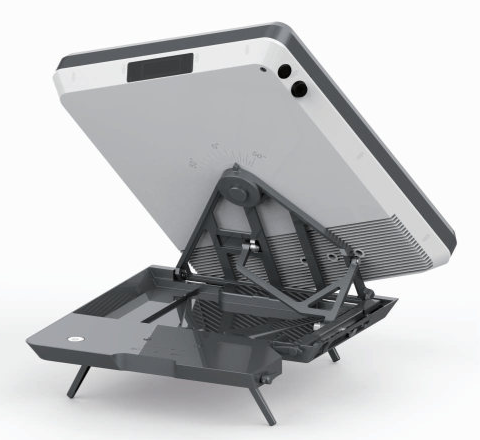
Flat Portable Satellite Terminal 0.35m Aperture Manual Portable Terminal
China Starwin Science & Technology Co., Ltd.
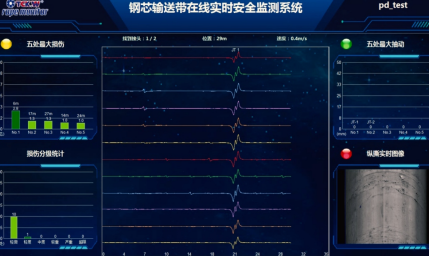
Conveyor Belt Intelligent Monitoring System
LUO YANG WIRE ROPE INSPECTION TECHNOLOGY CO., LTD.