en.Wedoany.com Reported - The global rare earth industry has been heating up recently. China's export restrictions on U.S. companies MP Materials (NYSE:MP) and USA Rare Earth (NASDAQ:USAR) have further highlighted the trend of diversifying critical mineral supply chains and expanding downstream processing and magnet manufacturing capacity outside of China. Rare Earth Elements (REEs) are core materials for strategic technologies in energy, transportation, artificial intelligence, aerospace, healthcare, and defense. However, their supply chain is highly concentrated, making it one of the most vulnerable globally. According to the International Energy Agency (IEA), economically recoverable rare earth deposits are uncommon, and because REEs often exist in complex compounds, their separation and processing are technically demanding and capital-intensive. Permanent magnets account for approximately 95% of the value of rare earth consumption and play a critical role in electric vehicles, wind turbines, industrial motors, and AI data center infrastructure. Since 2015, demand for the key elements required in permanent magnets—neodymium, praseodymium, dysprosium, and terbium—has surged; with the expansion of electrification and advanced manufacturing, demand is expected to accelerate further by 2030. However, outside of China, mining, separation, metal manufacturing, and magnet production capacities are limited, prompting a global push to build secure alternative supplies. Rare earth pricing shows significant regional disparities, with global buyers paying a premium over domestic Chinese prices. Driven by demand growth and supply tightness, rare earth prices face upward pressure. According to data from Shanghai Metals Market (SMM), the spot price for neodymium metal in China was USD 121.95 per kilogram (AUD 176.33) in June 2026, neodymium metal (FOB China, i.e., export-grade material from Chinese ports) was USD 155 per kilogram, neodymium-praseodymium alloy was USD 109.55 per kilogram, praseodymium metal was USD 124.88 per kilogram, and the FOB export price for praseodymium was USD 160 per kilogram.
Australian mineral exploration company Dalaroo Metals (ASX:DAL) focuses on rare earths in Greenland and gold operations in Côte d'Ivoire, West Africa. Its wholly-owned Blue Lagoon Critical Minerals Project is located in the Gardar Alkaline Province in southwestern Greenland, a globally recognized rare earth and critical mineral region. The company completed its first modern field program at Blue Lagoon in 2025, collecting 113 surface samples covering river sediments, lagoon edge sediments, and surface materials, each showing anomalous rare earth mineralization. Key results reveal a coherent mineralized trend extending approximately 2.7 kilometers, with a peak Total Rare Earth Oxide (TREO) grade of approximately 0.81%, zirconium values up to 4.42%, and hafnium values up to 99 parts per million (ppm). CEO John Morgan stated that the results are encouraging as hafnium holds strategic importance in aerospace, semiconductors, nuclear energy, and advanced technology applications. He noted that long-term demand for magnet rare earths is compelling, and China's dominance creates a strategic vulnerability for Western economies, a situation prompting governments and industries to shift focus from lowest cost to supply security. Morgan believes structural trends may support investment in new projects and alternative supply chains over the next decade. He added that unlike the lithium market, which is grappling with oversupply, rare earths are benefiting from the geopolitical narrative surrounding supply diversification and critical mineral security, thus attracting increased attention from institutional and strategic investors for high-quality rare earth projects. Dalaroo is advancing the Blue Lagoon project as a strategic component of the Western alliance's critical mineral supply chain, with its Greenland location offering geopolitical alignment and significant mineral potential. Morgan stated that if the project can continue to demonstrate scale and favorable metallurgical characteristics, it could ultimately supply feedstock for critical mineral supply chains in Europe and North America. The company's near-term focus is on improving geological understanding, including the 2026 field season, ground-penetrating radar surveys, bathymetry, and drilling and sampling, aiming to understand scale, continuity, mineral hosts, and potential processing characteristics.
Multi-commodity critical minerals company OD6 Metals (ASX:OD6) owns the Quinn Fluorspar Project in the USA, the Splinter Rock Rare Earth Project in Western Australia, and the Gulf Creek Copper Project in New South Wales. The Splinter Rock Project has JORC resources of 682 million tonnes at a TREO grade of 1338 ppm, including an internal high-grade core resource of 119 million tonnes (Indicated) at a TREO grade of 1632 ppm. The Mixed Rare Earth Carbonate (MREC) produced from the project has a TREO grade of approximately 56%, the Mixed Rare Earth Hydroxide (MREH) has a TREO grade of approximately 59%, and the total recovery rate for neodymium and praseodymium is approximately 75% (including impurity removal). The company uses a simple acidic heap leach process to produce high-quality, low-impurity products, with product quality meeting or exceeding global benchmarks for MREC and MREH. In January 2026, OD6 Metals supported the Australian Critical Minerals Strategic Reserve, advanced by the Association of Mining and Exploration Companies, aimed at providing greater market certainty for rare earth and critical mineral producers, enhancing supply chain resilience, and supporting long-term offtake pathways.
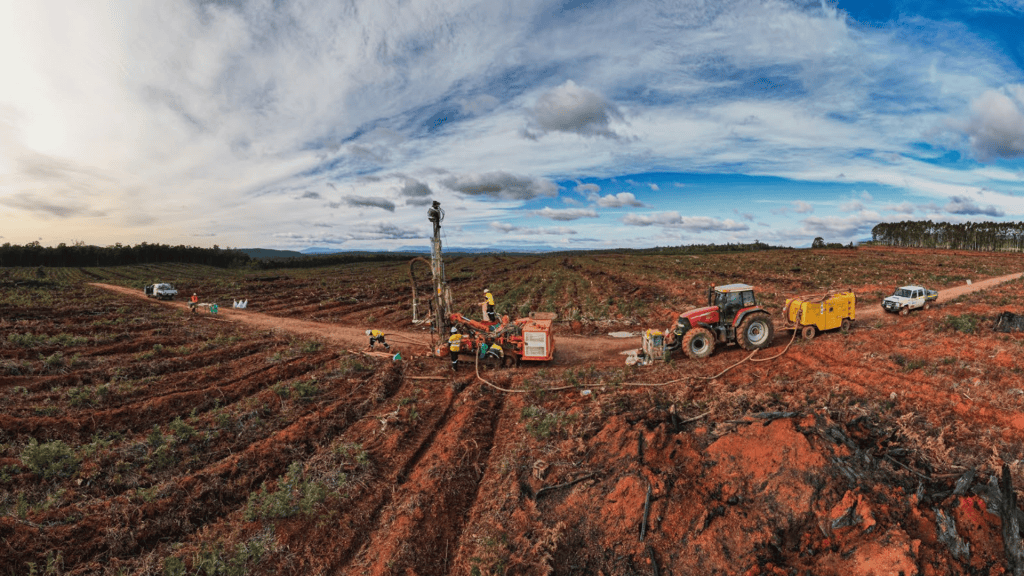
ABx Group (ASX:ABX) is committed to becoming a key supplier of both light and heavy rare earths in the Western supply chain, driven by its Deep Leads Rare Earth Project in Tasmania. The company announced a resource upgrade to 89 million tonnes in 2024, with the current resource base covering only 29% of the identified mineralized footprint. In May 2025, the company discovered the Temple Bar deposit, located 50 kilometers east of Deep Leads. Deep Leads is one of the few non-acid clay-type resources with a significant ionic proportion, which can reduce reagent consumption, simplify impurity removal, and minimize rare earth losses. The company recently obtained new exploration licenses in Tasmania, expanding its ionic adsorption clay rare earth exploration area to over 800 square kilometers. The MREC produced by ABx from Deep Leads has been confirmed by the Australian Nuclear Science and Technology Organisation to be exempt from radiation control, reducing regulatory compliance requirements and broadening market access. The company also received funding from the Tasmanian Government's Exploration Drilling Grant Scheme, being one of five selected projects to offset direct drilling costs. ABx plans to conduct its next exploration campaign in Tasmania in August 2026, incorporating AI tools, and is committed to advancing commercialization, including distributing MREC samples, engaging potential offtake partners, and conducting economic studies. Beyond rare earths, ABx also focuses on materials businesses such as clean fluorochemicals production and bauxite production.
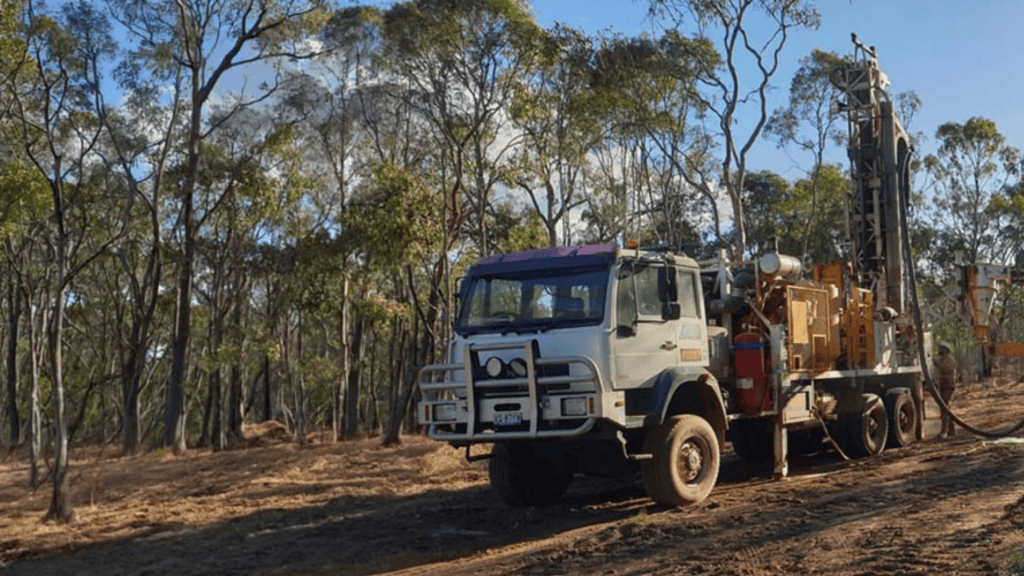
Ark Mines (ASX:AHK) is accelerating its Sandy Mitchell Rare Earth Project in North Queensland. The deposit is one of the world's largest surface-exposed sand-hosted rare earth deposits, with a mineral resource of 71.8 million tonnes at a monazite equivalent grade of 1732.7 ppm, and recent drilling targets pointing to 330 million tonnes. The company estimates the current exploration target at 1.3 to 1.5 billion tonnes at a monazite equivalent grade of 1316 to 1580 ppm. The company states the deposit is located within a large sand pit and can be simply extracted via gravity concentration. Queensland Investment Corporation recently invested AUD 4.5 million, part of its AUD 170 million Queensland Critical Minerals and Battery Technology Fund, supporting selected Queensland resource companies. Ark Mines has produced commercial monazite samples from the heavy mineral concentrate at Sandy Mitchell, with the highest-grade stream achieving a TREO grade of 54.8%, a yttrium oxide grade of 1.49%, a neodymium-praseodymium oxide grade of 23.4%, and a titanium dioxide grade of 73.5%, demonstrating strong titanium potential. The company is working to complete a comprehensive Pre-Feasibility Study, expected in the second quarter of 2026, and is engaged in multiple offtake discussions with potential partners. Managing Director Ben Emery stated that these results bridge the gap between understanding commercial potential and successfully producing a product. While further metallurgical testing is still required, they provide confidence in the resource quality, and the company is seeking to determine the most effective commercial processing pathway.