China's 15th Five-Year Plan: Energy Digitalization at the Right Time — Observations from the Second Digital Ecosystem Conference of the Energy and Power Industry
en.Wedoany.com Reported - The 15th Five-Year Plan period marks a critical stage for the bidirectional empowerment and coordinated development of artificial intelligence and energy. What are the key priorities for the next phase, in terms of aligning the pace of power supply with computing infrastructure construction and fully unleashing the value of AI in enabling the green transformation of energy? At the Second Digital Ecosystem Conference of the Energy and Power Industry, held on July 2, attendees took a long-term perspective to jointly explore new directions for energy digitalization.
Deep Integration of AI and Energy is a Strategic Imperative
Currently, the global energy supply-demand landscape is undergoing profound adjustments, making the security, stability, and sustainability of energy systems more prominent. In the view of the attending guests, promoting the deep integration of AI and energy is not only a key variable for enhancing system resilience and efficiency but also a strategic imperative concerning national development initiative, industrial competitiveness, and security assurance capabilities.
To continuously strengthen coordinated promotion, the National Energy Administration has introduced a series of policy measures in recent years. Guided by the top-level design, China has achieved positive results in the integrated development of AI and energy.
"Power digitalization has moved from single-point pilots to full-chain integration, from technological empowerment to value creation, forming a development pattern of source-grid-load-storage integration and cloud-edge-terminal full coverage," said Yang Kun, Party Secretary and Executive Vice Chairman of the China Electricity Council.
According to statistics, direct digital investment in the power industry in 2025 exceeded 42 billion yuan, ranking among the highest across all industries in the country. As a new production factor, digitalization has rapidly integrated into all aspects of power dispatch, operation and maintenance, trading, and maintenance, becoming a crucial support for the new-type power system.
Currently, State Grid Corporation of China, China Southern Power Grid, and China Energy Investment Corporation have successively launched industry-specific large models such as "Guangming," "Dawate," and "Qingyuan," effectively improving system operational efficiency. The gradient parameter layout ranging from tens of billions to hundreds of billions has preliminarily built the technological foundation for AI in the energy industry.
Huang Xuenong, former Director of the Supervision Department of the National Energy Administration, stated that the development of green computing power is currently accelerating through green electricity trading, direct green electricity connections, and cross-provincial trading, with the energy consumption scale of computing facilities continuing to rise.
"In 2025, the total electricity consumption of computing centers reached 170 billion kWh, accounting for 1.6% of total societal electricity consumption. The average growth rate of computing energy use at the eight major hub nodes over the past three years is approximately 39.5%, far exceeding the average growth rate of total societal electricity consumption," Huang Xuenong pointed out.
Barriers Remain in Technological Innovation and Industrial Collaboration
While acknowledging achievements, it is also necessary to recognize that there are still shortcomings in the digital transformation of the energy industry. Among them, barriers exist in technological innovation and industrial collaboration, and the application scenarios for AI and digitalization need further deepening.
"Especially in areas such as new energy consumption, source-grid-load-storage systems, and the construction of new-type power systems, breakthrough and large-scale mature applications have not yet been formed, and the core value of AI in improving quality and efficiency has not been fully released," Yang Kun pointed out.
Guo Jianbo, an academician of the Chinese Academy of Engineering, stated that the promotion of AI applications in the power sector is gradually highlighting technical risks. "AI is fundamentally based on statistical principles, and uneven data distribution and preferences will bring multiple risks, including fairness and security."
Lyu Tingyan, Party Leadership Group Member and Deputy General Manager of China Three Gorges Corporation, similarly believes that with the in-depth application of AI technology, security risks have been continuously rising. "Increased automation has given machines greater weight in decision-making chains. Once system vulnerabilities are exploited by malicious attacks or injected with false data, the consequences would be unimaginable."
Currently, frequent extreme weather events combined with large-scale grid integration of new energy have intensified the volatility of the power system. However, the industry has yet to form unified standards, making it difficult to rely on AI for accurate prediction and implementation of regulatory measures.
At the same time, data flow barriers still exist in areas such as computing-power coordination and zero-carbon park construction, with prominent issues of data silos. AI models lack support from high-quality data, limiting the pace of iterative upgrades and making it difficult to fully empower industrial development.
To enhance the security and trustworthiness of AI technology applications, Guo Jianbo suggested adopting digital twin system construction technology to achieve "coexistence, co-growth, and co-prosperity" with the new-type power system, building an intelligent "brain" for system operation to verify strategies generated by AI.
Furthermore, "construct an AI security and trustworthiness assessment and enhancement technology system tailored to the characteristics of power business, clarify the usage boundaries of AI technology in extreme scenarios of core power business, and locate and track security and trustworthiness issues to build a security protection system," Guo Jianbo stated.
Accelerating the High-Quality Development of Energy Digitalization
To accelerate energy digitalization, Huang Xuenong proposed that during the 15th Five-Year Plan period, efforts should be strengthened in strategic planning and coordinated coordination, key core technology breakthroughs, deepening high-value application scenarios, and accelerating the implementation of computing-power coordination projects.
"Based on the overall goal of building a strong energy nation, systematically plan the overall layout, major projects, and priority directions for the bidirectional empowerment of AI and the energy industry, and strengthen cross-departmental work coordination and policy linkage," Huang Xuenong emphasized.
In terms of computing-power coordination, resources such as power sources, grids, energy storage, load-side resources, and computing facility configuration should be coordinated, supporting the promotion of a batch of pilot projects. Enhance the clean energy assurance capability of computing facilities and build a safe, reliable, green, and low-carbon computing-power integration system.
Focusing on data construction, Li Jianguo, Deputy Director of the Infrastructure Construction Department of the National Data Administration, pointed out the need to further explore trusted data spaces and privacy-preserving computing, systematically sort out multi-dimensional data resources such as power industry supply-demand and international cooperation, and provide a demonstration for data flow in the power industry.
"We will solidly promote the coordinated development of computing and power, fostering a virtuous cycle of 'strengthening computing with power and promoting power with computing,' to better unleash the overall efficiency of 1+1>2," Li Jianguo said.
Zhi Haijie, Deputy Secretary of the Xicheng District Committee of Beijing and District Mayor, stated that to create more possibilities for energy and power digital transformation during the 15th Five-Year Plan period, Xicheng District will build a number of benchmark projects and accelerate the formation of a new paradigm of central-local coordination, industry linkage, and co-creation and win-win outcomes.
"Focusing on key tracks such as power AI and computing-power coordination, fully leverage policy support, integrate the district's abundant resources in finance, industrial space, and public services, and provide service guarantees for various innovation entities. Jointly build a distinctive industrial ecology with deep coupling of computing power, data, and energy," Zhi Haijie stated.
Yuan Jun, Vice President of the National Data Development Research Institute, believes that looking to the future, efforts must be coordinated in policy mechanisms, planning layout, market systems, and technical standards. "Build a five-dimensional resource foundation platform of data, computing, power, models, and applications, and carry out technological innovation around stable power supply on the power side and precise carbon efficiency control."
Related Products


G.652.D Wavelength-extended Non-dispersion Shifted Single-mode Optical Fiber
HONGAN GROUP CO., LTD.
PCS-901 Series Ultra (Extra) High-voltage Transmission Line Complete Protection Device
Nanjing NR Electric Co., Ltd.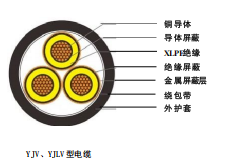
Rated Voltage 6-35kV Cross-linked Polyethylene Insulated Power Cable
TONGDING INTERCONNECTION INFORMATION CO., LTD.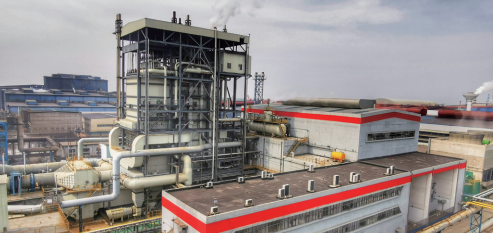
Jiujiang Pinggang 125MW Subcritical Gas Power Generation Project
Capital Engineering & Research Incorporation Limited
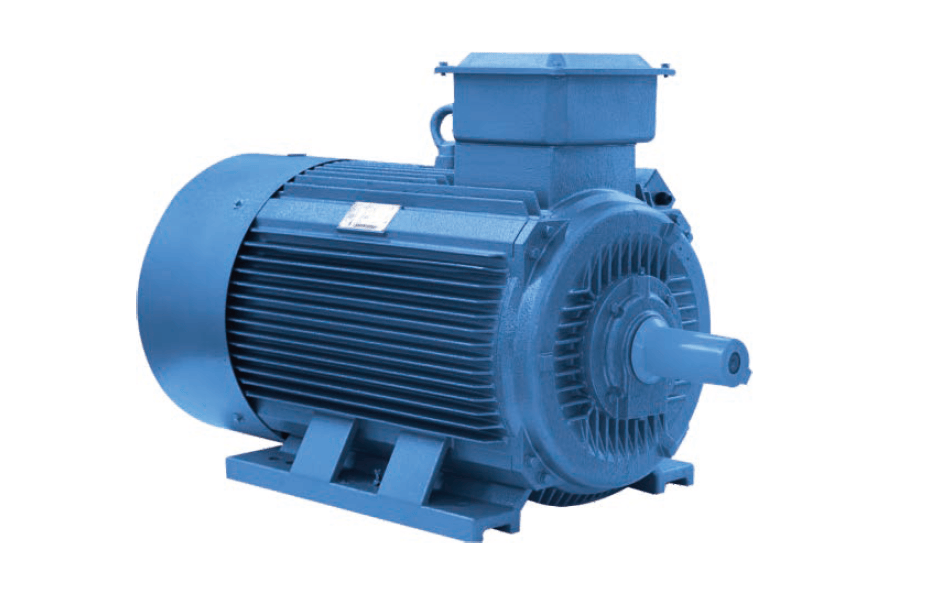
TYC Series High-Efficiency Permanent Magnet Synchronous Motor
Xiangdian Smart Energy Technology Co., Ltd.
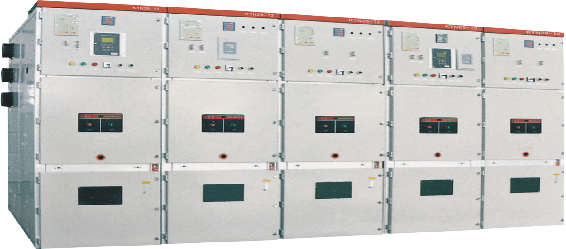
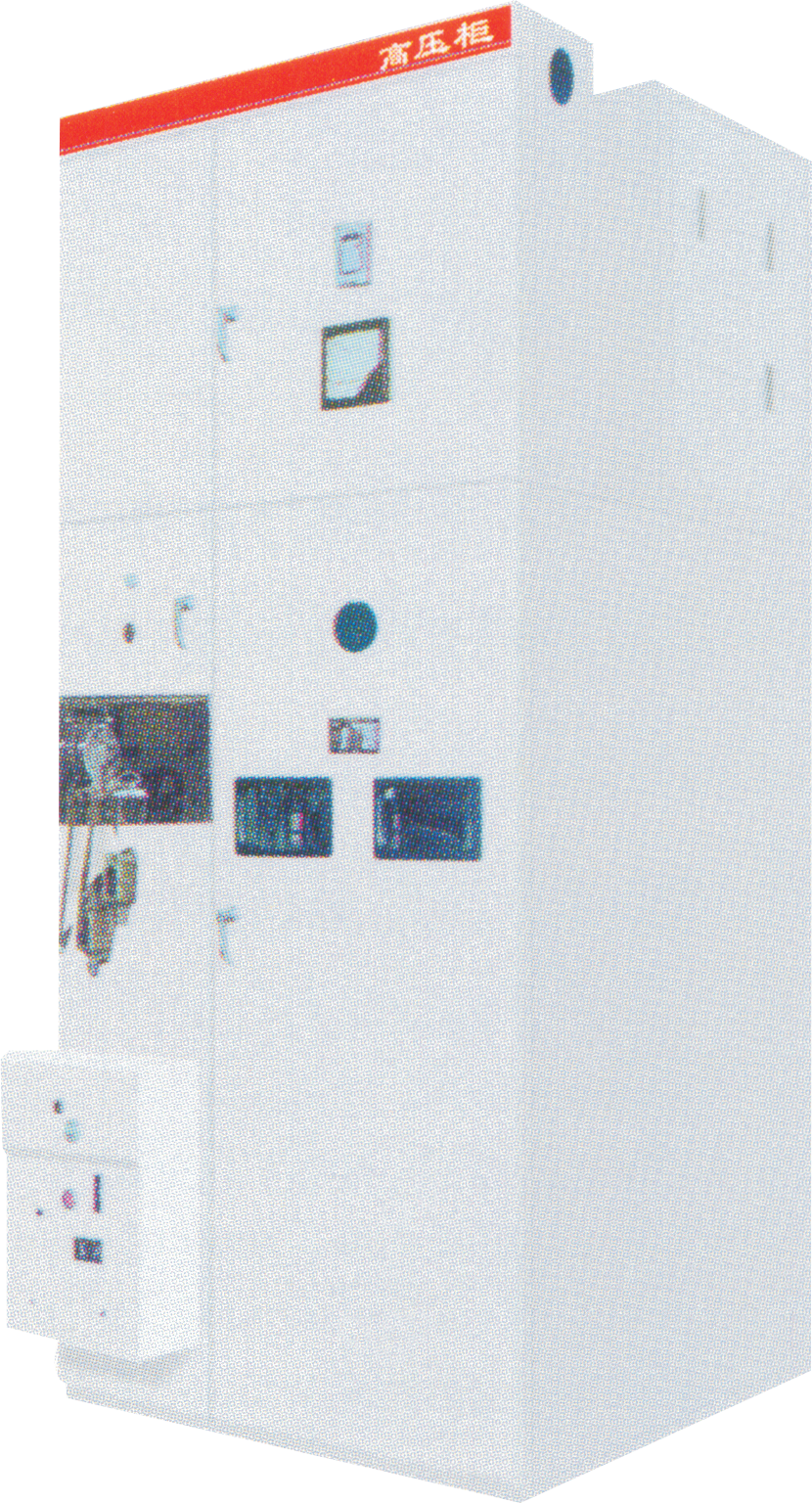
KYN28-12/24 Indoor High-Voltage Metal-Clad Removable Switchgear
Shenzhen Zhaoyang Hui Technology Co., Ltd.