en.Wedoany.com Reported - US startup Orbital Compute plans to move data centers to low Earth orbit, using space-based solar energy and radiative cooling to support AI computing demands. The project's first satellite is scheduled for launch in 2027, with a long-term goal of deploying 100,000 satellites in orbits approximately 500 to 800 kilometers above Earth, collectively providing up to about 10 gigawatts of computing power.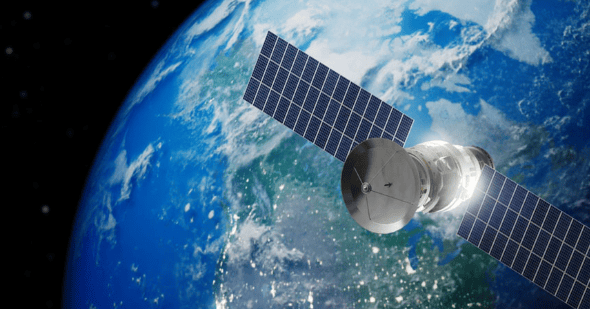
Orbital Compute's vision targets the increasingly prominent pressures on terrestrial AI data centers regarding electricity, cooling, and land. The training of large models, inference services, and the expansion of AI applications are pushing computing infrastructure toward higher power densities. Traditional data centers require substantial power supply, cooling systems, substations, backup power, and land resources. Space data centers attempt a different path: satellites operating in orbit, powered by solar energy, utilizing the space environment for heat dissipation, and processing some AI workloads beyond Earth. The company has applied to the US Federal Communications Commission to build a system of up to 100,000 satellites, planning for these satellites to undertake AI computing tasks rather than solely providing traditional communication or remote sensing services.
This plan is still in its early stages and faces high commercialization challenges. The figures—100,000 satellites, 10 gigawatts of computing power, and a first satellite launch in 2027—are enough to attract attention, but actual implementation must address issues such as launch costs, in-orbit power supply, chip radiation resistance, thermal management structures, satellite-to-ground communication, task scheduling, satellite lifespan, and orbital safety.
Space data centers are not just a concept from Orbital alone. Google previously announced Project Suncatcher, exploring the deployment of TPUs and free-space optical communication links on satellite constellations, using solar-powered satellites to support machine learning computations. Multiple studies have also begun discussing the energy, communication, thermal control, and economic feasibility of orbital data centers. The challenge is that AI computing requires not only "electricity" and "chips" but also stable data transmission. Terrestrial data centers can handle massive high-speed data exchanges internally, whereas satellite-to-ground link bandwidth, latency, communication costs, and the uplink/downlink capacity of mission data will determine which workloads are suitable for orbit. A more realistic early scenario might not be moving all general-purpose AI computing to space, but rather first handling Earth observation, space mission data, edge inference, AI tasks with low data return volumes, and certain workloads sensitive to terrestrial power and cooling pressures.
If Orbital's plan continues to advance, the impact will extend beyond the satellite industry. High-performance computing chips, radiation-hardened electronics, solar arrays, satellite thermal control, inter-satellite laser communications, ground stations, task scheduling software, cloud computing interfaces, and orbital maintenance services could all enter a new technology validation cycle. For the AI infrastructure market, space data centers are not yet a mature alternative, but they illustrate that the competition for computing power has expanded from server rooms, campuses, and power resources to orbital space, satellite manufacturing, and satellite-to-ground network capabilities.