en.Wedoany.com Reported - Brazilian company Better Beef has established a circular economy model in the interior of São Paulo state, transforming sweet potatoes previously considered agricultural waste into raw materials for producing ethanol, high-nutritional-value feed, and future biomethane for its own fleet. In one year, the company has converted over 40,000 tons of industrial waste into animal nutrition, equivalent to reducing 20,537 tons of CO2 emissions based on industry reference emission factors (GHG Protocol).
Everton Gardezan, Marketing Manager at Better Group, stated that the company practices sustainability at every link of the industrial chain, building a system aimed at providing high-quality beef while reducing environmental impact—a mature circular economy model applied to livestock farming. The investment is part of the company's vertical integration strategy, aiming to internally produce part of the feed raw materials for its cattle, reducing dependence on external suppliers. The project is being carried out at the group's livestock branch, Agropecuária Vista Alegre, located in the Presidente Prudente region, one of the largest sweet potato producing areas in the country.
The initiative originated from an opportunity identified in the field: approximately 30% to 40% of local production consists of sweet potatoes that do not meet market standard specifications. Although these tubers have the same nutritional properties, they ultimately lose commercial value or are not even harvested when prices are low. David Oliveira, Industrial Manager at Agropecuária Vista Alegre, stated that this surplus sparked the company's interest. The company recognized a locally abundant raw material that could create more value within its production ecosystem, developing solutions based on local agricultural realities rather than relying entirely on corn.
The company initially studied building a corn ethanol plant, but the high cost of local corn raw materials made the project unfeasible. The alternative was to replace corn with sweet potatoes, given the large local supply and the significant volume of substandard products. The plan involves processing approximately 36,000 tons of sweet potatoes annually, capable of producing about 5 million liters of industrial ethanol. With the "Sweet Potato Project" (Projeto Batata-Doce) becoming operational, these figures are expected to grow. The project plans to utilize local agricultural waste to produce 15,000 liters of alcohol, 20 tons of WDG (nutritional additive), and approximately 10,000 Nm³/day of biogas, initially used as process heat.
After alcohol extraction, the nutrient-rich residue is converted into approximately 7,000 tons of cattle feed annually. According to the company, this ingredient has a protein content of about 29% and becomes part of the diet for confined cattle. Better Beef also uses yeast from the ethanol industry as a feed supplement, which acts as a natural probiotic, improving rumen health and feed conversion efficiency. Oliveira stated that the goal is to internally produce most of the protein required by the herd, making operations increasingly self-sufficient and improving cost predictability and operational competitiveness.
Company research indicates that wastewater from sweet potato processing has high biogas production potential. In the second phase of the project, this gas will be purified to obtain biomethane, which can replace diesel used in the internal fleet and provide energy for the plant. Better Beef controls nearly all links of the industrial chain, from breeding, rearing, and fattening to beef processing. The group manages approximately 7,000 hectares of land, producing sugarcane, hay, and other inputs for confinement, and recycles water collected from facilities for crop fertilization and irrigation. The project also positively impacts local farmers, creating demand for sweet potatoes that previously had no market, providing alternative income sources, and reducing food waste. The company also collaborates with rural settlements to produce hay, strengthening crop-livestock integration.
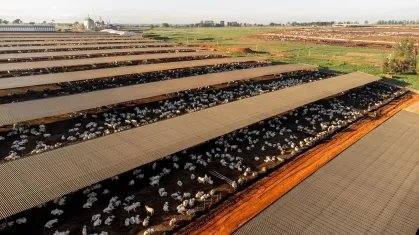
At Agropecuária Vista Alegre—the largest feedlot with covered and concrete pens in Latin America—the group applies regenerative agriculture principles, converting waste into agricultural inputs. Manure from over 136,000 animals annually is recycled for soil improvement, reducing dependence on fertilizers and contributing to carbon sequestration. Everton Gardezan noted that the business is not just about producing beef but also restoring ecosystems, achieving high productivity while consolidating land. The slaughterhouse currently exports beef to over 30 countries across five continents and supplies the Brazilian market through a premium beef line. Such initiatives reinforce the strategy of adding value to production through innovation, sustainability, and reduced operational costs.