en.Wedoany.com Reported - St George Mining has reported drill results from its Araxá project in Minas Gerais, Brazil, revealing mineralized intervals of rare earths and niobium, including the thickest interval encountered to date, confirming the scale and continuity of the mineralization.
Assay results from the latest batch of 23 completed diamond drill holes have confirmed widespread high-grade mineralization starting from surface. Notably, drill hole AXDD120 returned 199.5 meters from surface grading 2.86% total rare earth oxides (TREO) and 0.44% niobium pentoxide (Nb2O5). This hole also included higher-grade zones: 60 meters from surface grading 3.96% TREO and 0.52% Nb2O5; 15 meters from 36 meters depth grading 3.3% TREO and 0.97% Nb2O5; and 28.8 meters from 116.2 meters depth grading 1.76% TREO and 0.7% Nb2O5.
St George Mining (ASX:SGQ) stated that the hole was designed to test the vertical extent of the weathered mineralized profile and the potential for large-scale open-pit mining, and ended in mineralization, indicating the mineralized system continues at depth. Executive Chairman John Prineas noted that the results from AXDD120 highlight the scale and sustained high grades of the Araxá mineralized system, and that this result is not an isolated case, with many holes in the project returning over 150 meters of mineralization from surface. He believes the thickness, grade, and near-surface, flat-lying nature of the deposit support the potential for open-pit mining.
Araxá already hosts the largest and highest-grade carbonatite rare earth resource in South America, and the second highest-grade rare earth resource in the Western world. Current resources stand at 70.91 million tonnes grading 4.06% TREO and 0.62% Nb2O5, including 29.49 million tonnes in the measured and indicated categories grading 4.56% TREO and 0.75% Nb2O5.
Of the 23 reported drill holes, eight are located outside the current mineral resource estimate, extending the mineralized footprint up to 200 meters to the north. This area is becoming a focus for resource growth and resource definition. The remaining holes were drilled at approximately 40-meter spacings within the existing resource area, aimed at improving confidence in grade continuity and supporting future resource conversion and reserve estimation.
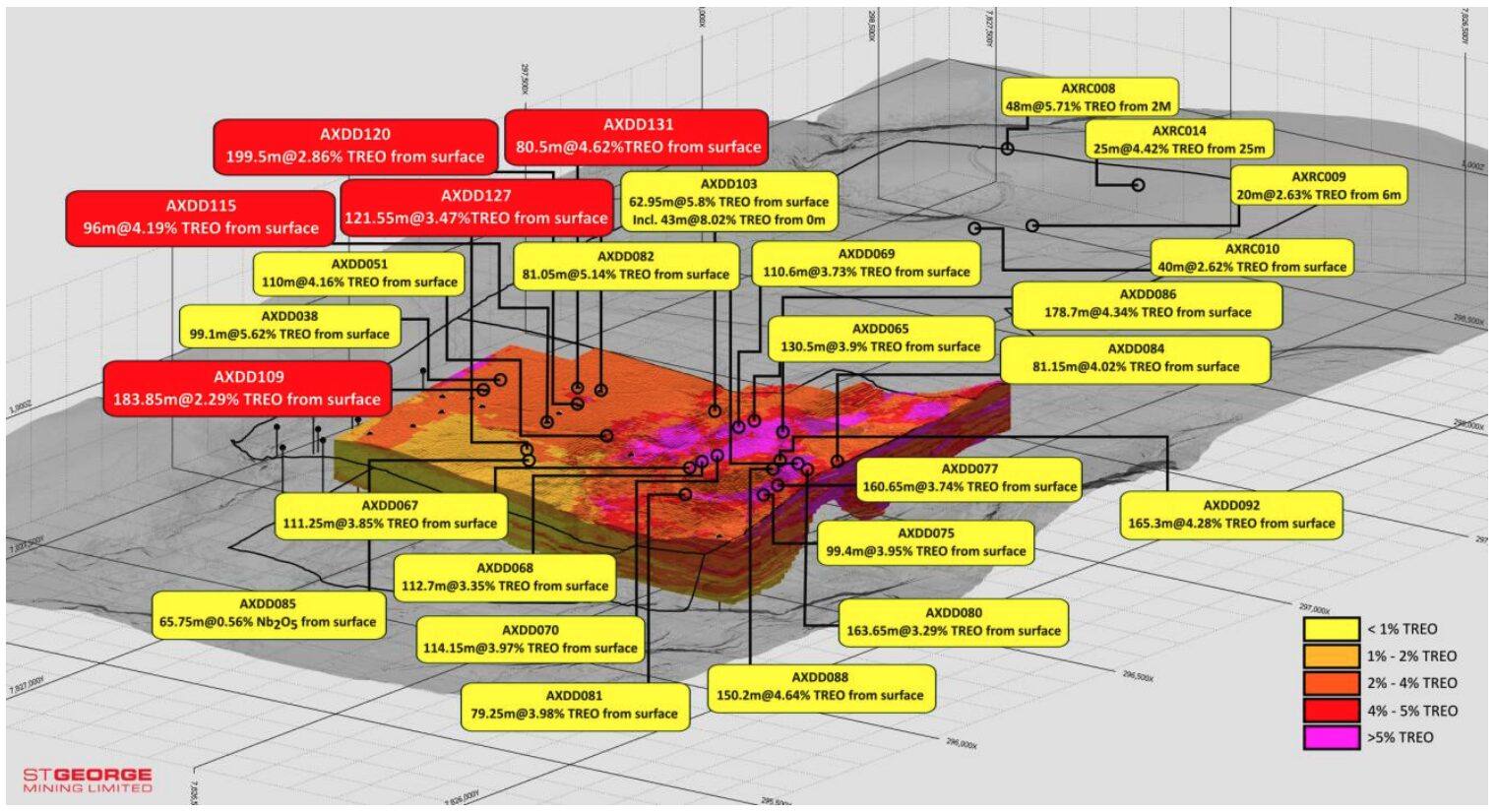
The latest assay results have also confirmed widespread niobium mineralization, including several broad intervals: drill hole AXDD117 returned 90 meters from surface grading 0.54% Nb2O5; drill hole AXDD123 returned 145.75 meters from 25 meters depth grading 0.49% Nb2O5; and drill hole AXDD126 returned 171.4 meters from 12 meters depth grading 0.48% Nb2O5. This confirms that niobium remains a significant component of the Araxá mineralized system and supports the company's strategy to evaluate the production of both products.
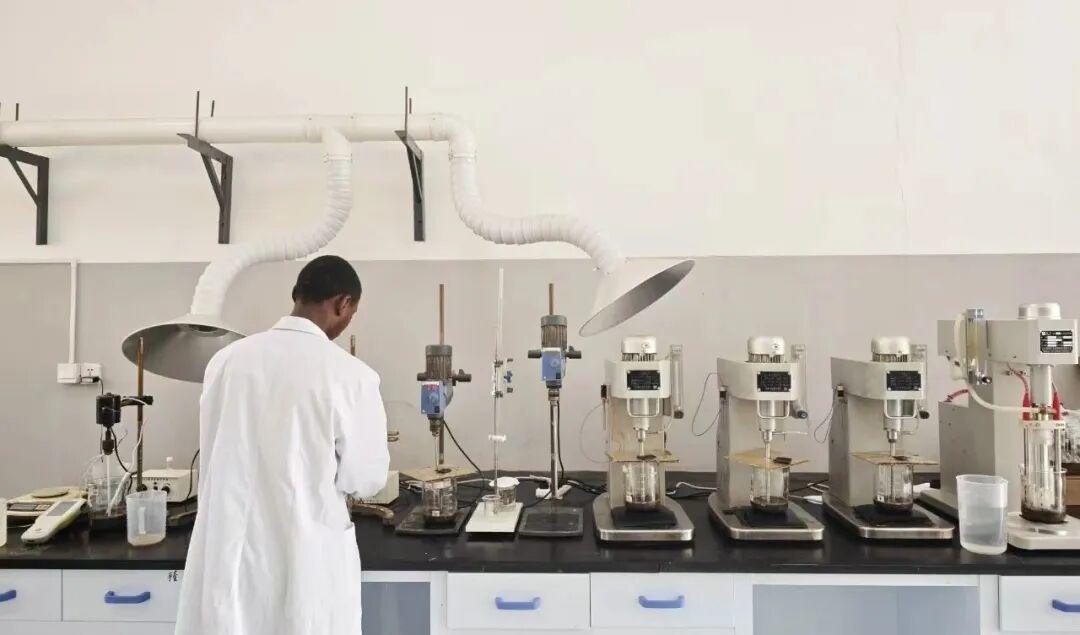
The latest drill results will be incorporated into an upgrade of the resource estimate planned for this quarter, providing a basis for economic studies of potential mining operations. Once drilling at the main Araxá deposit is complete, exploration will shift to the East Araxá discovery zone, approximately 1 kilometer away, with resource definition drilling expected to support another resource update in the fourth quarter of 2026. Additionally, further test work is underway to optimize recovery rates and concentrate grades. Previous open-circuit flotation work has produced concentrates grading 39.6% Nb2O5 with a flotation recovery of 54.3%, and 40.2% Nb2O5 with a flotation recovery of 46.0%, while also generating a rare earth concentrate stream grading 15.7% TREO from the niobium flotation tailings.