Ghana Proposes Raising Gold Royalty to 9%-12%, Côte d'Ivoire Focuses on Accelerated Approvals
en.Wedoany.com Reported - For mining companies, investors, and engineering, procurement, and construction (EPC) contractors evaluating the West African gold sector, Ghana and Côte d'Ivoire present two distinctly different investment models. Ghana, leveraging its production base, is seeking higher national revenue through proposed royalty reforms, tightened lease conditions, and increased participation in strategic assets. In contrast, Côte d'Ivoire places greater emphasis on approval speed, regulatory stability, and policy certainty.
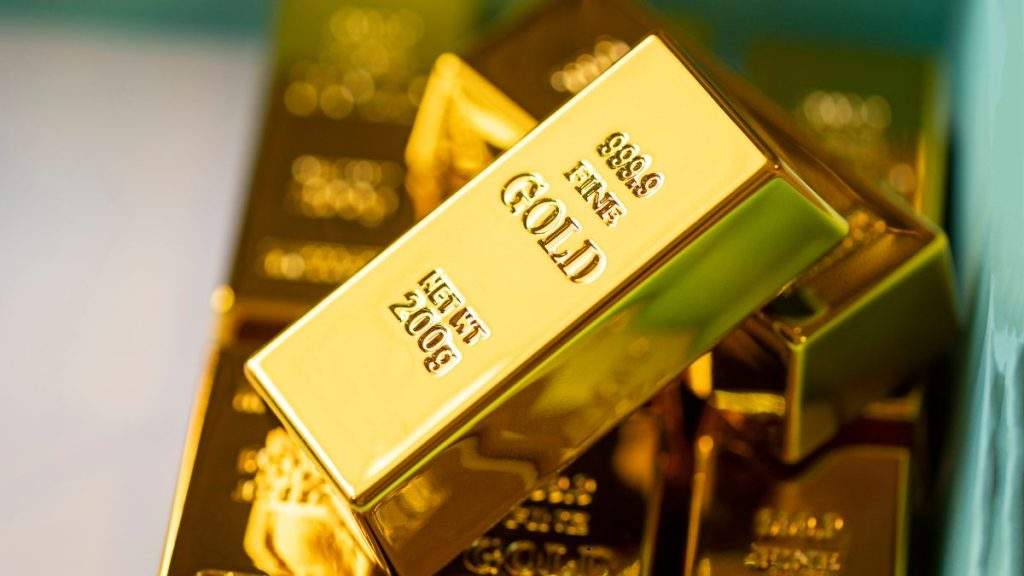
This contrast emerges against a backdrop of a gradual gold price recovery. Although the gold price fell from a high of $5,500 per ounce in January to below $4,000 per ounce in June, the World Gold Council believes it could rebound to around $4,500 per ounce. As higher gold prices reshape the economics of African projects, the competing strategies of Ghana and Côte d'Ivoire offer a timely reference for how governments balance fiscal returns with long-term investment competitiveness.
Ghana is attempting to convert record production into higher fiscal returns. In 2025, the country's gold production provisionally set a record of 6 million ounces, with large-scale mines contributing 2.9 million ounces. Gold exports generated approximately $11 billion in revenue, further cementing the sector's role as a pillar of the national economy. Artisanal and small-scale mining also drove growth, with output reaching 3.1 million ounces in 2025, accounting for 52% of total production. Through the traceability program of the Ghana Gold Board (GoldBod), whose pilot phase launched in early 2026, the government aims to formalize production while enhancing confidence in the country's gold value chain. Kenneth Ashigbey, CEO of the Ghana Chamber of Mines, told Prospect that the program "not only helps to eliminate leakages but also ensures that artisanal and small-scale gold mining is conducted responsibly."
With record production and expected price increases, Ghanaian policymakers are seeking a larger share of mining revenue. The proposed royalty reform would raise the royalty to 9%, and to 12% if the gold price exceeds $4,500 per ounce. While this aims to maximize returns during periods of high commodity prices, Ashigbey warned that these changes could impact Ghana's competitiveness. "The government's revenue share is close to 60%, and when gold prices fall, this proportion could even rise to 64% or 65%," he said, adding that while the government should benefit from high commodity prices, fiscal competitiveness must remain a priority. Ashigbey noted: "Our concern is that the introduced tax brackets will make Ghana less competitive. Compared to other African mining jurisdictions, Côte d'Ivoire's ratio is 50%."
Côte d'Ivoire, rather than focusing on increasing fiscal returns from existing production, is leveraging the current gold cycle to accelerate investment and expand the mining sector. The government aims to achieve an annual production of 62 metric tons, approximately 2 million ounces, by 2030, placing regulatory certainty and approval efficiency at the core of its growth strategy. This approach is reflected in a series of regulatory decisions. In October 2025, the government approved 11 exploration permits, including eight for gold projects, to bolster efforts in sustaining exploration activity. The country's project development pipeline is also progressing steadily. Resolute Mining's $2.5 billion Doropo project received its mining permit, Perseus Mining obtained an extension for its Yaouré license until 2036, and Montage Gold's Koné project targets first gold pour by the end of 2026. These developments collectively demonstrate how approval speed and policy certainty can enhance investor confidence and accelerate project execution, positioning Côte d'Ivoire to compete for the next wave of mining capital.
As the gold cycle strengthens, Ghana and Côte d'Ivoire are pursuing different paths toward the same goal: converting higher commodity prices into long-term economic value. How each strategy performs will help shape the next phase of mining investment in West Africa.
Related Products

Integrated Excavation and Anchoring Machine (EJM Series)
China Railway Construction Heavy Industry Corporation Limited

Industrial and Commercial Point-Type Gas Detector
Jinan Benan Technology Development Co., Ltd.
Comprehensive Mining Automation Control System
Beijing Tianma Intelligent Control Technology Co., Ltd.
High-temperature Equal Wall Thickness High-power Screw Drilling Tool
Orient Energy & Technologies Co., Ltd.
Linyi Steel Investment Special Steel 2.7 Million Tons per Year High-quality Special Steel Project
Capital Engineering & Research Incorporation Limited
Quick-Change Single-Seat Control Valve / Quick-Change High-Pressure Single-Seat Control Valve
Beijing Consen Automation Technology Co., Ltd.