en.Wedoany.com Reported - Scania has completed its industrial investment for producing electric trucks in Brazil, with the factory in São Bernardo do Campo, SP, fully prepared, but the company is waiting for the market to reach sufficient scale to initiate local production.
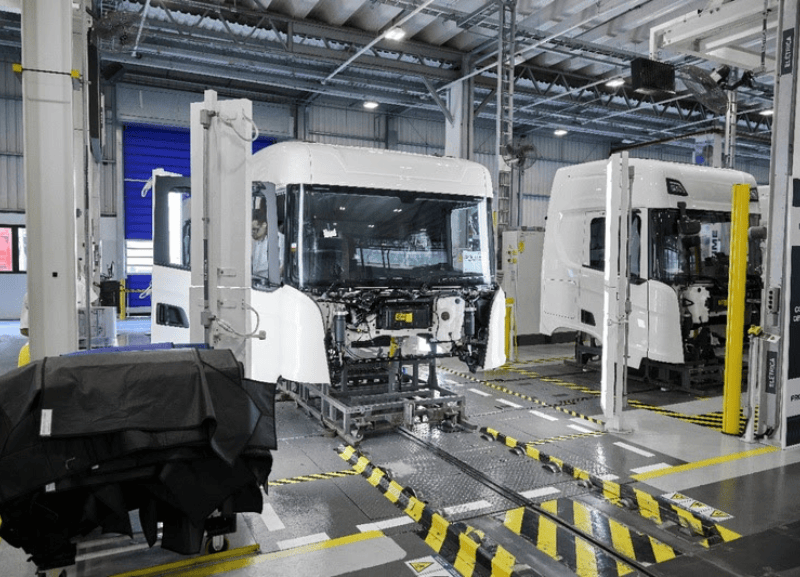
Christopher Podgorski, President and CEO of Scania Latin America, stated at the recently held 2026 Sustainable Transport Forum (Fórum Transporte Sustentável 2026) that the company is ready, with the issue being reaching a critical point to justify completing this investment. According to the executive, the Brazilian factory has already begun producing electric bus chassis, and the entire industrial structure for manufacturing electric trucks is in place, with the assembly line ready to start once sustained demand emerges.
Currently, the electric model 30 G sold by Scania in Brazil is imported from Sweden and primarily used for urban and regional operations. According to Scania, only one unit has been sold so far, to the transport company Reiter Log. This announcement comes earlier than the timeline the executive himself disclosed to Transporte Moderno in 2025. At that time, Podgorski revealed that localized production of electric trucks was expected to start in November 2027, with an initial pace of one unit per day. He stated that this strategy would allow the company to track demand changes and gradually scale up production as the market matures.
The project is part of Scania's announced BRL 2 billion investment cycle for 2024-2028, although the company has not disclosed how much of this is specifically allocated to electric truck and bus production lines. Podgorski believes that the trajectory of electrification will be similar to that of natural gas and biomethane vehicles—a technology Scania introduced in Brazil seven years ago, which is now beginning to attract other manufacturers. He noted that the maturity of new solutions requires building an ecosystem; the natural gas ecosystem is largely established, while the electric ecosystem still needs to be developed.
Podgorski believes that the initial markets with greater potential for large-scale adoption will be concentrated in the main logistics corridors of the South and Southeast, particularly along the axis between Rio de Janeiro, São Paulo, and Campinas, as the operational characteristics of these regions are more favorable for the technology. He assessed that some transporters currently investing in natural gas trucks may eventually shift to electric vehicles, as charging infrastructure, costs, and demand gradually develop. This outlook reinforces Scania's strategy of maintaining a multi-energy portfolio to meet the needs of different stages of the energy transition in road freight transport.
While the electric truck market is still in its infancy, Podgorski believes that the entry of new manufacturers into the natural gas and biomethane truck segment indicates that the technology has achieved economic viability, no longer being a pilot project but a commercial alternative to diesel in heavy transport. He stated that the company launched this solution five years ago and conducted all feasibility tests; today, natural gas vehicles are off-the-shelf products with all specification options available. According to him, natural gas trucks are no longer limited to niche markets like garbage collection and can now operate in almost all road freight applications. The entry of other manufacturers demonstrates that the ecosystem is economically viable and that demand exists. Currently, Scania has over 2,000 natural gas trucks in operation in Brazil, with expectations to reach a fleet of approximately 2,500 by the end of 2026.