en.Wedoany.com Reported - A study commissioned by the Portuguese Association of Toll Highway Concessionaires (APCAP) and conducted by Deloitte for its 25th anniversary conference reveals that Portugal has one of the safest and cheapest highway networks in Europe, with construction and operational costs per kilometer 20% lower than the European average.
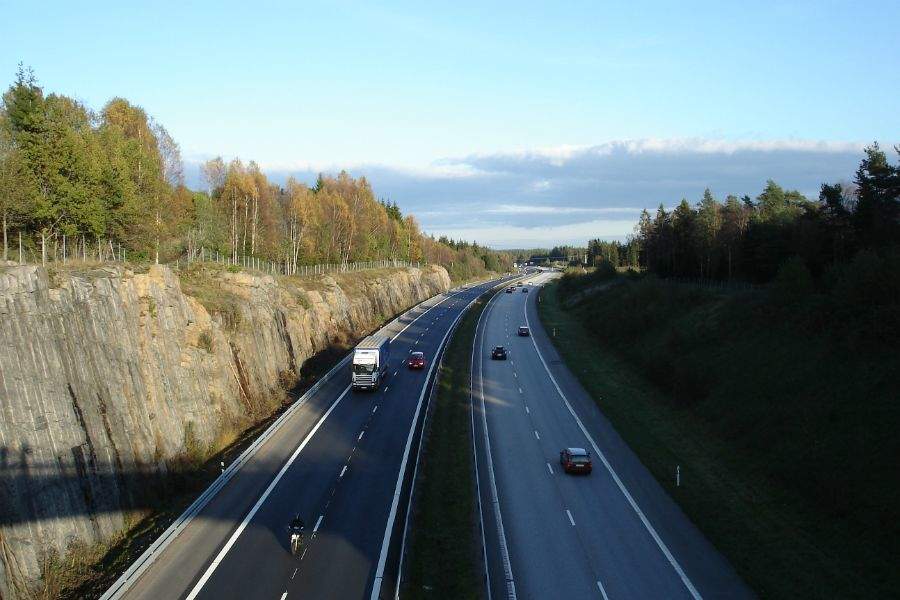
Released on July 1 at the National Laboratory of Civil Engineering (LNEC) in Lisbon, the study concludes that Portugal boasts the highest quality road infrastructure among the networks of the European Association of Tolled Motorways (ASECAP). This is largely attributed to sustained investments funded directly or indirectly by tolls, resulting in accident rates below the European average.
According to the research data, 58% of Portugal's current highway network is tolled, a proportion lower than the average tolling rate within the ASECAP network. Deloitte's study also warns that completely abolishing tolls would create an annual fiscal gap of 1.5 billion euros, a cost that would be fully borne by taxpayers and could severely jeopardize the routine maintenance and modernization upgrades of the highway network.
APCAP President Manuel Melo Ramos stated in a declaration that a structured and transparent process based on the user/payer principle is the best way to maximize public interest. He believes this model ensures the maintenance, operation, and quality of existing infrastructure while creating financing capacity for the future, supporting modern new investments without increasing the public debt burden.
Ramos views this conference as the starting point for a debate. APCAP proposes to continue promoting discussions over the coming months through collaboration among policymakers, national agencies, concessionaires, and other stakeholders, aiming to design the future model for road concessions in Portugal.
APCAP estimates that recent measures related to toll abolition will result in an annual revenue loss of approximately 200 million euros. This cost would also be passed on to all taxpayers, thereby reducing resources available for new investments and weakening the user/payer principle. The association states that Deloitte's study is the first in-depth diagnosis of Portugal's concession model, evaluating network performance through comparisons with major European countries and forecasting future prospects. The document's conclusions reinforce that the concession model based on the user/payer principle is the most effective way to ensure a high-quality network without burdening public finances.
ASECAP President Christophe Boutin presented the conclusions of the "Conférence Ambition France Transports" and the ASECAP manifesto. Ramos further emphasized that strengthening the user/payer principle and recognizing the value of tolls as a fair, effective, and sustainable mechanism is crucial for meeting future mobility needs. It also helps sustain infrastructure investments and reduce negative externalities such as accidents, congestion, and CO2 emissions.
The APCAP President noted that most European countries charge tolls on highways, tunnels, bridges, urban entrances, or at least for heavy vehicles. The EU's Eurovignette directive further reinforces this direction by linking tolls to infrastructure use and the environmental impact of vehicles. In a roundtable discussion, participants included João Jesus Caetano (from IMT), Paulo Carmona (from Infraestruturas de Portugal), António Pires de Lima (from Brisa Group), Luís Silva Santos (from Ascendi Group), and António Ramalho (from Lusoponte), with the closing remarks delivered by the Secretary of State for Infrastructure, Hugo Espírito Santo.