Galaxy Digital Delivers 133 MW AI Data Center in Texas to CoreWeave
en.Wedoany.com Reported - Galaxy Digital has completed the first power phase at its Helios campus in West Texas, delivering 133 megawatts of critical IT load to AI cloud services provider CoreWeave under a 15-year lease. The project transformed an original dense AI infrastructure concept into a revenue-generating data center asset, as power availability has become a scarce resource for AI operators in the US pursuing hyperscale computing.
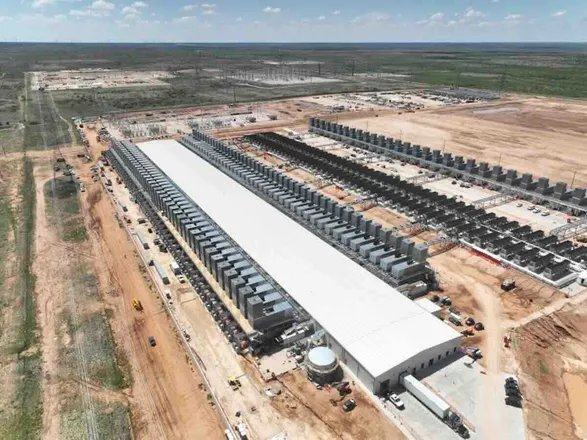
The first phase delivered approximately 200 megawatts of total power, with rent from the CoreWeave lease commencing in the second quarter of 2026. Helios has thus transitioned from a land and power concept to an operating asset. CoreWeave has committed to 526 megawatts of critical IT load across the first three phases, covering the 800 megawatts of total power currently approved and contracted at the site. The lease term is 15 years, with two five-year renewal options. Galaxy stated that the arrangement is expected to generate over $1 billion in annualized revenue.
The economics of AI infrastructure depend on developers securing power, converting it into usable IT load, and delivering before assumptions about customer demand, financing conditions, or GPU supply change. The Helios campus spans over 2,200 acres in West Texas, where large-scale power access is more negotiable than in Northern Virginia, Silicon Valley, or most major European metropolitan areas. Transmission, interconnection, cooling, construction labor, and equipment availability remain key factors determining the timeline.
Galaxy stated that development of the second phase, comprising 260 megawatts of new critical IT construction, has commenced, with civil and structural engineering underway and data hall deliveries expected to begin in the first half of 2027. CoreWeave, as a major buyer of AI data center capacity driven by GPU infrastructure demand, gains room for expansion. Galaxy, known for its digital asset business, is leveraging Helios to reposition itself as a data center infrastructure platform. The company stated that the total approved power capacity at the site has been expanded to 1.63 gigawatts, with a potential scale of up to 3.6 gigawatts.
For enterprise buyers and cloud infrastructure customers, Helios demonstrates that AI capacity is concentrating around operators who secure power first. Computing procurement is materializing into energy procurement. Operators with contracted power and committed tenants hold an advantage. A 15-year lease combined with a rapidly growing AI cloud tenant can support an infrastructure-based valuation logic, but tenant concentration and execution risks in later phases are real. On-time completion of the first phase reduces development risk, but building hundreds of additional megawatts of capacity in an overheated AI supply chain remains challenging.
As the campus scales, regulators may scrutinize water usage, grid impact, emissions accounting, and local economic benefits more closely. While West Texas offers space and energy access, hyperscale AI loads could still reshape regional infrastructure planning. Galaxy describes Helios as the cornerstone of a multi-campus, multi-tenant, multi-gigawatt strategy. Currently, the site has one anchor tenant, the first phase has begun generating revenue, and construction progress must consistently match the AI market's demand for high-density power.
Until 2022, the site was a Bitcoin mining facility. After completing the delivery of the first phase of 133 megawatts to CoreWeave, it now generates revenue as an AI data center, with an additional 260 megawatts of critical IT capacity under development and first deliveries expected in the first half of 2027. Galaxy views this transformation as reflecting a broader structural shift rather than a temporary surge in demand. This view aligns with the forecast from the International Energy Agency, which expects global data center electricity consumption to roughly double by 2030, with AI-focused facilities accounting for most of the growth. In this context, Helios's approved 1.63 gigawatts of power capacity provides Galaxy with a substantial development pipeline built around reliable power.