China's Hepfulai Develops 150°C High H₂S-Resistant Imidazoline Corrosion Inhibitor
en.Wedoany.com Reported - Traditional imidazoline corrosion inhibitors face four major technical challenges in the oil and gas extraction sector: failure under high-temperature conditions, performance degradation in the presence of H₂S, uneven interfacial distribution due to strong hydrophilicity, and incomplete film coverage at low dosages. The industry is seeking breakthroughs through molecular structure optimization and synergistic compounding to adapt to the extreme corrosive environments of deep, high-acid oil and gas fields.
Imidazoline corrosion inhibitors are widely used in oil and gas extraction due to their low toxicity, environmental friendliness, and good oil-phase compatibility. Their molecular structure consists of a five-membered nitrogen-containing heterocyclic ring, an amide group, and a long-chain alkyl tail. The amide group provides a chemical adsorption anchor, while the long-chain alkyl tail forms a hydrophobic barrier. With the development of deep oil and gas fields, bottom-hole temperatures in some ultra-deep wells exceed 150°C, and corrosive environments with high CO₂ and H₂S content impose higher demands on inhibitor performance. Under these conditions, the performance of traditional imidazolines significantly declines.
Among the four application challenges, performance degradation in high-temperature environments is the primary factor. In the temperature range from room temperature to 80°C, imidazoline adsorbs stably on metal surfaces, maintaining a corrosion inhibition efficiency above 95%. However, when the temperature exceeds 120°C, the adsorption equilibrium is disrupted, leading to a sharp decline in inhibition efficiency. Above 150°C, the efficiency of traditional imidazoline drops below 60%. In H₂S environments, the dissociated HS⁻ ions form an FeS film on the metal surface, and some imidazoline derivatives even exhibit a "negative effect," with inhibition efficiency lower than that of a blank system. H₂S also alters the surface charge state of the metal, affecting imidazoline adsorption. Due to their strong hydrophilicity, imidazoline molecules tend to dissolve in the aqueous phase, resulting in uneven distribution at the oil-water interface and discontinuous corrosion protection. At low dosages (e.g., below 10 mg/L), the corrosion inhibition film formed by imidazoline has defects, which may accelerate localized pitting corrosion.
In terms of molecular structure improvement, optimization directions include replacing the alkyl tail chain with benzyl or thiazole groups to enhance thermal stability. Data show that benzyl-modified imidazoline can maintain a corrosion inhibition efficiency above 85% at 150°C, an improvement of about 20 percentage points over traditional alkyl imidazoline. Introducing phosphate ester or sulfonic acid groups can enhance tolerance to H₂S. Phosphate ester groups can form synergistic protection with the FeS layer, while sulfonic acid groups improve oil-water interfacial distribution. Developing gemini-type imidazoline structures enhances film integrity and interfacial activity through dual-anchor adsorption. Introducing polyether segments can adjust the hydrophilic-lipophilic balance, improve interfacial distribution, and reduce corrosive medium penetration.
In terms of synergistic compounding strategies, combining imidazoline with molybdate or tungstate can maintain a corrosion inhibition efficiency above 90% at 130°C, an improvement of about 15 percentage points over single imidazoline. Compounding with organic phosphorus-based corrosion inhibitors such as hydroxyethylidene diphosphonic acid (HEDP) can fill film defects through competitive adsorption and synergistic promotion, preventing pitting corrosion at low dosages. Adding vapor-phase corrosion inhibitors such as urotropine, which releases ammonia gas upon thermal decomposition, creates a weakly alkaline environment that inhibits H₂S corrosion activity.
Tianjin Hepfulai New Materials Co., Ltd., under its Vanconol® corrosion inhibitor brand, has developed a specialized modified imidazoline system for acidic natural gas fields with high CO₂ and H₂S content. By introducing heat-resistant and H₂S-tolerant groups, it maintains stable corrosion inhibition efficiency under high-temperature conditions of 150°C. The product features excellent oil-water interfacial distribution performance and low-dosage pitting corrosion prevention, and has been successfully applied in multiple deep, high-acid oil and gas fields in China. Enhanced high-temperature thermal stability, H₂S environment tolerance, optimized interfacial distribution, and low-dosage pitting corrosion prevention are the current core improvement directions.
Related Products

Nitrogen Export, Nitrogen Manufacturer, High-purity Nitrogen Supplier
Foshan Yuexin Industrial Gas Co., Ltd.

CAP1400 main feedwater flow nozzle flowmeter.
Jiangsu Hongda Instrument Technology Co., LTD.
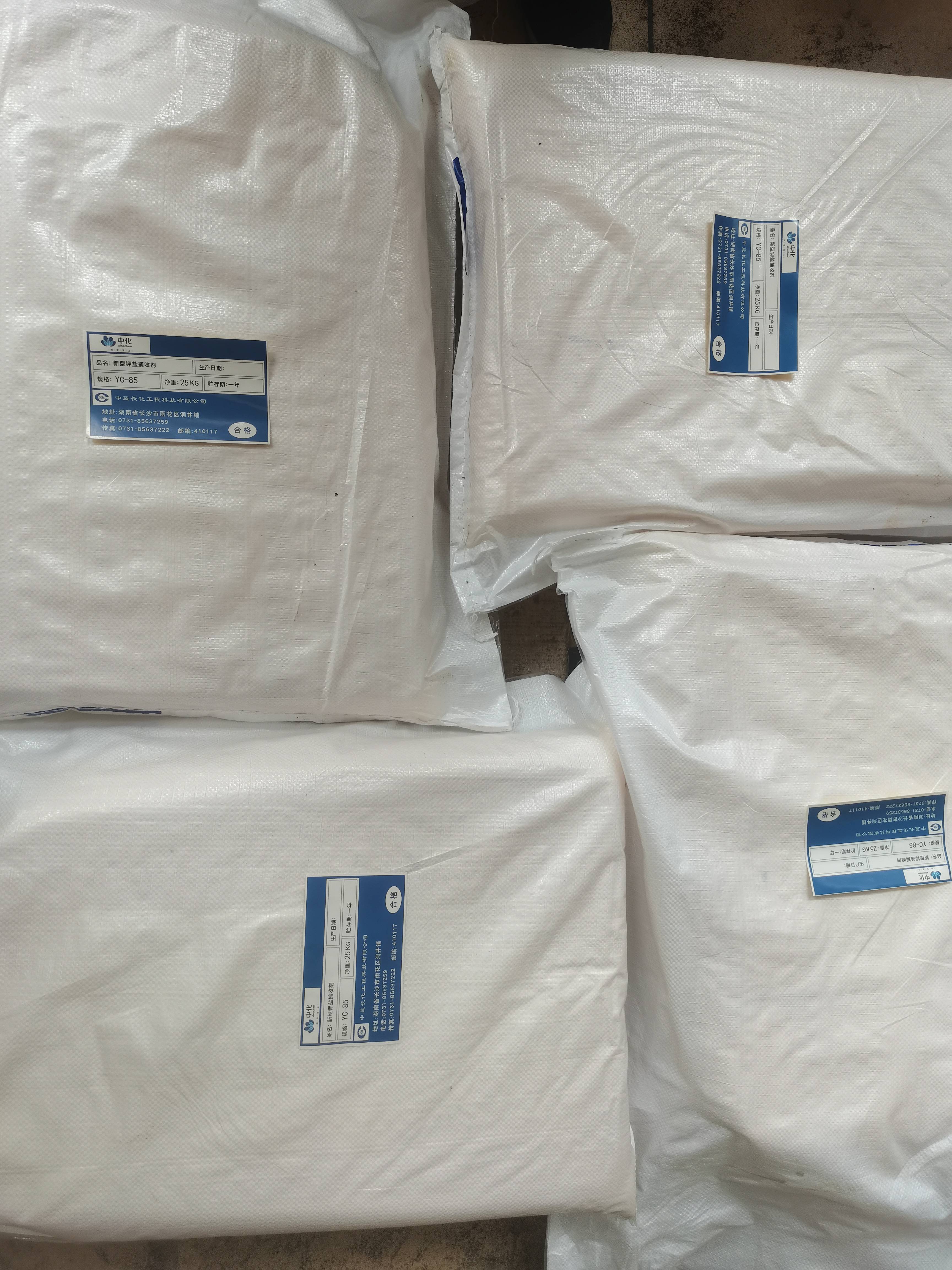
New Environmentally Friendly Green Potassium Salt Collector
Chonfar Engineering and Technology Co., Ltd.