China's Yahua Group Expects Over 710% Net Profit Growth in First Half of 2026
en.Wedoany.com Reported - Yahua Group released its performance forecast for the first half of 2026 on July 6, expecting net profit attributable to shareholders of the listed company to be approximately RMB 1.1 to 1.3 billion, an increase of 710.17% to 857.48% compared to RMB 136 million in the same period of 2025.
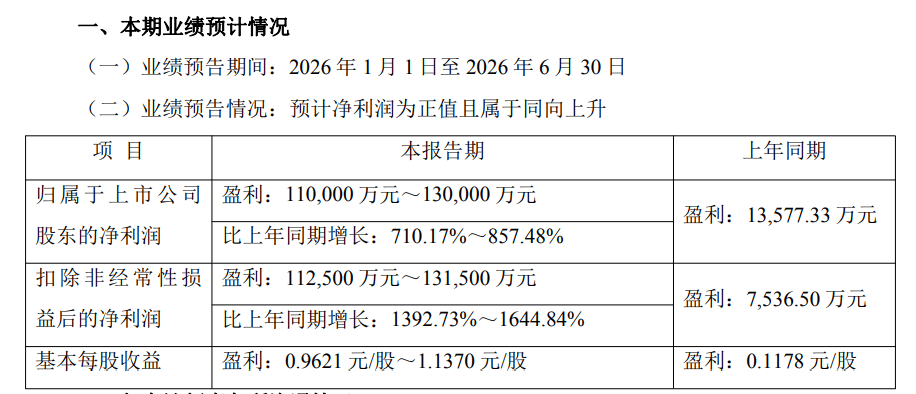
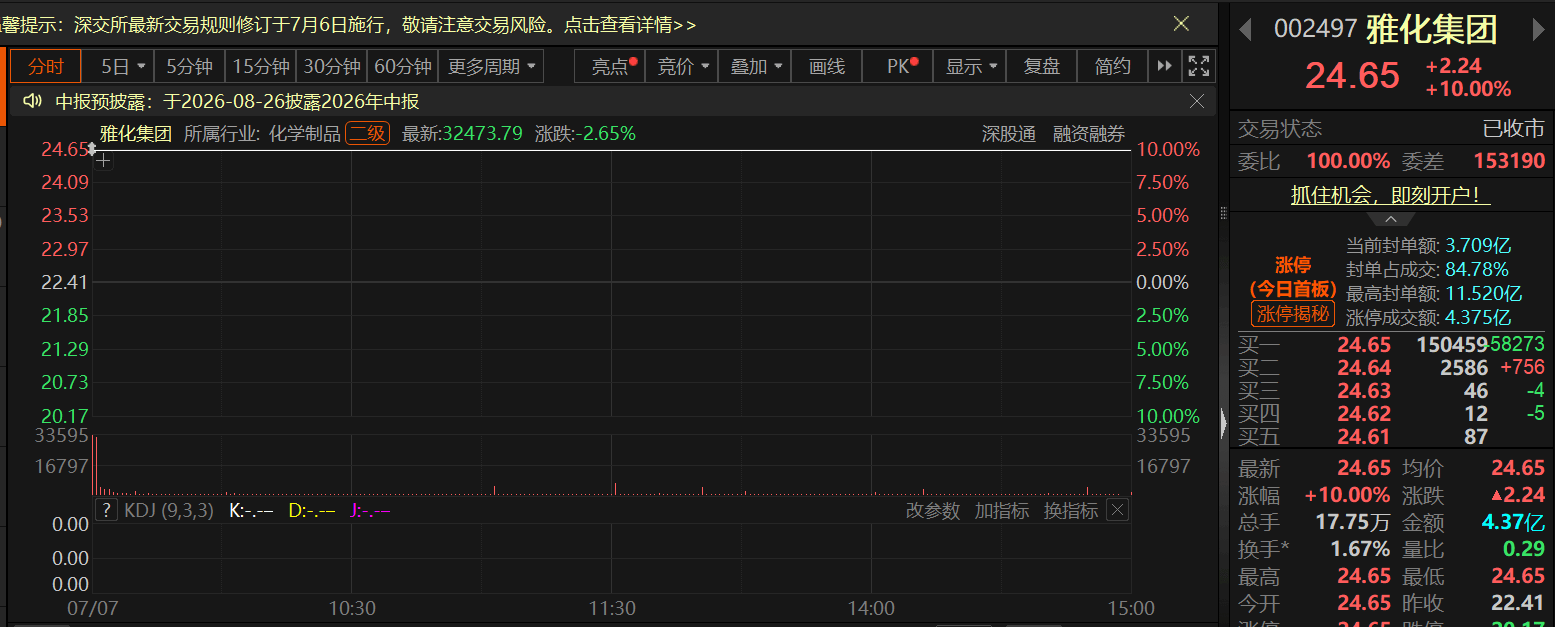
The significant performance growth is mainly attributed to the sustained upward trend in lithium salt market prices during the reporting period. The company's lithium salt product sales volume and average selling price both increased simultaneously, leading to substantial growth in main business revenue. At the same time, the company improved its profitability by optimizing the balance of mining, production, and sales, enhancing production efficiency, and controlling costs. Affected by the positive performance forecast, Yahua Group's stock price hit the daily limit up at the opening on July 7, closing at RMB 24.65 per share, an increase of 10%.
As a major producer of battery-grade lithium hydroxide, Yahua Group possesses industry-leading production technology and manufacturing equipment in the lithium salt product field, achieving automated production lines, intelligent manufacturing, and information-based management. Its lithium salt customers are primarily under long-term agreements. International customers include Tesla (TESLA), LG Energy Solution (LGES), SK On (SKON), LGC, L&F, and Panasonic, while domestic customers include CATL, Zhenhua New Materials, XTC New Energy Materials, Easpring Material Technology, Rui Xiang Co., Ltd., Ronbay Technology, and Minmetals New Energy. In 2025, revenue from leading companies in the lithium business accounted for over 90% of the company's total.
In terms of lithium resource security, Yahua Group has established a diversified channel layout combining self-controlled mines and externally purchased mines. For self-controlled mines, the first and second phases of the Kamativi lithium mine project in Zimbabwe were fully completed in 2024, with an annual raw ore processing capacity of 230 million tons, and products have been shipped back to China in batches. By holding a stake in Sichuan's Lijiagou lithium mine, the company has secured priority supply rights. For externally purchased mines, the company has obtained offtake rights for lithium ore resources from Australia's Pilbara, Africa's DMCC, Brazil's Atlas, and Brazil's MGLIT through long-term agreements. The company's current comprehensive design capacity for lithium salts is close to 130,000 tons, ranking among the industry's top tier.
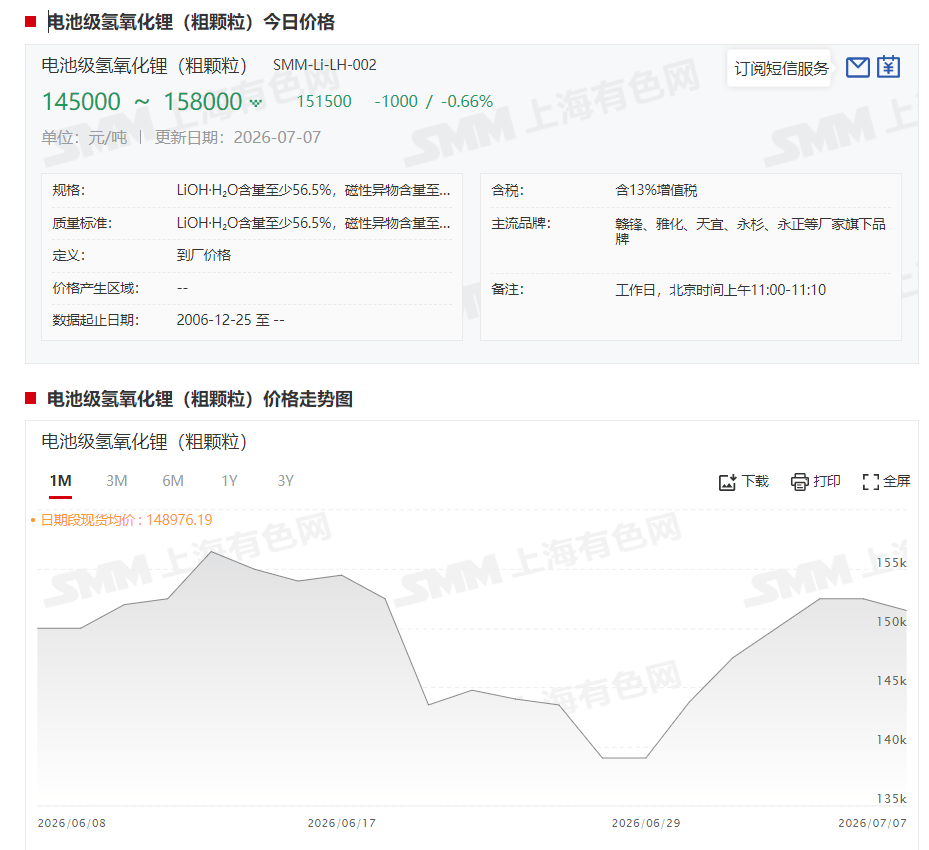
In the first half of 2026, the average spot price of battery-grade lithium hydroxide (coarse particles) was RMB 152,976.29 per ton, an increase of RMB 85,575.01 per ton from RMB 67,401.28 per ton in the first half of 2025, representing a rise of 126.96%. In terms of price trends, lithium hydroxide prices continued to climb in January, with the monthly average price rising 65% month-on-month. Prices fluctuated widely throughout February. In March, prices continued to climb, with the monthly average price up 3.4% month-on-month. In April, prices continued to rise with fluctuations, with the monthly average price up 2.73% month-on-month. In May, spot quotations generally trended upward, with the monthly average price up 13.6% month-on-month, reaching a high of RMB 174,000 per ton. In June, prices declined. As of June 30, spot quotations fell to RMB 143,750 per ton, down 12.75% from RMB 164,750 per ton at the beginning of the month, with the monthly average price dropping to around RMB 155,000 per ton.
Regarding the impact of Zimbabwe's lithium ore ban on the company's production, Yahua Group stated that current lithium concentrate inventory can meet domestic production needs. The Kamativi mine in Zimbabwe maintained normal operations during the ban period, and lithium ore production was unaffected. After obtaining the export quota for Zimbabwean lithium concentrate, the company completed new lithium ore export procedures and has initiated shipments. Subsequent lithium ore will be shipped back in batches. In response to a question about whether the KMC lithium mine in Zimbabwe has potential for resource expansion, the company responded that peripheral exploration of the mined area is ongoing. If subsequent changes in resource or reserve volumes meet disclosure standards, the company will fulfill its information disclosure obligations in a timely manner.
Yahua Group also stated that it is building a lithium sulfate production line to match the full production capacity of the Kamativi lithium concentrate, with the project expected to be completed next year. Processing lithium concentrate into lithium sulfate before shipping it back to China will reduce cargo volume and lower cross-border comprehensive logistics costs, which is expected to have a positive impact on costs. The company has also made progress in the solid-state battery field. In the synthesis process and mass production technology of lithium sulfide, a core raw material for solid-state electrolytes, the company has successfully developed a new gas-solid method for synthesizing lithium sulfide. This technical path is based on the company's development of a new high-specific-surface-area porous lithium salt and offers significant advantages in material cost, purity, particle fineness, and process controllability. The lithium sulfide has received good results from third-party testing, and samples have been sent to some customers. The company is currently optimizing based on feedback from the initial sample submissions, and is researching and developing continuous production equipment on the production side.
Related Products

Nitrogen Export, Nitrogen Manufacturer, High-purity Nitrogen Supplier
Foshan Yuexin Industrial Gas Co., Ltd.
Industrial and Commercial Point-Type Gas Detector
Jinan Benan Technology Development Co., Ltd.

CAP1400 main feedwater flow nozzle flowmeter.
Jiangsu Hongda Instrument Technology Co., LTD.
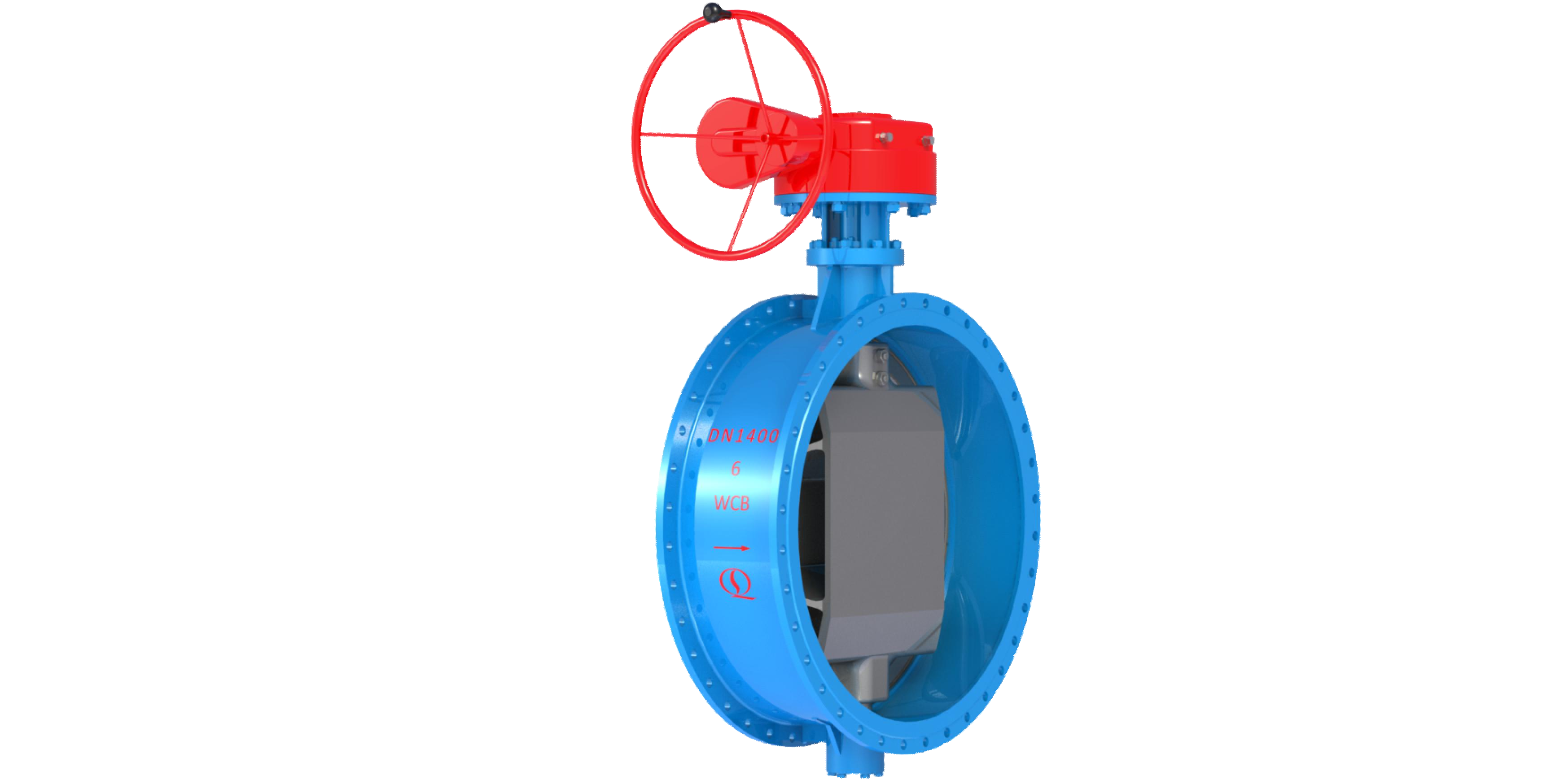
Bidirectional Metal Hard Sealed Seawater Butterfly Valve
Henan Quanshun Flow Control Science & Technology Co., Ltd.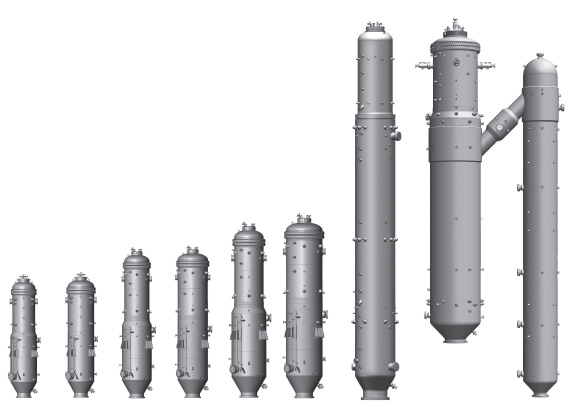
Gasification Furnace Series: Freely Combinable Aerospace Furnace
CHANGZHENG ENGLINEERING CO., LTD.
Steel Plates for Chemical Pressure Equipment
Gansu JISCO Group Hongxing Iron and Steel Co., Ltd.
New Environmentally Friendly Green Potassium Salt Collector
Chonfar Engineering and Technology Co., Ltd.