en.Wedoany.com Reported - New Found Gold Corp (TSX: NFG; NYSE American: NFGC), while advancing the regulatory process for its flagship Queensway Gold Project in Newfoundland and Labrador, Canada, has been required to add an Environmental Preview Report. However, the company has clearly stated that this requirement has not affected the modification progress of the Pine Cove Mill, and it still plans to transport the first Queensway ore to the mill in the fourth quarter of 2027.
Chris Tibbs, Minister of Environment, Conservation and Climate Change for Newfoundland and Labrador, has decided to require New Found Gold to complete an Environmental Preview Report for the Queensway Phase I. This decision stems from the company's environmental registration submitted on April 30, 2026, which entered the formal environmental assessment process on May 7, 2026. According to the province's statutory timeline, the company will receive guidelines for completing the EPR within 60 days of the Minister's letter. After submission, there will be a 35-day public review period, concurrent with a 45-day decision period for the Minister, which may be extended by two weeks—a provision the Minister has exercised once on this project. CEO Keith Boyle stated that for a greenfield project near the communities of Appleton and Gander, the government's request for more details was "not unexpected." The company has received an unprecedented level of government cooperation for the industry and reiterated its focus on unlocking the project's potential for all stakeholders while completing the review.
Regarding community engagement, New Found Gold has committed to updating its Gender, Equity, and Diversity Plan and continues to support local events. As of December 2025, ongoing exploration activities at Queensway involved 97 direct employees and 105 contractors, with 88% of those working at New Found Gold's site residing in Newfoundland and Labrador, and 61% from Central Newfoundland.
Concerning the production timeline of interest to investors, Boyle clarified that engineering, procurement, and construction work at Pine Cove has not slowed down. When asked if construction was on hold, he replied, "No, not at all." The company's plan follows two parallel tracks: advancing the EPR process for the Queensway greenfield mine; and, having received the permit amendment for the modification and expansion of the Pine Cove mill, breaking ground and beginning concrete pouring. Working backwards from the Minister's decision letter, the regulatory decision process itself (from EPR submission to the Minister's final ruling, including a possible two-week extension) takes approximately three and a half to four months. Considering the time for preparing and submitting the EPR, the actual overall timeline is six to nine months. However, this has not affected the current construction and milling schedule. The company reiterates its plan to transport the first batch of Queensway Phase I material to the mill in the fourth quarter of 2027, with a target for Phase I commercial production in the second half of 2028.
Phase I includes four open pits, waste rock storage facilities, topsoil storage facilities, stockpiles, a modular crushing and sorting plant, as well as supporting infrastructure such as haul roads, water management facilities, and a maintenance workshop. According to the Queensway Preliminary Economic Assessment, the initial capital cost is $155 million, targeting an average annual production of 69,300 ounces of gold, with all-in sustaining costs of $1,282 per ounce, from 1.15 million tonnes of ore at an average grade of 9.64 grams of gold per tonne. The project is expected to create over 200 full-time equivalent positions during construction and peak at over 230 full-time equivalent positions during operations.
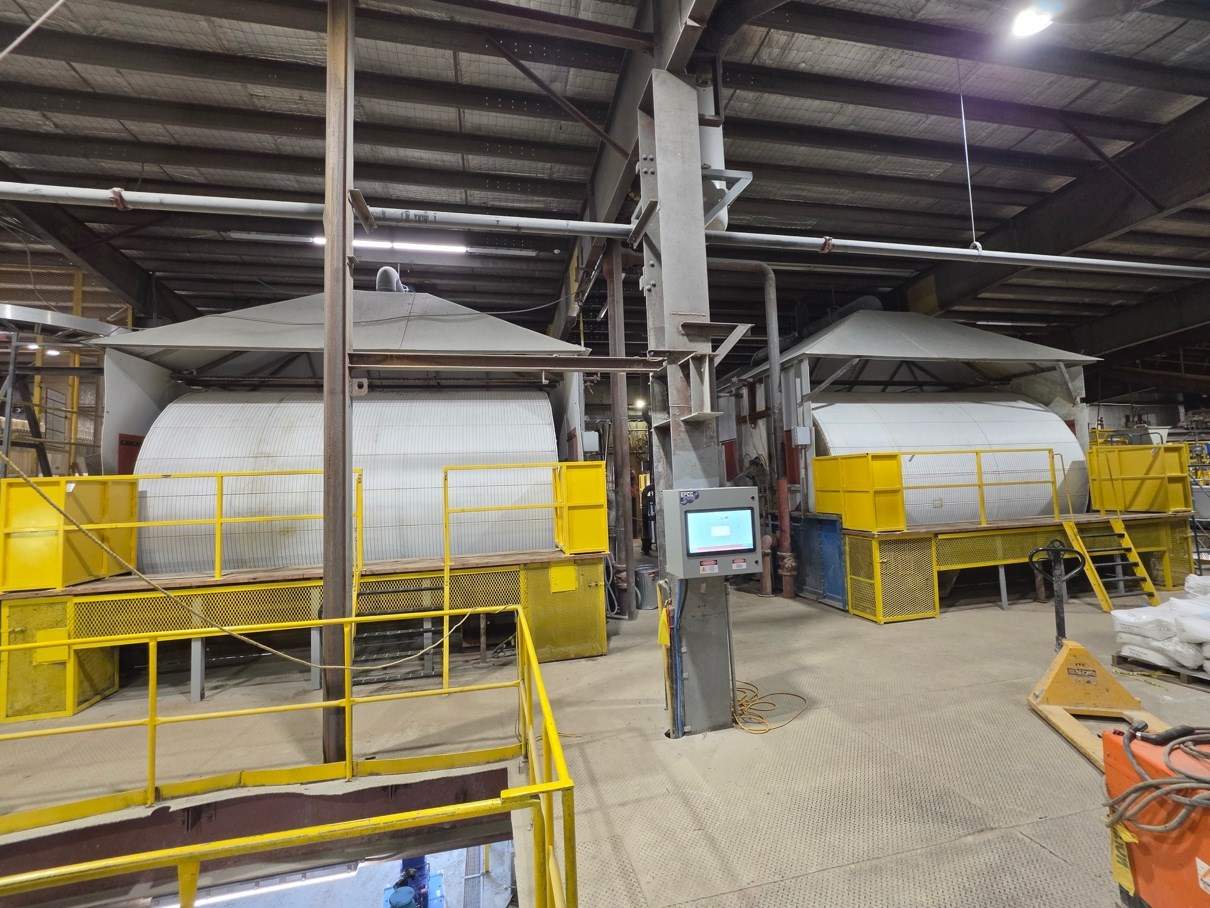
The core of the production plan is to convert the current 700 tonnes per day flotation-leach-Merrill-Crowe circuit at Pine Cove into a 1,400 tonnes per day gravity-carbon-in-leach circuit, the preferred method for processing the coarse, high-grade gold expected from Queensway Phase I. The permit amendment for the circuit conversion has been received, and additional permits required for the capacity expansion to 1,400 tonnes per day will be applied for in due course. Based on recent test work, the company expects the converted circuit to increase recovery from the Hammerdown deposit from the design standard of 87% to approximately 92%.
New Found Gold is using the ongoing ramp-up of the Hammerdown Gold Project as a testing ground for Queensway. Boyle stated that the company can demonstrate its experience in methods, drilling, and blasting, and show stakeholders what Queensway construction and operations will look like. Knowledge gained from the Hammerdown mine start-up will be directly applied to Queensway, supporting a more efficient ramp-up.
Looking ahead, New Found Gold expects to file an updated NI 43-101 technical report in the second half of 2026, including updated mineral resource estimates and design and cost estimates for all three phases. Other technical work includes ongoing metallurgical testing, infrastructure and water management planning, and initial engagement with the owner of the transmission line crossing the Queensway mineral rights. Boyle believes the EPR decision and Hammerdown achieving commercial production are the two most important catalysts that could drive the share price for the remainder of the year.
The 100% owned Queensway district-scale land package spans over 110 kilometers of strike length across two favorable fault zones. Simultaneously, the wholly-owned Pine Cove mill is fully permitted, eliminating reliance on third-party toll milling. The near-term production path via Hammerdown, targeting commercial production in the second half of 2026, is seen as a direct operational dress rehearsal for the larger Queensway construction. Management has clearly stated that the new EPR requirement has not impacted the construction, procurement, or the Q4 2027 first ore timeline. The company's listing upgrade to the Toronto Stock Exchange, support from cornerstone shareholder Eric Sprott, and conditional approval received in June 2026 have strengthened its capital markets profile. The upcoming technical report, expected in the second half of 2026, will provide investors with updated data for all three planning phases.
This update from New Found Gold reflects that investor demand for gold and silver exposure remains strong, with focus shifting to execution risk rather than commodity confidence. The company's decision to acquire and modify its own mill reflects a broader trend among junior and emerging producers seeking to control their own cost structures and processing schedules rather than relying on third-party toll milling. For greenfield mines near populated communities, the environmental assessment process has become a standard checkpoint, and how a company communicates has become a key differentiator for investor confidence. New Found Gold emphasizes collaboration with regulators, backed by concrete evidence that construction has continued uninterrupted.