en.Wedoany.com Reported - In power metering, energy monitoring and relay protection systems, the selection of a Current Transformer may appear straightforward, but it can directly affect data quality and protection reliability. Many projects first focus on primary current, secondary current and installation size. However, accuracy class, rated burden, secondary circuit impedance and actual operating current range are often more important for long-term performance.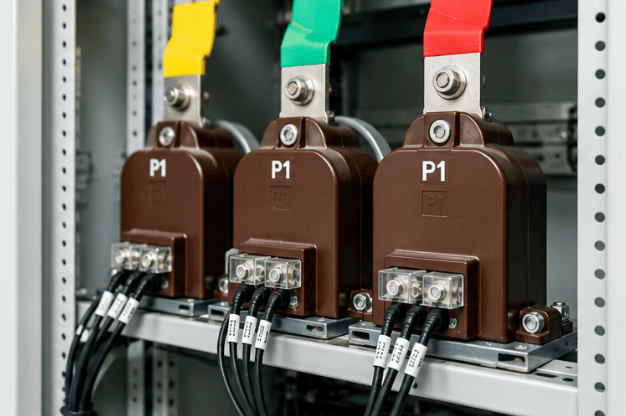
The main task of a current transformer is to convert primary current into a standardized secondary current according to a designed ratio. Common secondary rated currents include 1A and 5A. The choice depends on instrument distance, secondary circuit loss, equipment practice and system design. But the ratio is only the starting point.
For metering circuits, accuracy class determines current error and phase displacement. This directly affects electricity billing, energy accounting and sub-metering. For protection circuits, the current transformer must provide useful secondary output under fault current conditions. If the magnetic core saturates too early, the protective relay may receive a distorted signal and make an incorrect judgment.
Rated burden is also critical. The secondary side must supply the combined load of meters, protection devices, terminal blocks and cables. If the actual burden exceeds the design range, measurement error may increase significantly. If the burden is too low or poorly matched, measurement stability can also be affected. In retrofit projects, added meters, remote monitoring modules or new protection devices may require the existing current transformer to be recalculated.
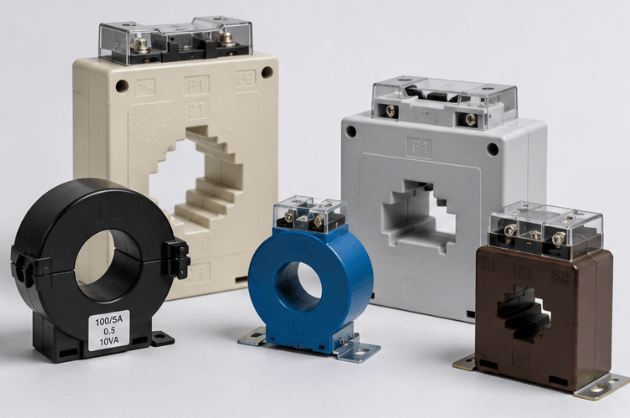
Different structures serve different applications. Window-type current transformers are suitable for busbars or cables passing through the core. Split-core types are useful for retrofit projects where shutdown should be minimized. Cast-resin current transformers are often used in medium-voltage switchgear and applications requiring higher insulation performance. Zero-sequence current transformers are commonly used for ground-fault detection.
As distributed energy, charging stations, storage systems and industrial digital upgrades expand, current transformer applications will become more segmented. Accuracy, stability, safety and installation efficiency will carry more weight in procurement. A proper selection is not about choosing the highest specification on paper. It is about matching the transformer with the real electrical system, measuring device and protection logic.