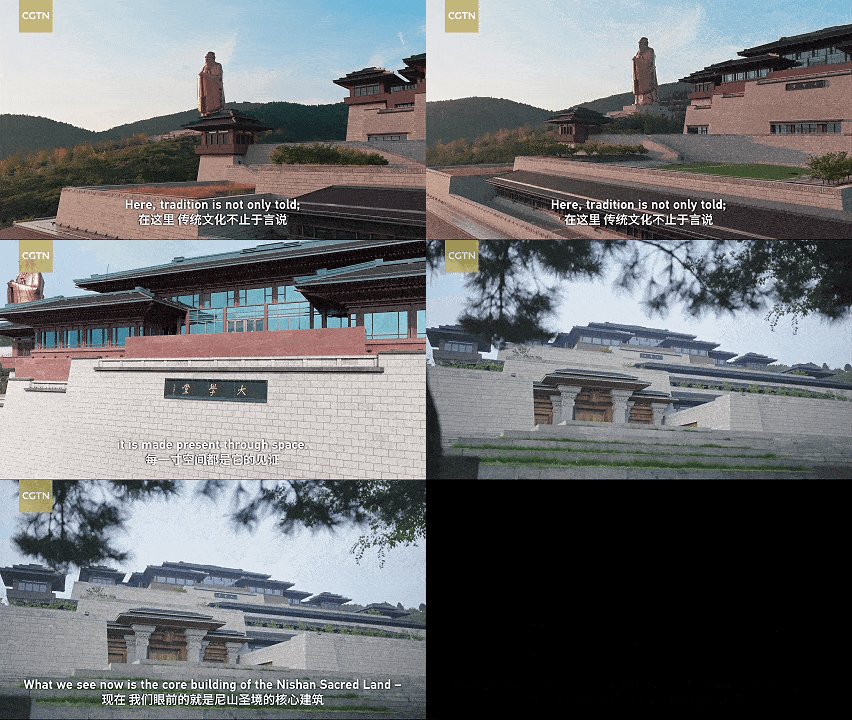
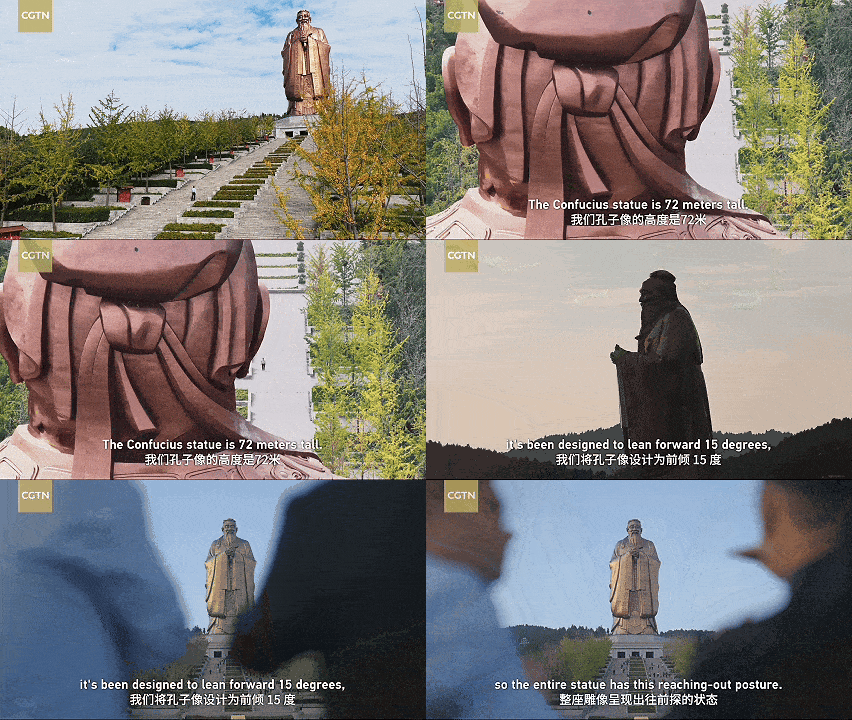
en.Wedoany.com Reported - Song Xiaolong, chief project engineer of China State Construction Eighth Engineering Bureau, led the construction challenge of the Nishan Sacred Land in Qufu. The core of this cultural park, built over more than a decade, is a 72-meter-tall statue of Confucius leaning forward at 15 degrees. Song explained that the statue was designed in a forward-leaning posture to create an interactive effect with visitors, giving the entire statue a sense of reaching out.
The combination of a 72-meter ultra-large volume and a 15-degree forward lean poses a severe risk of overturning, akin to creating a controllable version of the Leaning Tower of Pisa. To uphold the principle that the tilt is intentional while stability is non-negotiable, the construction team established a robust overall structural system: the base of the Confucius statue is connected via high-strength bolts to the steel structure columns of the foundation, which are in turn linked to uplift-resistant anchor rods, ultimately connecting to the ground. Song elaborated that these three components form a solid whole, fundamentally mitigating the safety risks posed by the tilt.
The meticulous carving of the Confucius statue's facial features was a critical process. Since ancient times, there has been a set of standards for Confucius's face: prominent whites of the eyes revealing sharpness, visible nostrils indicating flared nostrils, clear ear contours showing defined ears, and exposed teeth meaning two teeth are visible when the mouth is closed. Enlarging Confucius's image to 72 meters was no easy task. The statue's initial prototype was a small wood carving, and the construction team scaled it up three times proportionally, from 1 meter to 10 meters, finally settling at 72 meters. Each enlargement required finding a new balance between preserving the expression without distortion and ensuring structural feasibility.
Another core building of the Nishan Sacred Land is the Grand Hall of Learning, with a total scale of nine floors above ground and a height of 65 meters, built following the contour of the mountain terrain. It is the world's largest "Confucius building" of its time. The project team consulted numerous historical texts, using historical context as the core to tell the stories of Confucius and his disciples. The interior of the building extensively employs innovative techniques: using S-curve beam wood grain transfer technology to replace wooden purlins, aluminum square tubes instead of traditional wooden beams, and aluminum antique-style components to reduce the weight of ceiling and terminal equipment hangers while improving fire resistance.
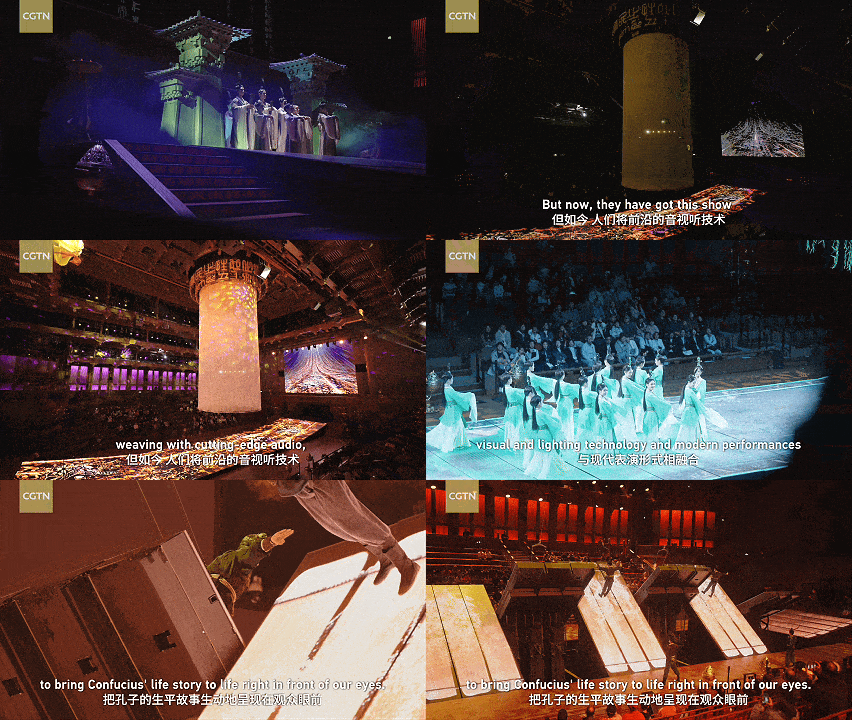
The Nishan Sacred Land integrates cutting-edge audio-visual technology with modern performance forms, vividly presenting the life story of Confucius to audiences. From the structural challenges of the 72-meter forward-leaning Confucius statue, to the fusion of ancient architectural forms with modern materials in the Grand Hall of Learning, and the empowerment of cultural dissemination through audio-visual technology, this project responds to the market demands of China's cultural tourism industry. Culture is becoming a tangible driving force for industrial development.