Zimbabwe Government Supports Namib Minerals in Restarting Redwing Mine
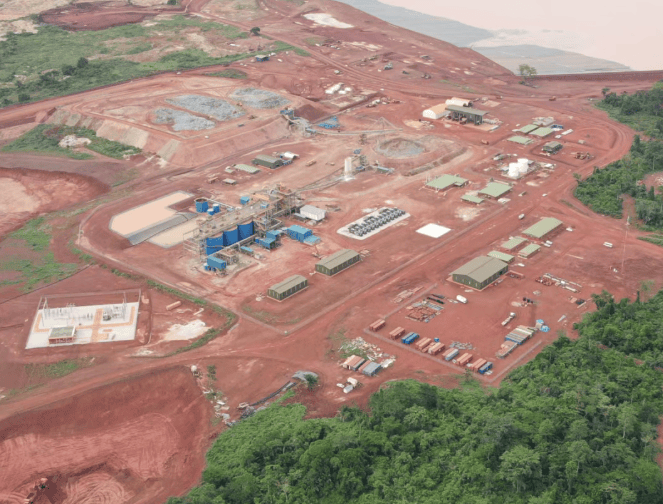
en.Wedoany.com Reported - Zimbabwe's Deputy Minister of Mines and Mining Development, Hon. Fred Moyo, recently conducted a site visit to the Redwing Mine in Penhalonga to assess the progress of its restart project and reaffirm government support. The visit is part of the ministry's national plan to bring mines into production, boost gold output, and support economic growth. The Deputy Minister inspected key facilities such as the dewatering system, pump stations, hoists, a newly commissioned substation, and rehabilitation works, and reviewed areas affected by illegal mining and unlicensed processing plants, emphasizing the government's intent to restore order and formalize operations on site.
Deputy Minister Moyo described the Redwing Mine as a "strategically important asset" for Manicaland Province and the national economy, stating that the government would maintain collaborative oversight through regular engagement as the project progresses. Located approximately 20 kilometers northeast of Mutare, the Redwing Mine has historically produced about 650,000 ounces of gold, with a remaining 1.18 million ounces in proven and indicated resources. The mine entered care and maintenance after former owner Metallon Corporation scaled back operations, leading to a period of artisanal mining activities, fatal accidents, and chaos on site.
Namib Minerals, which listed on the Nasdaq in New York in June 2025 through a business combination with Hennessy Capital Investment Corp VI, has allocated between $300 million and $400 million to revive the Redwing Mine and the Mazowe Mine, while also expanding output at its operating How Mine. The company is seeking strategic investors to revitalize these dormant assets. During the visit, Namib Minerals' National Managing Director, Tavepi Dafana, outlined the restart roadmap, confirming that dewatering work is restoring safe underground access, a definitive feasibility study is advancing to support larger-scale mining operations, and an exploration contractor will mobilize to the site this month.
The dewatering plan, initiated on January 29, 2026, has achieved significant progress. As of early July, approximately 1 million cubic meters of water had been pumped from underground workings, lowering the water level by nearly 22 meters. Total pumping capacity has been substantially enhanced following the successful restoration of the mine's connection to the national grid in collaboration with the Zimbabwe Electricity Transmission and Distribution Company (ZETDC). Grid restoration included the installation of new transmission lines, a substation, and transformers at the mine site. Four additional submersible pumps have been connected to the grid, accelerating the pumping rate to 1,400 cubic meters per hour. Reliable power restoration is critical for energy-intensive activities such as dewatering, underground ventilation, ore hoisting, and mineral processing.
The Deputy Minister's review of areas affected by illegal mining showed alignment between the government and Namib Minerals on coordinated action. The issue is not the presence of artisanal and small-scale mining (ASM), but how it is organized and made safer. By collaborating with ASM stakeholders, Namib Minerals can protect its assets and foster a new model where artisanal and large-scale mining complement each other.
During the visit, Namib Minerals outlined the project's expected benefits, including increased tax revenue for national and local governments, economic stimulation of Manicaland Province through local procurement of goods and services, and job creation for local communities, with employment expected to reach hundreds during the construction and operational phases. The restoration of the Redwing Mine's grid has already brought broader benefits to the Penhalonga community by improving power supply.
The government's reaffirmed support comes as Zimbabwe's gold industry undergoes a revival, with gold deliveries reaching 21.4 tons in the first half of 2026, the strongest performance since the record year of 2022. The revival of the Redwing Mine, along with other large-scale investments, positions the country to achieve its annual target of 50 tons in 2026. Namib Minerals is committed to sustained long-term growth, aiming to develop into a multi-asset mid-tier gold producer with an eventual annual output of 300,000 ounces. The restart of the Redwing Mine is central to this strategy, and with government support, community engagement, and technological progress proceeding as planned, this restart project is already underway.