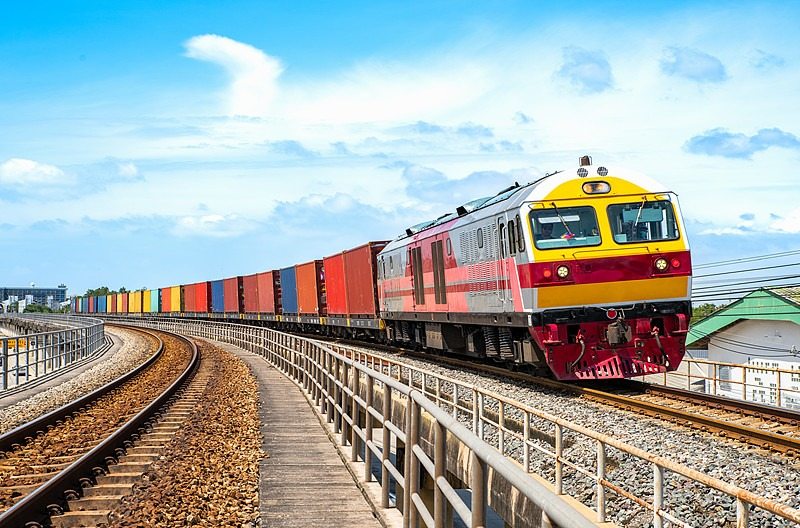
en.Wedoany.com Reported - Germany's large-scale railway network renovation is underway, with the federal government investing tens of billions of euros annually to comprehensively update infrastructure, advance network digitalization, and upgrade rolling stock. Under a ten-year infrastructure plan passed in 2025, Germany will allocate €150 billion to the railway sector by 2027 to address the current on-time rate of just 62.5%. The first railway investment plan, "Starke Schiene," launched in 2019 with €86 billion, was supplemented by an additional program at the end of 2023, further expanding the scope of works.
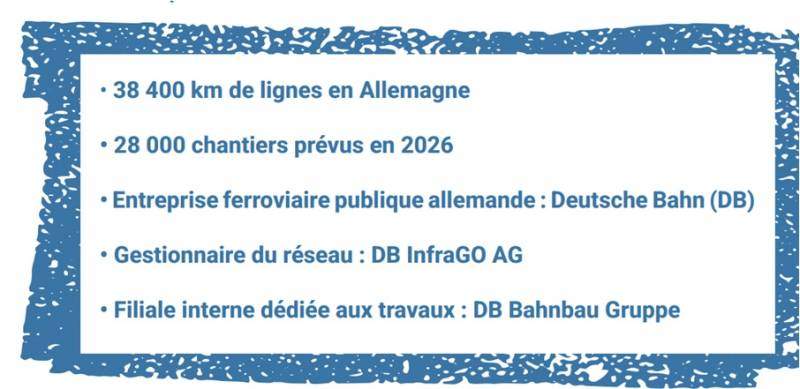
As early as 2024, Germany's annual railway investment reached a record €18.2 billion. Sascha Frölich, Managing Director of France's Eiffage Infra-Rail GmbH in Germany, stated that in 2026 alone, DB InfraGO AG will tender for nearly 2,000 kilometers of track, 2,100 sets of switches, and approximately 100 bridges—far exceeding the annual renewal mileage of previous years. The Hamburg-Berlin line renovation is a flagship project. This over 300-kilometer line costs €2.2 billion, with construction from August 2025 to June 2026, accounting for about 10% of Germany's railway renewal budget (€23 billion) for that year. Deutsche Bahn plans to focus on renovating "major corridors" across 40 lines, totaling 4,000 kilometers. The Frankfurt-Mannheim line (70 kilometers) was completed first, from July to December 2024, with nearly 300 passenger and freight trains operating daily on that route.
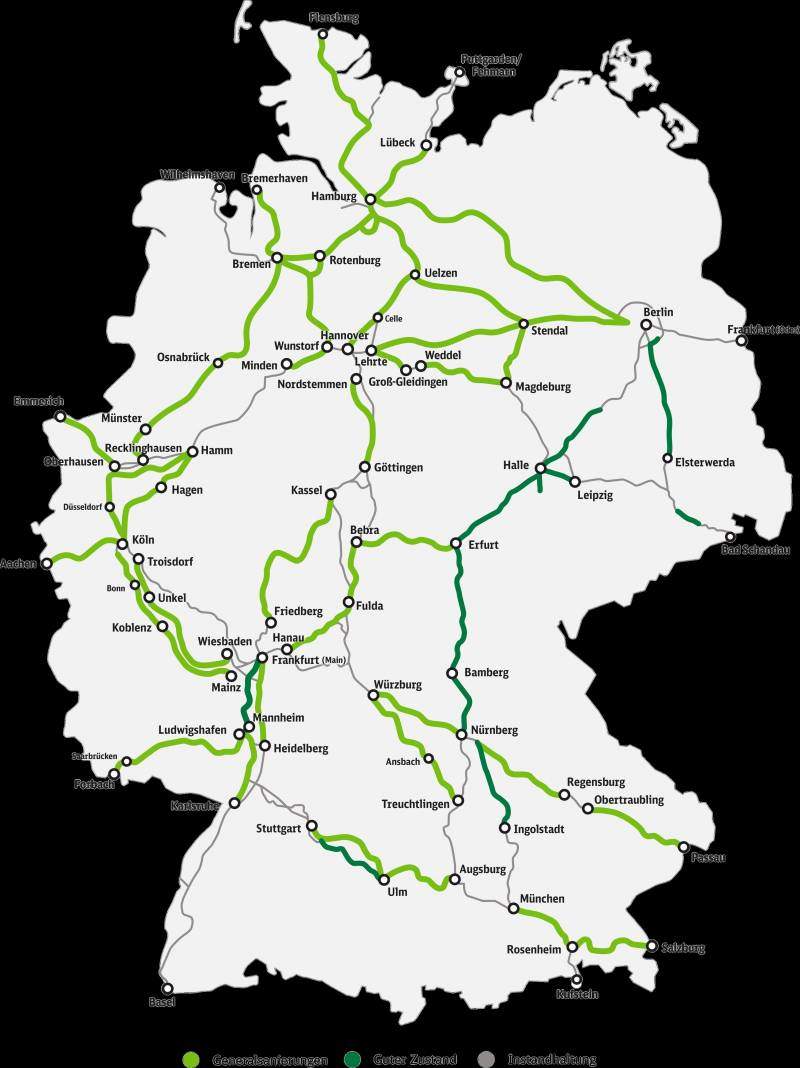
Germany's railway network is a dense grid, allowing for sectional closures and the use of alternative routes—a significant advantage for project progress. Rouven Althaus, Head of Onboard System Development at Matisa, noted that unlike in France, German railway construction sites often gather large amounts of equipment similar to that used in public works, such as cranes. Passengers are also accustomed to switching to buses during construction, and alternative routes can be quickly established. On the market side, Sascha Kettler, Franco-German head of Novium, stated that Germany is Europe's largest railway market, with 500 engineering operators. Large projects are typically handled by consortia of two or three major companies, collaborating with specialized small local firms. Notable domestic companies include Hochtief, Max Bögl, and Leonhard Weiss, while Austrian firms include Porr, Swietelsky Bahnbau, and Strabag (along with its subsidiary Züblin).
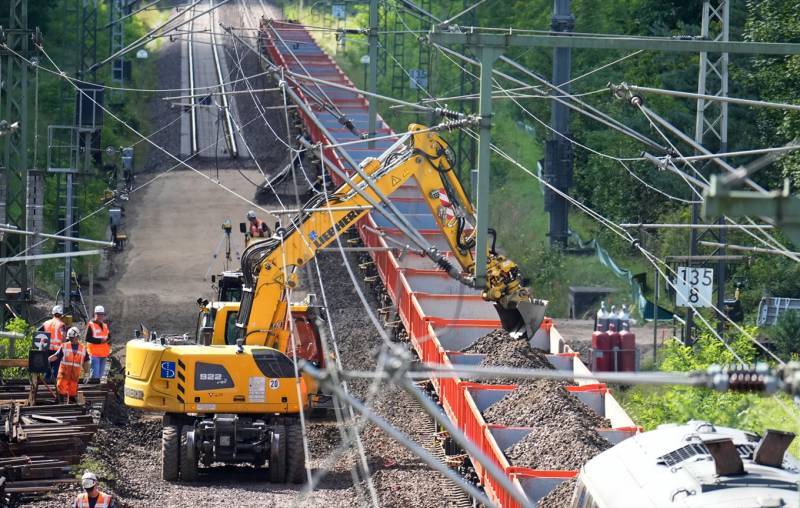
French engineering companies operating in Germany include ETF, Colas Rail, and Eiffage. Colas Rail, through its German subsidiaries Hasselman and NTG Bau, is involved in the Regis-Breitingen line expansion, which will increase train speeds from 120 km/h to 160 km/h, and participated in the renovation of Röblingen am See station, with a contract value of nearly €70 million. Eiffage established its presence in Germany by acquiring Wittfeld in 2004 and Heitkamp Rail in 2009, integrating them into Eiffage Infra-Rail, which has 700 railway-dedicated employees and operates across Germany and Scandinavia. ETF entered the German market by acquiring THG Baugesellschaft in 2017 and AGT GmbH in 2021. TSO President Romuald Hugues told BTP Rail in April that the German market is unique, requiring companies to become local players to enter, and TSO currently has no intention of following the acquisition path. In the rolling stock and equipment sector, French companies such as Alstom-Bombardier and Thales (whose ground transportation systems were sold to Hitachi Rail in 2024) have also secured significant contracts.
However, the German market has high entry barriers, with extremely stringent standards and certification requirements. Guillaume de Gavre, Civil Engineering Project Director at Eiffage, advises entering only after thoroughly understanding the market or establishing relationships. Xhinol Alilaj, Head of Certification at Swiss manufacturer Matisa, described the German market as "the Rolls-Royce of certification," where every detail is scrutinized. Despite this, Matisa has sold three tamping machines in Germany and plans to sell three more. The "French Railway Industry Team" and Business France are assisting French companies in positioning themselves in the market, identifying tender projects, and entering Germany's public procurement sector. Germany's massive investments in digitalization (ETCS, digital signaling centers) and electrification also present new opportunities for French technical experts.