Rwanda and Estonia Advance Cooperation in Digital Government and AI
en.Wedoany.com Reported - Recently, Rwandan President Paul Kagame and Estonian President Alar Karis held talks in Geneva, Switzerland, focusing on strengthening cooperation in areas such as digital innovation, e-governance, and artificial intelligence applications. The meeting, held during the "AI for Good Global Summit," went beyond policy exchanges to address digital infrastructure, including digital public service systems, government informatization capabilities, and AI deployment rules.
The cooperation between Rwanda and Estonia first targets the field of e-governance. Estonia has long advanced the digitization of government services, developing a mature model in e-governance, digital public services, and tech ecosystem building. Rwanda, meanwhile, aims to further improve the digitalization of public services and enhance government management, social services, and public resource allocation through digital technologies. The discussions laid the groundwork for future exchanges and project alignment in areas such as digital identity, online government affairs, public data management, and digital service platforms. However, no specific cooperation projects, implementation timelines, or construction scales have been announced at this stage.
Building a digital government is not merely about moving offline services online. Its core also includes unified identity authentication, government system connectivity, data exchange, information security, and public service portal development, enabling different government departments to share and access data under unified rules and provide stable services to the public through online platforms. By prioritizing e-governance as a key area of cooperation, Rwanda and Estonia indicate that their focus has extended from individual software applications to the entire digital government operational system.
Estonia's experience in digital transformation serves as a crucial foundation for these cooperation discussions. The country is widely regarded as one of the most advanced in building a digital society, with extensive practical experience in networked public services, electronic government operations, and tech industry development. Communication technology company Skype originated in Estonia, reflecting the country's industrial base in internet communications, software development, and digital entrepreneurship ecosystems.
Artificial intelligence has emerged as another key theme in the cooperation. Before their talks, Paul Kagame and Alar Karis jointly participated in the launch of the "AI for Good Global Committee," supported by the United Nations, with Kagame co-chairing alongside Salesforce CEO and co-founder Marc Benioff. Alar Karis is a founding member of the committee, which also includes Icelandic President Halla Tómasdóttir.
The committee brings together 44 representatives from governments, tech companies, UN agencies, investment institutions, and international organizations, focusing on how AI technology can be developed, deployed, and used globally. Its main tasks include enhancing trust in AI, promoting responsible innovation, expanding technology accessibility, and ensuring that the economic and social benefits of AI are shared across more countries and regions.
From a digital infrastructure perspective, the promotion of AI requires support from government data, computing platforms, communication networks, and public service systems. Only when models and applications are integrated with stable data resources and digital service platforms can they enter practical scenarios such as education, public administration, social services, and business operations. Therefore, the cooperation between Rwanda and Estonia on AI and e-governance essentially involves synergy among digital government platforms, data governance mechanisms, and AI application environments.
In recent years, Rwanda has consistently emphasized the role of digital technology in driving public services and economic development. By discussing cooperation with Estonia, Rwanda can draw on its experience in e-governance and digital public services while tailoring digital construction models to its own local government management and social service needs. At this stage, neither side has disclosed whether they will establish a joint working group, launch pilot projects, or deploy specific systems. Further progress will depend on formal cooperation documents and project arrangements.
The establishment of the committee also adds an international collaborative platform for bilateral cooperation. With the participation of governments, tech companies, international organizations, and investment institutions, AI projects are no longer solely focused on technological research and development but must also address governance rules, social impacts, technology普及, and cross-border cooperation. Through this platform, Rwanda and Estonia can continue to engage in global discussions on AI rules and application models, translating relevant experience into references for their domestic digital public service construction.
These talks reflect that digital technology cooperation is extending from pure software and communication applications to e-governance, AI governance, and the digitalization of public services. Key points to watch going forward include whether the two sides establish a long-term cooperation mechanism, launch digital government demonstration projects, and whether AI technology can achieve practical applications within Rwanda's public service system.
Related Products


Comprehensive Mining Automation Control System
Beijing Tianma Intelligent Control Technology Co., Ltd.

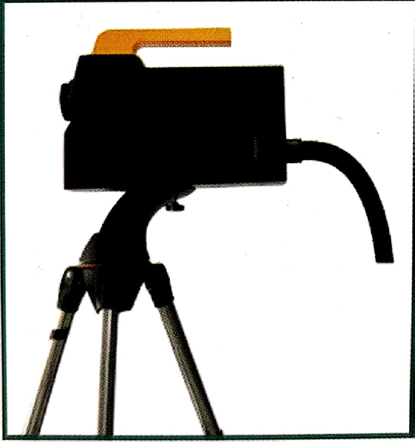
Automatic Aiming Laser Remote Obstacle Removal Robot
Pinggao Group Weihai High-Voltage Apparatus Co., Ltd.
Hot Selling 10 Inch Intel N5100 I5 I7 FHD 8 +128GB 16+256GB Win10 Pro Win11 Pro 4G 5G Rugged Tablet PC Pad with NFC Barcode
Highton Electronics Co., Ltd.
GYTA Type Non-Self-Supporting Aerial/Duct Optical Cable
TONGDING INTERCONNECTION INFORMATION CO., LTD.


Multi-function Marine Monitoring Low-altitude Detection Radar Sea-air Boundary Ocean Dynamic Environment Measurement
Chengdu Dixin Technology Co., Ltd.


TWP16 P-Band Tropospheric Wind Profile Radar
China Huayun Meteorological Technology Group Co., Ltd.