Singapore's Singtel Teams Up with Four-Country Operators to Deploy Asia-Pacific IoT eSIM Network
en.Wedoany.com Reported - On July 13, Singapore telecommunications operator Singtel, France's Thales, and the Asian mobile operator alliance Bridge Alliance announced that they have jointly completed the deployment of a multi-operator enterprise IoT eSIM connectivity network with Australia's Optus, Thailand's AIS, and the Philippines' Globe Telecom. The platform has passed interoperability tests among the four mobile operators and can now support enterprises in uniformly activating, adjusting, and managing IoT device connections across multiple countries and mobile networks in the Asia-Pacific region. The partners call it the world's first multi-operator eSIM connectivity network for enterprise IoT.
The focus of this initiative is to integrate IoT connectivity capabilities, previously scattered across different countries, operators, and management systems, into a centralized platform. In the past, when deploying smart meters, vehicle-mounted terminals, payment devices, routers, or industrial gateways in multiple markets, enterprises typically had to sign separate service agreements with local operators and independently handle SIM card procurement, device activation, plan configuration, and connection monitoring. When devices moved across borders or needed to switch operators, it could also involve replacing physical SIM cards and on-site maintenance. With the new platform online, enterprises can remotely manage device connections through a unified portal, reducing redundant configuration across different operator platforms.
From the perspective of information and communication infrastructure structure, this project does not build a new independent wireless network to replace existing mobile communication networks. Instead, it adds unified eSIM configuration, operator connection orchestration, and device lifecycle management layers on top of the existing mobile networks of Singtel, Optus, AIS, and Globe Telecom. The underlying radio access, core network, and international roaming capabilities are still provided by each country's operator. Thales' IoT eSIM system is responsible for remotely issuing and managing operator profiles, while Bridge Alliance connects different member networks, enabling enterprise devices to maintain unified management across multiple operator coverage areas.
The platform adopts the GSMA SGP.32 IoT eSIM specification. SGP.32 specifies the remote configuration, management interface, and security functions of the embedded universal integrated circuit card for IoT terminals with limited network capabilities or lacking user interfaces, allowing devices to receive new operator configurations without relying on users to manually scan QR codes or enter settings pages. The completion of multi-operator interoperability tests for this system means that the basic interface adaptation between different operator networks, eSIM management platforms, and device configuration processes has been achieved, establishing technical conditions for subsequent batch access of enterprise terminals.
In actual operation, devices equipped with eSIMs can access corresponding operators based on available networks and platform policies when entering different countries. If connection anomalies occur, the system can switch to other participating networks through backup configurations and recovery mechanisms, reducing the risk of long-term device disconnection due to a single operator failure. For vehicle navigation and remote software upgrades, communication connections need to be continuously maintained as vehicles move across borders; smart meters, payment terminals, and industrial gateways may operate on-site for years, making manual SIM card replacement costly. Multi-operator remote configuration can reduce on-site maintenance work after device installation.
The initial network coverage includes Singapore's Singtel, Australia's Optus, Thailand's AIS, and the Philippines' Globe Telecom, with plans to integrate more Bridge Alliance member operators in the future. As the participating network expands, enterprises can extend IoT devices to more Asia-Pacific markets through the same platform. However, differences in mobile network coverage, frequency bands, roaming rules, and service guarantees across countries remain, so the platform's subsequent development focus will be on integrating new operator interfaces, ensuring cross-network configuration consistency, managing batch devices, and enhancing failover capabilities.
Currently, the partners have not yet disclosed the enterprise customers formally connected to the platform, the initial number of devices, or service pricing. At this stage, the clearest project milestone is that the four operators have completed interoperability tests, transitioning the platform from technical validation to enterprise IoT deployment. Future progress will primarily be reflected in the addition of more operators, batch access of devices such as connected vehicles and smart metering, and whether stable remote configuration and unified monitoring can be maintained across different national networks.
Related Products


Industrial and Commercial Point-Type Gas Detector
Jinan Benan Technology Development Co., Ltd.

G.652.D Wavelength-extended Non-dispersion Shifted Single-mode Optical Fiber
HONGAN GROUP CO., LTD.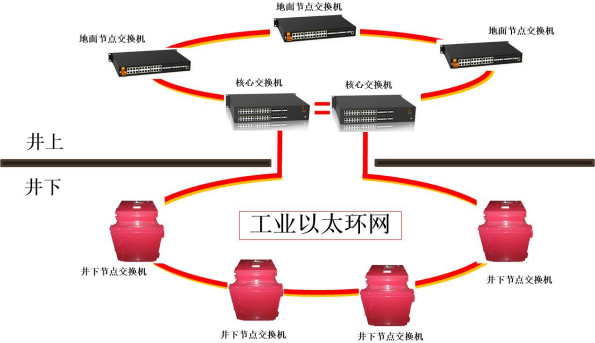
Mine Explosion-proof and Intrinsically Safe Industrial Ethernet Ring Network (10 Gigabit/Gigabit)
Chongqing Mas Sci&Tech Co., Ltd.

Comprehensive Mining Automation Control System
Beijing Tianma Intelligent Control Technology Co., Ltd.
One-Stop Steward Service for the Entire Logistics System Integration Chain
Zhongding Intelligent (Wuxi) Technology Co., Ltd.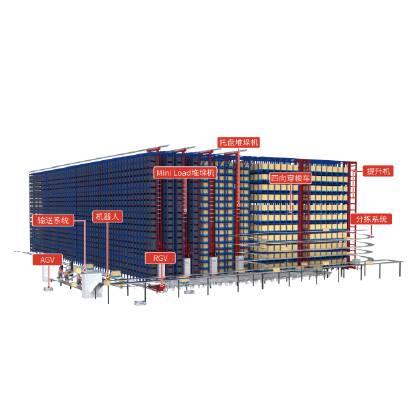



Conveyor Belt Intelligent Monitoring System
LUO YANG WIRE ROPE INSPECTION TECHNOLOGY CO., LTD.
Automatic Aiming Laser Remote Obstacle Removal Robot
Pinggao Group Weihai High-Voltage Apparatus Co., Ltd.