Hawaiian Telcom Advances Kunoa North Submarine Cable Construction, Deployment Scheduled for 2028
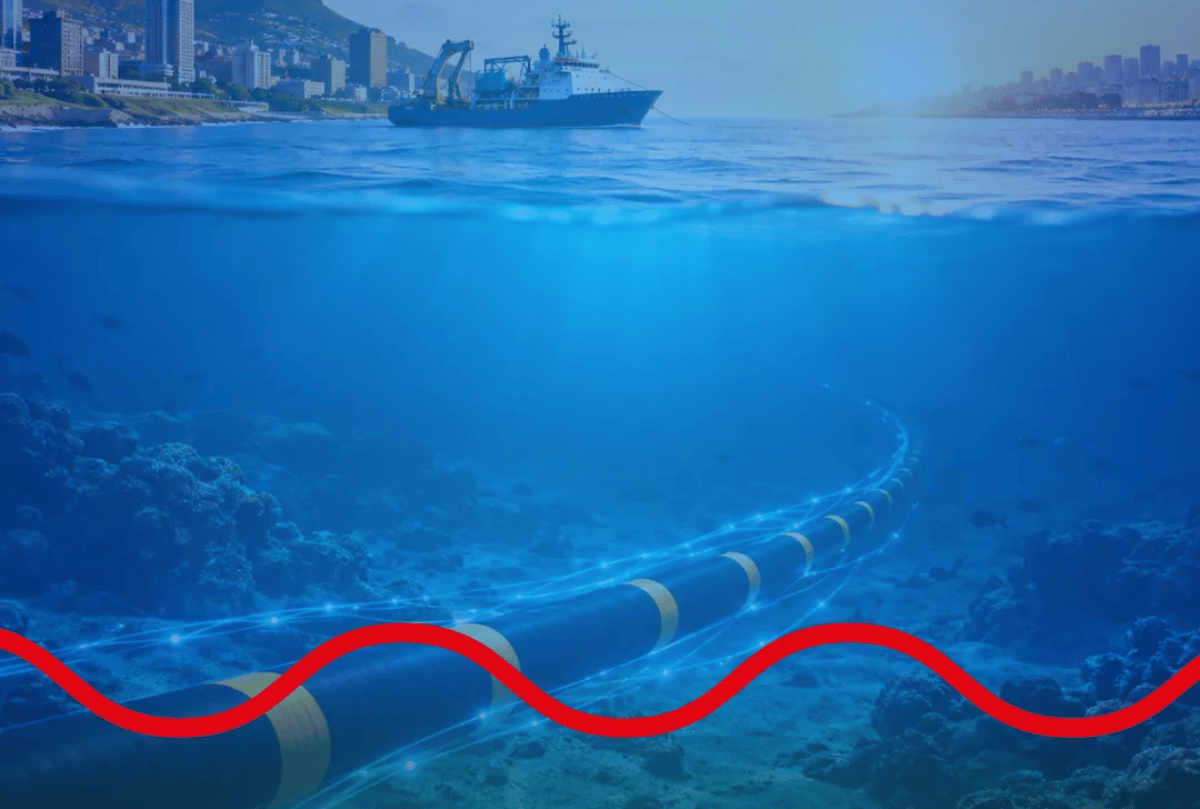
en.Wedoany.com Reported - Recently, U.S. submarine telecommunications engineering consultancy WFN Strategies was commissioned by U.S. telecom operator Hawaiian Telcom to provide procurement representative and offshore engineering supervision services for the Kunoa North inter-island submarine fiber optic cable project. The project plans to conduct marine route surveys in 2026 and implement submarine cable deployment in 2028. Upon completion, it will enhance inter-island communication channels in the northern Hawaiian Islands and improve the line redundancy and failover capabilities of the existing fiber optic network.
Under the contract arrangement, U.S.-based WFN Strategies will deploy offshore engineering personnel aboard survey and construction vessels to supervise project implementation on behalf of Hawaiian Telcom. The scope of services extends from the 2026 marine route survey through the 2028 submarine cable deployment, including verifying contractor compliance with contract terms, confirming adherence to technical specifications, safety requirements, and environmental conditions, and independently documenting and reporting on-site progress, engineering issues, and contractor operations.
The marine route survey is a critical engineering phase prior to submarine cable deployment. The survey work involves determining seabed topography, underwater obstacles, geological conditions, and suitable routes for cable burial, providing a basis for subsequent route design, cable length estimation, landing section construction, and offshore deployment. WFN Strategies' role in this project is not merely technical consulting but encompasses on-site supervision throughout the offshore survey and deployment phases, enabling Hawaiian Telcom to continuously monitor engineering progress and construction quality.
Kunoa North is an inter-island submarine fiber optic communication system designed for the Hawaiian Islands, including submarine lines and onshore connection facilities. The project adopts a northern route, forming a communication path in a different direction from Hawaiian Telcom's existing southern fiber optic line. When one line experiences a fault or requires maintenance, partial communication traffic can be rerouted through the other line, thereby reducing the impact of a single route outage on inter-island internet, government communications, and public service networks.
According to the published technical plan, the submarine portion of Kunoa North will be built as a high-capacity, low-latency, repeaterless fiber optic system and integrated into Hawaiian Telcom's inter-island medium-haul communication network. The repeaterless design means no underwater signal amplification equipment is placed along the submarine line, simplifying the system structure, but requiring line design based on island distances, fiber loss, and terminal equipment capabilities. The complete route, number of fiber pairs, designed transmission capacity, and landing locations have not yet been fully disclosed.
The construction cost of the Kunoa North project is approximately $87 million, including $37 million in project funding from the U.S. National Telecommunications and Information Administration, with the remaining $50 million borne by Hawaiian Telcom. Previously, Barbados-based I.T. International Telecom Marine was designated as the turnkey contractor responsible for the design, supply, and installation of the submarine cable system, with the overall project scheduled for completion in 2028.
From a construction process perspective, the project has now finalized the selection of the main submarine cable contractor and offshore engineering supervision unit. The next steps will focus on marine route surveys, detailed engineering design, cable production, landing facility preparation, and offshore deployment organization. WFN Strategies will conduct on-site supervision on survey and cable-laying vessels, verifying that contractors execute work in accordance with contracts, technical and safety requirements, and promptly recording sea condition changes, construction deviations, and on-site issues.
Kunoa North is not a transoceanic backbone cable connecting Hawaii to other countries and regions; its primary role is to improve the communication network within the islands. The Hawaiian Islands are separated by sea, and inter-island data transmission relies on submarine fiber optic systems. With the addition of the northern line, the existing southern route will no longer bear the full burden of inter-island communication traffic, and network operators can adjust transmission paths based on faults, maintenance, or traffic changes.
The project will also align with the Hawaii Connect Kākou broadband initiative, providing inter-island medium-haul network support for homes, businesses, government agencies, and critical public services. After the backbone and medium-haul submarine cables are completed, communication capacity still needs to be extended to residential areas, commercial facilities, and public institutions via onshore fiber optic and access networks. Therefore, Kunoa North serves as an inter-island backbone link in the Hawaiian Islands' fiber optic network construction, rather than a standalone submarine line operating independently.