en.Wedoany.com Reported - The U.S. steel market has experienced a counter-seasonal uptick during the traditional summer slowdown (between Memorial Day and Labor Day), with fuel surcharges and regional freight premiums emerging as two factors driving up steel prices.
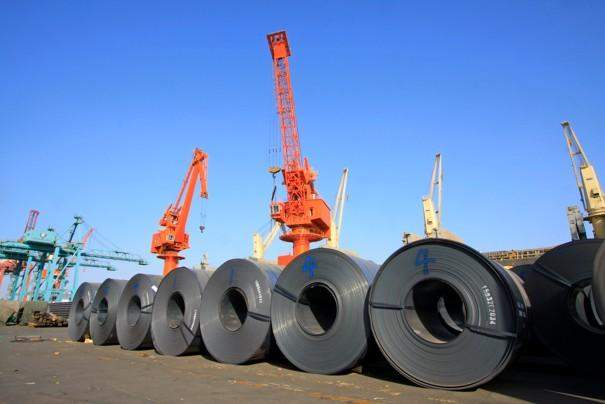
Spot market buyers report modest weekly price increases, a trend confirmed by public spot price announcements from mills such as Nucor. According to an assessment by Steel Market Update on June 9, average transaction prices for hot-rolled coil ranged between $1,080 and $1,150 per short ton, with most deals concluded at $1,115 per short ton. In the same period of 2025, the average spot price for domestic hot-rolled coil was $860 per short ton; in 2024, it stood at $710 per short ton. From galvanized products to plate, all domestic steel products have followed a similar trajectory, with hot-rolled coil prices up 33.7% year-on-year and 61.9% higher than in 2024. Domestic mill lead times have also extended by several weeks.
The current market strength can be attributed to a series of conditions tightening domestic supply, with the core issue being the limited ability of domestic mills to meet both contractual volumes and additional spot market demand. On the demand side, U.S. industries have moved past the analysis paralysis caused by tariff uncertainty in 2025, with buyers turning to domestic producers to fulfill customer needs. Steel demand from the data center sector continues to surge; according to data released by Construct Connect News in May 2026, year-to-date construction starts for data centers reached $49.5 billion, compared to $13.6 billion in the same period last year. The Dodge Construction May index report indicates that construction demand in healthcare, government, and religious sectors has driven growth. Sentiment among service centers, OEMs, and processors has remained stable since February, with their order books supporting steel demand.
On the supply side, the strictly enforced 50% Section 232 tariff (25% for steel imports from the UK) has reduced the volume of steel available in the market, funneling a large number of inquiries that would have gone to foreign suppliers toward domestic mills. Purchasing imported steel requires months of advance planning, but most buyers did not place orders in the first quarter before demand reached current levels. Multiple market sources indicate that even if the market conditions had been anticipated, speculative buying would not necessarily have been pursued. The ripple effects of tariffs have also impacted domestic production: U.S. manufacturers reliant on imported steel billets have had to reconfigure their supply chains, while domestic producers face pressure to either secure domestic billets or pay the 50% import tariff. Meanwhile, some domestic production facilities have undergone maintenance shutdowns, further shifting demand to other already strained facilities.
To adapt to the current market, multiple buyers have told SMU that they welcome the return of imported steel. They believe that large service center groups—such as the merger of Ryerson and Olympic, and the deal between Worthington and Kloeckner—have created market behemoths, and that small and medium-sized service centers and end-market buyers fear their businesses may not survive without imports. Sources in the Midwest, who previously relied solely on domestic steel, have prepared for imports and placed orders, accepting them as long as distributors match domestic pricing, lead times, and steel quality.
As long as consumer demand for steel exceeds the supply capacity of domestic mills, the market heat is unlikely to subside. When imported steel enters the U.S. and buyers have ample supply, the slowdown may arrive in winter. Given the current pace of demand, it appears difficult for mills to catch up, optimize operations, and expand capacity before imports become prevalent in the market again. Whether buyers will lobby to reduce or eliminate the 50% Section 232 tariff as foreign steel fills the domestic gap remains to be seen.