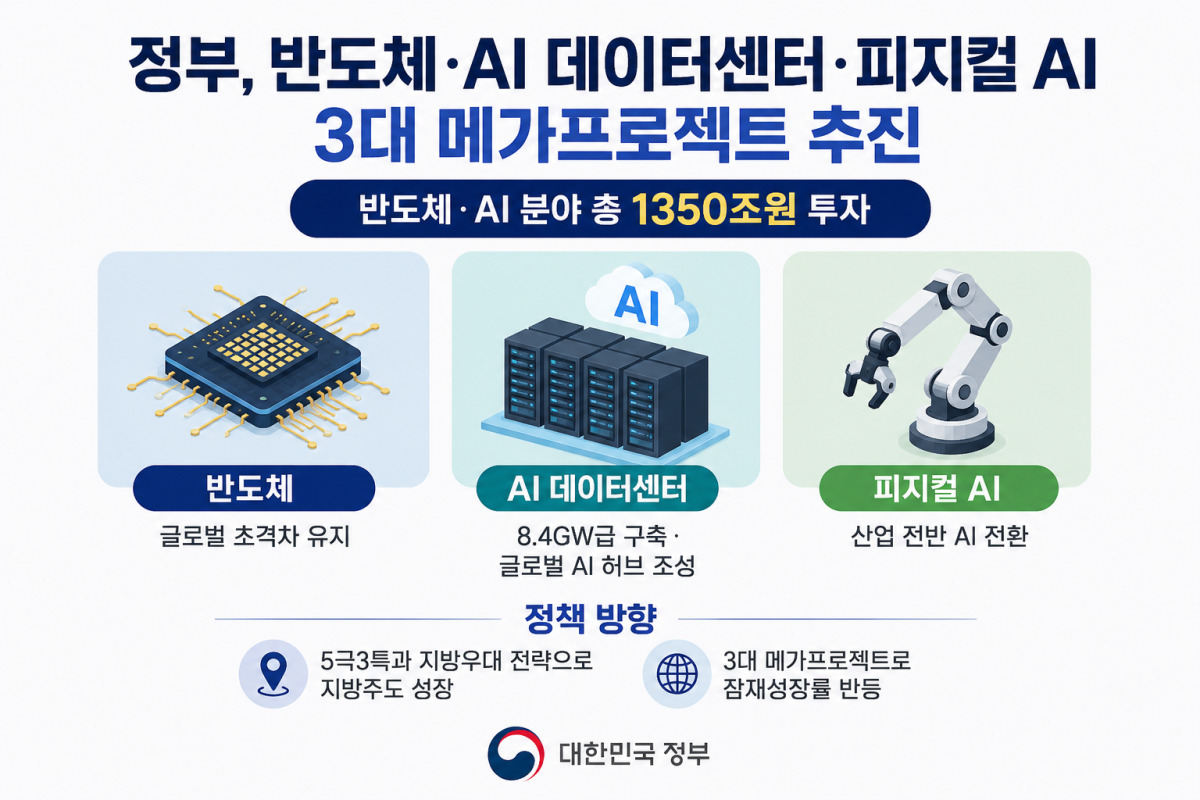
en.Wedoany.com Reported - The South Korean government has designated semiconductors, artificial intelligence (AI) data centers, and physical AI as the "three mega projects," planning to invest a total of 1,350 trillion won in the semiconductor and AI sectors to boost the nation's potential growth rate.
On the 14th, the government announced the "2026 Second Half Economic Growth Strategy," jointly formulated by relevant ministries, at a Cabinet meeting, which includes the aforementioned content. The government aims to maintain a global super-gap centered on the three mega projects while promoting region-led growth through the "five poles, three specialties" and regional preferential strategies.
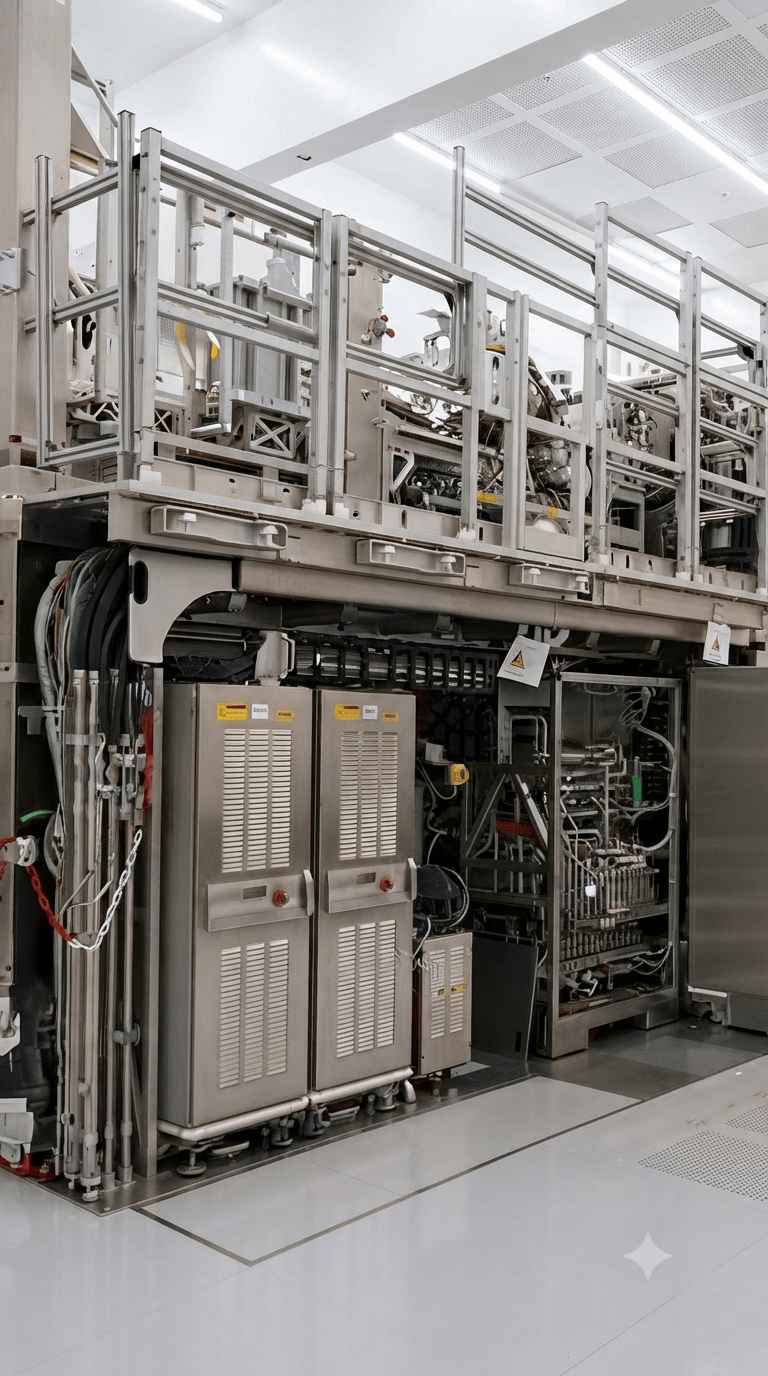
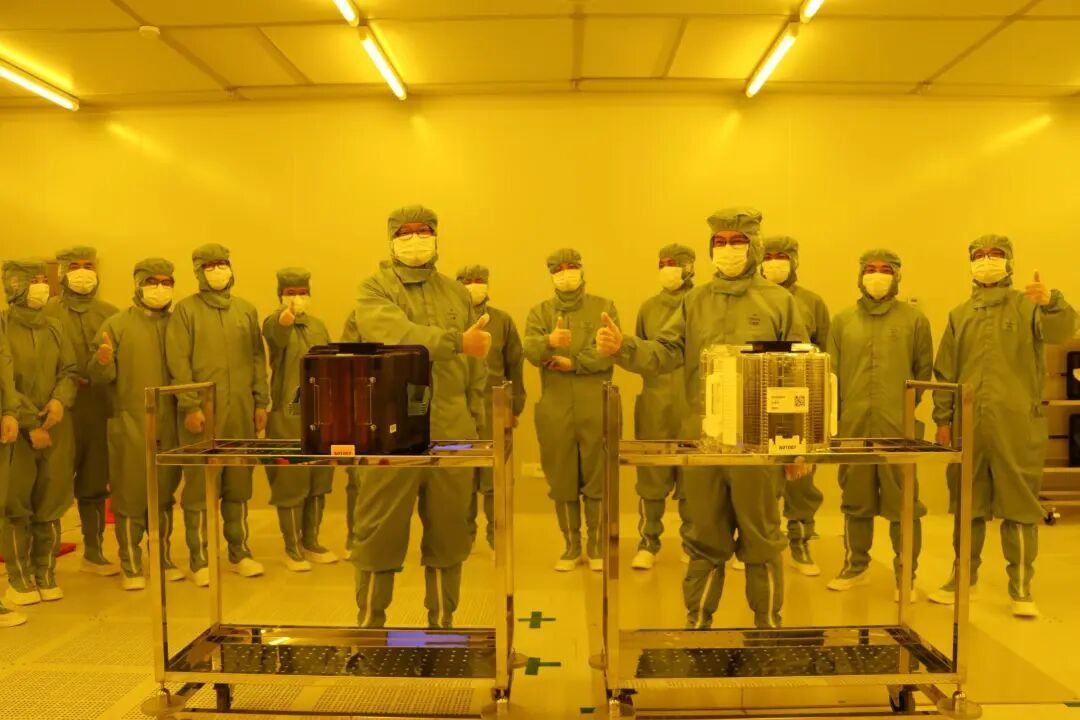
In the semiconductor sector, the government decided to build an irreplaceable K-semiconductor ecosystem by supporting next-generation semiconductors. First, it will accelerate the completion of the capital area wafer fabs (Yongin and Pyeongtaek), expanding memory semiconductor production capacity twofold within five years. In Yongin and Pyeongtaek, the construction period for wafer fabs will be significantly shortened, and a "Trinity Fab" testing platform for advanced semiconductor materials, components, and equipment will be established. In the southwestern region, four semiconductor wafer fabs will be built, with a total investment of 800 trillion won. The government plans to develop the southwestern region into a second semiconductor production base, rapidly supplying power, water, and other infrastructure, and establishing an advanced packaging verification center centered on leading companies, universities, and research institutions.
Additionally, the Chungcheong region will be developed into a packaging hub by investing 156 trillion won to build a High Bandwidth Memory (HBM) wafer fab. The Yeongnam region will leverage its existing industrial base to become an innovation hub for next-generation semiconductors, materials, components, and equipment. Semiconductor R&D support will also be expanded. Following HBM, support will be provided for next-generation high-performance, low-power memory, AI semiconductors for data centers, NPUs for future automobiles, robotics, and defense, power semiconductors, and advanced packaging technology development. The government will also increase the number of semiconductor-specialized universities and semiconductor academies to accelerate the training of 100,000 semiconductor professionals. It plans to establish a special account for strengthening the competitiveness of the semiconductor industry to focus on supporting policy financing such as the National Growth Fund.
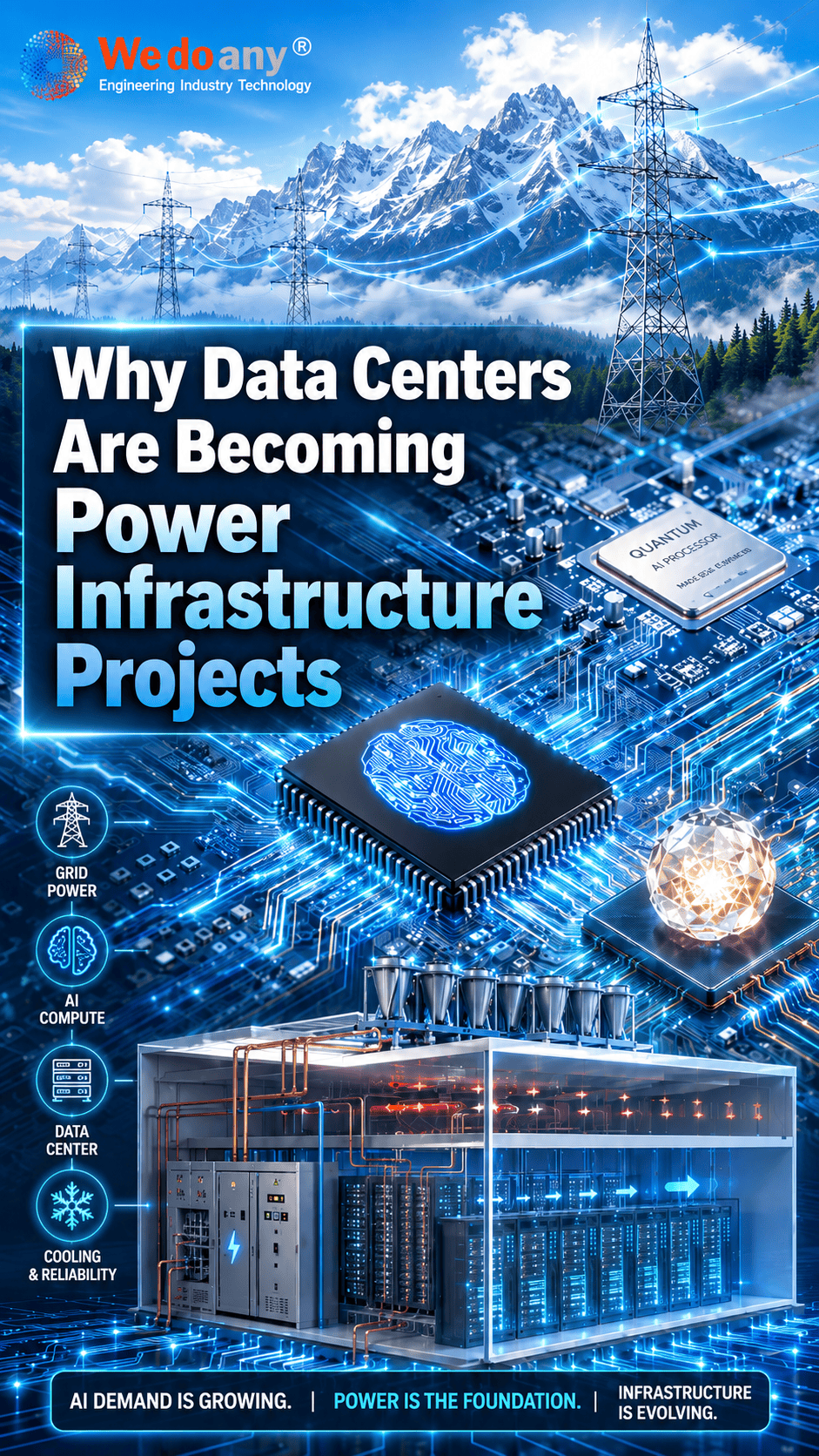
In the AI data center sector, the government is fostering it as a national strategic industry. To build an 8.4GW-class AI data center, 550 trillion won will be invested, including attracting foreign investment. Construction is scheduled to begin in the first half of 2028, with phased operations starting from 2029. The AI data center will be centered around Ulsan, Donghae, and Sejong. The government will support the localization of data center IT, cloud, software, power, cooling, and other technologies and equipment, and promote export industrialization. Following the implementation of the Special Act on AI Data Centers, specialized clusters will be designated, and upstream and downstream industries will be fostered to make AI data centers regional industrial hubs.
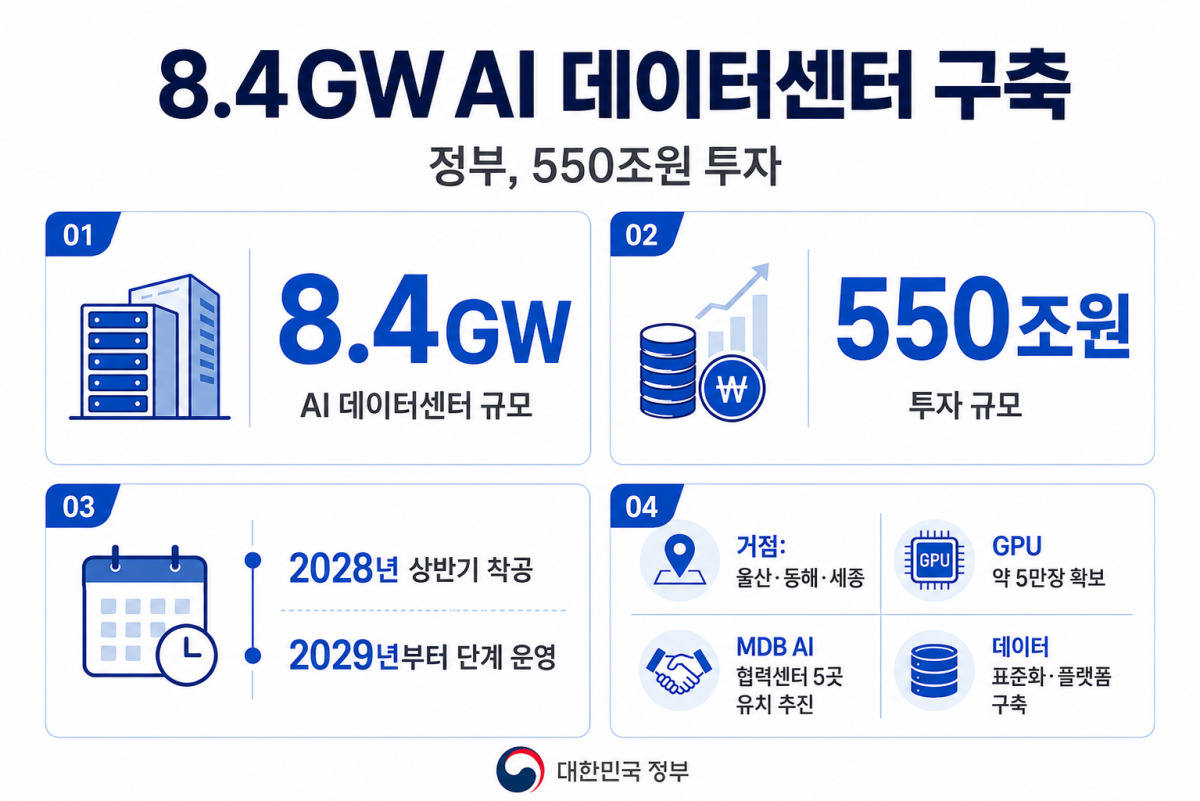
The government will secure approximately 50,000 Graphics Processing Units (GPUs) and establish a 2027 allocation plan in advance for national AI projects. Simultaneously, through site selection, forming support teams, and signing Memoranda of Understanding (MOUs) with international organizations, the government will attract AI functions of major international organizations to the country, preemptively attract five "Multilateral Development Bank (MDB) AI Cooperation Centers," and discover signature AI projects. To activate the data economy, the government will promote national data standardization, the establishment of data acquisition and utilization platforms, the construction of a medical data space, and the preparation of a comprehensive system for providing AI learning data.
In the physical AI sector, the government is fostering it as a national strategic industry and will formally apply it in industrial fields such as manufacturing, robotics, and automobiles. Starting in 2027, a cross-departmental physical AI data library will be built, and general world models and robot foundation models will be developed to enable the ability to recognize and judge the physical world and move autonomously. Seven pilot areas for physical AI have been identified: factories, robots, automobiles, ships, home appliances, drones, and semiconductors. The vision is to digitize tacit knowledge from manufacturing sites, expand verification in autonomous driving, autonomous navigation, and drone fields, and spread AI applications to industrial sites.
AI robots will be intensively cultivated with the goal of ranking among the global top three. The government plans to develop AI robots targeting ten major industries, with commercialization targeted for 2028, and deploy them to 1,000 sites annually to accelerate Manufacturing AI Transformation (AX).
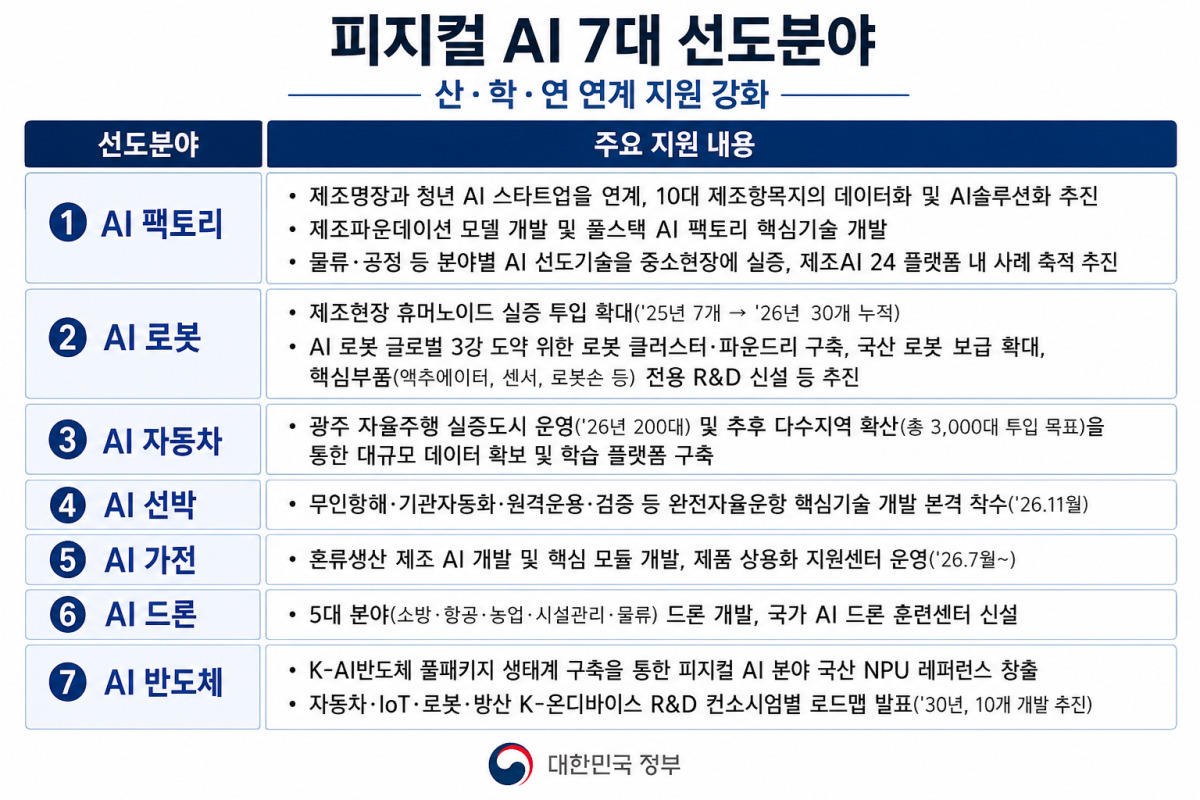
Localization of core robot components will also be pursued. Dedicated R&D for three weak components—actuators, robot hands, and sensors—will be newly established, and industry-specific data factories and physical AI training centers for robot behavior data collection and verification will be built. The diffusion of AX in the public sector will proceed in parallel. The government will establish a fast track for SME AX support and sequentially launch ten major AI public service projects. Some services, such as the National Tax Information Counselor, Agricultural Product Affordable Consumption Information, Child and Youth Crisis Response, and National AI Heritage Interpreter, will be launched within the year. Additionally, the government plans to introduce an AI chatbot that is easy for the public to use, build a comprehensive portal connecting public and private AI educational content, and establish online and offline AI practice environments.