European Commission Proposal Retains Two-Thirds of 2 GHz Satellite Spectrum for European Companies
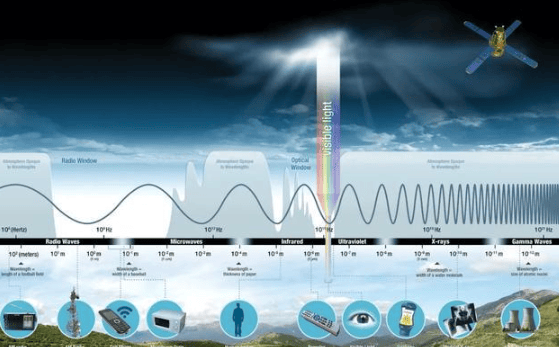
en.Wedoany.com Reported - The European Commission has formally submitted a regulation proposal concerning satellite spectrum in the 2 GHz band, aiming to ensure Europe's technological sovereignty in this field. The proposal plans to primarily reserve this frequency band, considered a critical resource for satellite networks, for use by European companies.

Just at the end of April this year, during the informal meeting of telecommunications ministers in Cyprus, Spanish Minister Óscar López (with support from France) first raised this issue. One month later, the European Commission adopted this regulation proposal on satellite spectrum, with the core objective of preserving European autonomy over frequencies in this band. Previously, the current decision was set to expire in May 2027, and two American companies currently hold licenses to use this satellite spectrum band. To this end, while promoting European sovereignty, the proposal plans to extend the rights of existing operators by two years until 2029, ensuring service continuity and leaving room for new operators.

The core of this regulation proposal is a new allocation principle: for the first time, it attempts to reserve two-thirds of the spectrum in the 2 GHz band for European companies. The specific allocation plan includes dedicating one-third of the 2 GHz band for governmental use, involving critical communications, security, and military applications. This portion will be provided through an EU operator to ensure the integration of current and future capabilities of IRIS (the EU secure satellite communications constellation). The remaining two-thirds of the spectrum will be used for commercial purposes, providing satellite direct-to-smartphone (D2D) services, enabling users to obtain mobile signal coverage anywhere on Earth and supporting IoT applications. Notably, within this two-thirds of commercial spectrum, half will be specifically reserved for European operators, equivalent to one-third of the total. The proposal also allows the same operator managing the governmental band to handle the use of this commercial spectrum portion. The regulation will adapt to the development of new Low Earth Orbit (LEO) constellations and Direct-to-Device (D2D) connectivity technologies, promoting integration with 5G and future 6G mobile networks.
The public consultation period for this regulation proposal began on July 13, 2026, and will run until 23:59 on August 3.
Related Products




Industrial and Commercial Point-Type Gas Detector
Jinan Benan Technology Development Co., Ltd.


Multi-function Marine Monitoring Low-altitude Detection Radar Sea-air Boundary Ocean Dynamic Environment Measurement
Chengdu Dixin Technology Co., Ltd.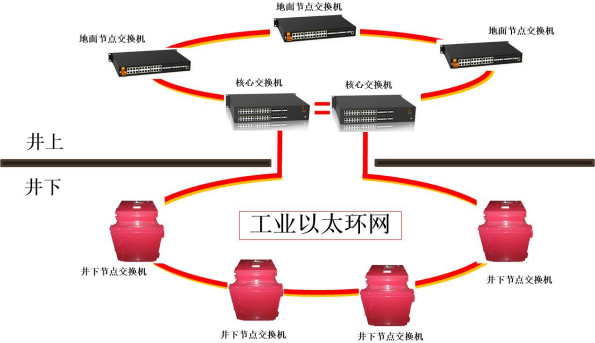
Mine Explosion-proof and Intrinsically Safe Industrial Ethernet Ring Network (10 Gigabit/Gigabit)
Chongqing Mas Sci&Tech Co., Ltd.

Flat Portable Satellite Terminal 0.35m Aperture Manual Portable Terminal
China Starwin Science & Technology Co., Ltd.