en.Wedoany.com Reported - The Brazilian Geological Survey (Serviço Geológico do Brasil, SGB) announced in July 2026 that it has intensified exploration efforts to find phosphate (fosforita) in marine sediments along the Brazilian coast. Work has already begun in Salvador, the capital of Bahia state, where technicians are processing collected samples through enrichment in the laboratory. Phosphate is a key raw material for producing agricultural fertilizers, holding significant strategic importance for Brazil as a global agricultural powerhouse.
Founded in 1969 as the Brazilian Mineral Resources Research Company (CPRM), the SGB is a state-owned geological survey agency under the Ministry of Mines and Energy. It is responsible for generating and disseminating geoscientific knowledge, providing technical support for national mineral resource management, geological disaster prevention, and water resource assessment. Marine geological research is one of SGB's core missions. Over the past decade, the agency has significantly expanded its offshore mapping and sampling programs through collaborations with Brazilian Navy research vessels and universities such as the Federal University of Rio de Janeiro (UFRJ) and the University of São Paulo (USP).
This offshore phosphate exploration is a key project under Brazil's 2024-2027 Multi-Year Plan (PPA) and an important component of the Continental Shelf Mineral Resource Potential Assessment Program. The Brazilian Continental Shelf (Plataforma Continental Jurídica Brasileira, PCJB) covers a vast area with immense mineral potential, with resources such as phosphate, cobalt crusts, and marine sands and gravels prioritized for research. The project is overseen by the Ministry of Mines and Energy and executed by the Geological Survey Directorate (SGM) under the SGB, with a total investment of 53 million Brazilian reais.
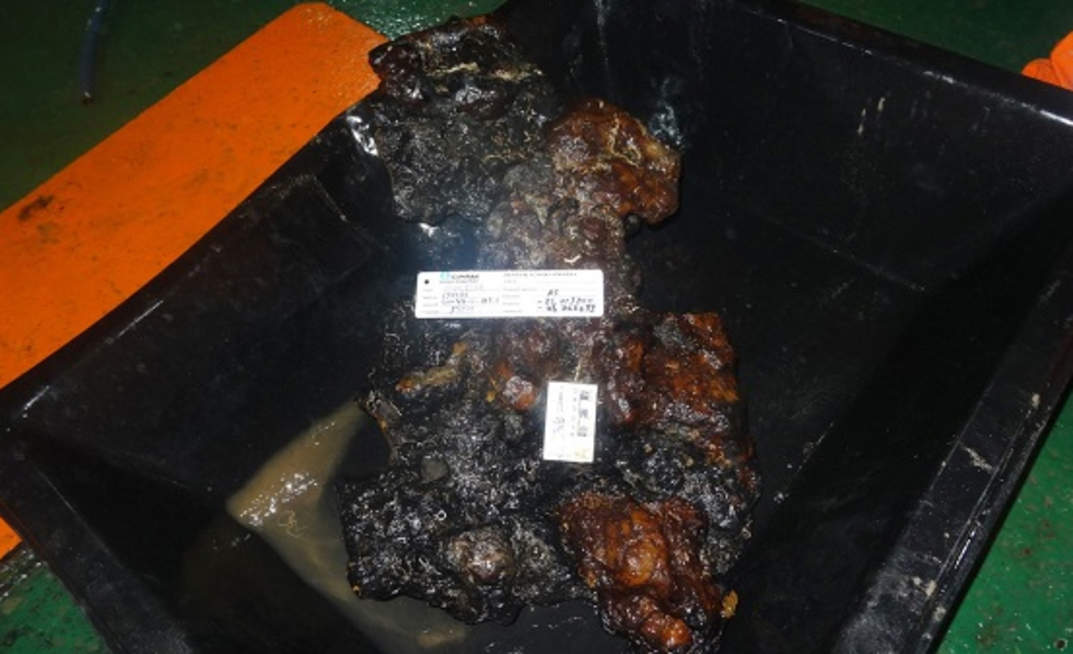
According to SGB disclosures, the project achieved three interim results in 2024: first, the release of a phosphate isopach map of the Rio Grande Terrace (Terraço do Rio Grande), delineating prospective areas for offshore phosphate; second, the completion of detailed geomorphological studies of the relevant region and submission of an academic paper; and third, the establishment of a business intelligence data platform for the offshore phosphate project, integrating grain size analysis and mineral data. The Rio Grande Terrace, located on the southern continental margin of Brazil, is a strategic focal area for phosphate exploration. Future exploration will focus on establishing criteria for linking deposit formation processes and deepening understanding of the relevant region.
Phosphate is an indispensable source of phosphorus for agricultural production. As the world's largest exporter of soybeans, coffee, sugarcane, and other agricultural products, Brazil has a massive demand for phosphate fertilizers. Currently, approximately 70% of Brazil's phosphate fertilizers are imported, with a highly concentrated supply chain. The development of offshore phosphate resources could reduce Brazil's dependence on imported fertilizers and enhance national food security. The SGB stated that future efforts will focus on the metallogenic mechanisms, deposit distribution patterns, and economic feasibility assessments of offshore phosphate, laying a scientific foundation for subsequent resource development.