First 60 km Electrified Section of Italy's Val Venosta Railway Put into Operation
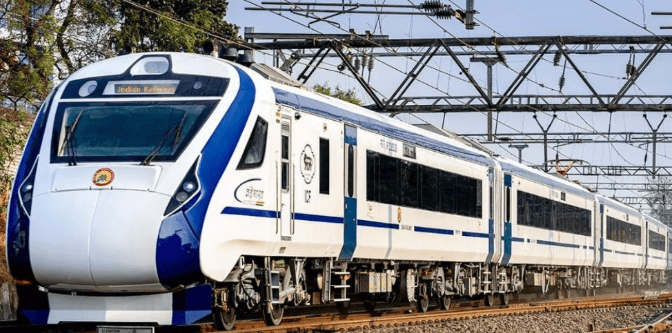
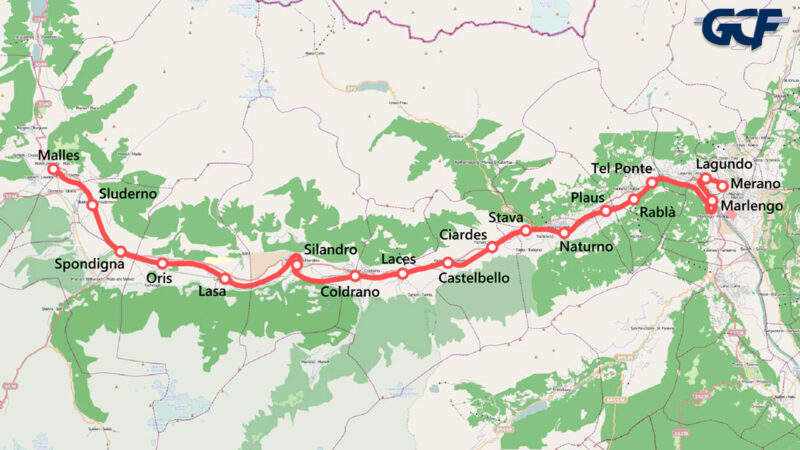
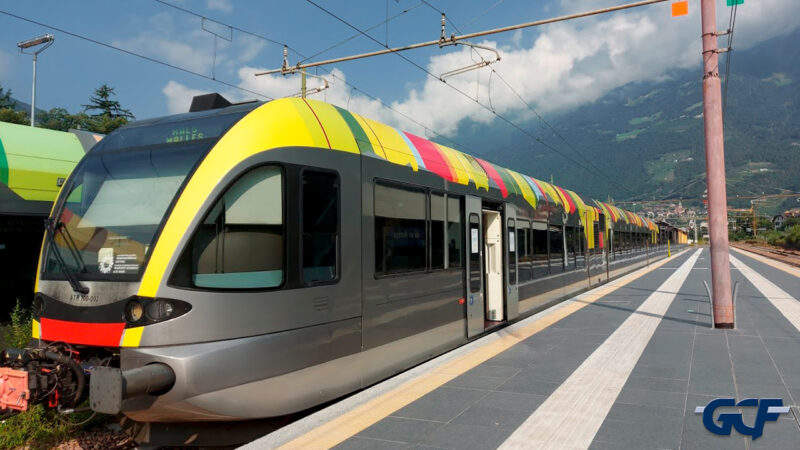
en.Wedoany.com Reported - The first electric trains have entered service on the Val Venosta Railway in South Tyrol, Italy, marking a new phase for regional rail transport centered on sustainability and efficiency. This progress is based on the completion of the electrification conversion project for the Merano-Malles railway line, with GCF S.p.A. (Generale Costruzioni Ferroviarie S.p.A.) and INEO Scle Ferroviaire jointly involved in the construction of the overhead contact line and main traction power system.
The project covers the approximately 60-kilometer Merano-Malles line, converting the railway, previously operated by diesel trains, into infrastructure suitable for 25 kV AC electric traction, a standard widely used in European railway networks. The new system can reduce local emissions, lower operating costs, and recover energy during train braking, while also improving service performance and reliability.
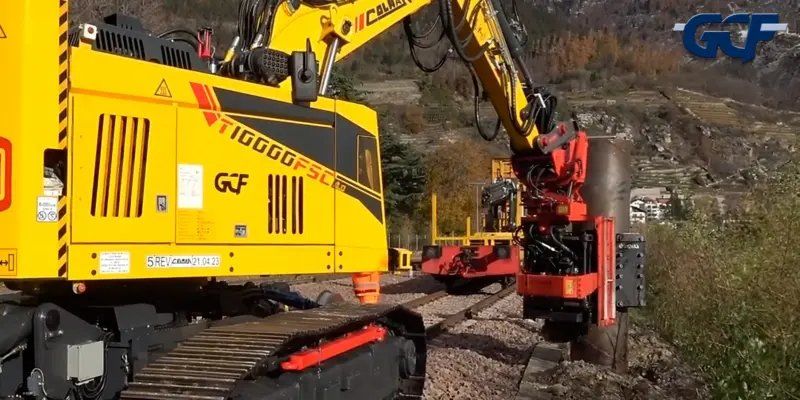
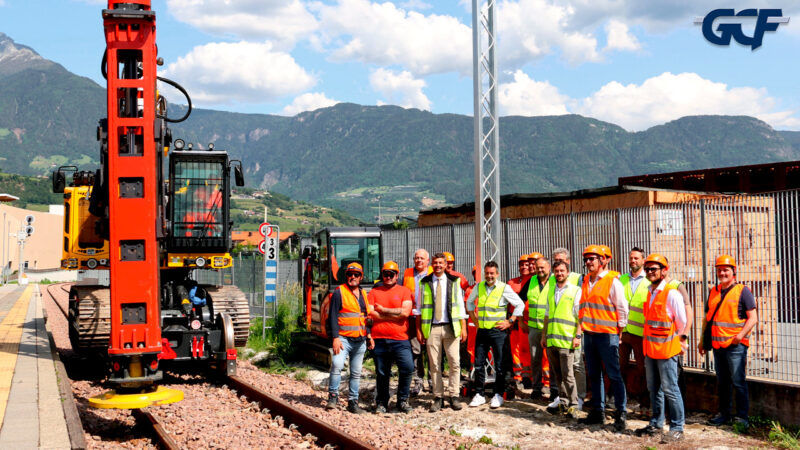
Numerous solutions were developed for the project tailored to the characteristics of the line and its surrounding environment. A key task involved the construction of foundations for approximately 1,700 overhead contact line masts. GCF Project Designer Giuseppe Canneti stated that based on comprehensive geological and geotechnical surveys, the team identified different geomechanical categories of the subsoil and selected the most suitable foundation type for each condition: driven steel pipe foundations in valley floor gravel and alluvial soils; prismatic reinforced concrete foundations where driving was not possible; and foundations anchored to bedrock where rock was exposed and met structural performance requirements. These foundations were designed to withstand future maximum load demands, avoiding the need for reinforcement works during subsequent upgrades. For bridges, dedicated steel anchoring systems were designed; customized solutions were also adopted for tunnel portals and other reinforced concrete structures. The galvanized steel masts combine high mechanical strength with lightweight characteristics, and their placement was positioned as close as possible to the uphill side of the railway to minimize visual impact.
Various technologies were also employed for the overhead contact line system. In open sections, a tensioned flexible stitched catenary suspension was installed, supported by new Omnia aluminum alloy cantilevers, and maintained at constant mechanical tension through automatic counterweight devices to compensate for dimensional changes caused by temperature variations, ensuring reliable contact between the pantograph and the contact wire. Within four tunnels totaling approximately 2 kilometers in length, a rigid overhead contact line system was used to reduce structural gauge, improve reliability, and lower maintenance requirements. Dedicated transition components were installed at the interfaces between open sections and tunnels to ensure uninterrupted power supply.
The line is powered by the main traction substation located at Coldrano-Vezzano, which is connected to the 132 kV high-voltage grid and equipped with two 7.2 MVA single-phase transformers to convert power into 25 kV AC traction supply. Under special conditions, even with only one transformer in operation, the installation can be reconfigured to supply the entire line. Two additional traction substations at Lagundo and Malles are each equipped with 2 MVA transformers to ensure service continuity, and all substations are remotely monitored. The line also introduces a permanent overhead contact line monitoring system that can check the movement of automatic tensioning counterweight devices in real time, verify whether mechanical tension remains within specified limits, and issue reports before anomalies affect service, shifting the maintenance model from planned maintenance to predictive maintenance.
From a safety perspective, the VIP (Video Inspection of Pantographs) system is installed along the railway line, using a set of dedicated high-performance cameras to automatically capture images of the pantograph on each train, verifying its integrity and detecting deformations or anomalies that could damage the overhead contact line. The system immediately alerts maintenance personnel for rapid intervention. Dr. Giuseppe Brecciaroli, CEO of Generale Costruzioni Ferroviarie S.p.A., stated that the project brings together the professional expertise of the company's designers and technical specialists, and its digital and innovative characteristics shift infrastructure maintenance towards a data-driven model, enabling the infrastructure to identify and report problems in advance.
The line also includes a precision engineering node—the POC (Point of Changeover)—used to connect the Val Venosta Railway network, operating at 25 kV AC, with the Italian national railway network, operating at 3 kV DC. Engineers designed a solution allowing trains to pass seamlessly between the two different electrification systems. GCF Project Designer Giuseppe Canneti explained that the neutral section is achieved by overlapping the contact wires by approximately 26 meters, allowing the pantograph to pass without mechanical interruption while maintaining complete electrical isolation between the two systems. Additionally, the isolation equipment and isolation transformer at the POC are installed on independent structural supports rather than being integrated into the overhead contact line masts, which improves maintenance accessibility and enhances the overall reliability of the interconnected system.
Related Products