Fujian, China Fully Lifts Traffic Controls for Typhoon Bavi on July 13, Restoring 1,552 Routes
en.Wedoany.com Reported - As of 18:30 on July 13, all temporary traffic controls on expressways and national/provincial highways in Fujian Province, implemented due to Typhoon Bavi, have been fully lifted. A total of 1,552 road transport routes have resumed operation, all 138 port enterprises that had suspended work have restarted operations, and ongoing highway and waterway construction projects are also resuming in an orderly manner. The recovery of transportation, production, and daily life is steadily progressing.
During this typhoon defense effort, Fujian's transportation emergency response system, cross-regional coordination capabilities, and grassroots execution underwent a comprehensive test, with responses carried out in an early, swift, and precise manner.
The coordination mechanism operated efficiently in advance. On July 5, the Provincial Department of Transportation issued a special notice to deploy typhoon defense work, four days before the official activation of the emergency response. On July 6, working groups led by five department-level officials were dispatched to frontline areas for guidance. On July 9, Wang Zengxian, Secretary of the Party Leadership Group and Director of the Department, convened a deployment meeting for defending against Typhoon Bavi, requiring the entire system to immediately enter a state of readiness. From July 10 to 12, the department's main leaders and those in charge of relevant areas conducted intensive, non-stop scheduling, holding video conferences with key regions and conducting spot checks on critical points. Leveraging the "5+N" joint coordination mechanism, transportation, expressway, emergency management, meteorological, and public security traffic police departments at the provincial and municipal levels formed a joint command team, integrating real-time meteorological warnings, road network traffic flow, and road hazard data to achieve direct command and closed-loop control. Before the typhoon's arrival, the province's transportation system pre-positioned 737 emergency rescue teams and over 6,790 units (sets) of equipment at key locations. The Provincial Department of Transportation coordinated the deployment of 9 highway rescue teams and 101 pieces of specialized equipment. Local authorities detailed risk distribution maps and force deployment maps ("two maps and two manuals"), closely monitoring sections prone to geological disasters and mountain flood inundation areas. In particular, they strengthened patrols and hazard mitigation along 1,068 kilometers of roads in key northern areas, implemented prevention plans for 27 kilometers of unstable road sections, 19 submerged bridges, and 23 water-crossing sections, and conducted 24-hour video monitoring of 116 high-risk slopes. Strict pre-rain inspections, during-rain patrols, and post-rain reviews were enforced, with patrol frequency increased to every two hours during the typhoon's impact. A total of nearly 6,000 patrol personnel were deployed, covering 61,000 kilometers of road.
Cross-regional coordinated control and response were swift. On July 11, affected by Typhoon Bavi, expressways in Wenzhou, Zhejiang, implemented full traffic controls. Fujian responded immediately, closing the ramp from the Yangzhong Hub on the Shenhai Expressway to the Mazhan (Zhejiang) direction on the Yongguan Expressway. All vehicles intending to travel to Zhejiang were directed to exit via the Fenshuiguan Toll Station on the Shenhai Expressway. The Fujian Provincial Department of Transportation maintained close communication with the Provincial Public Security Department's Traffic Police Corps and the Provincial Expressway Group, synchronizing real-time remote traffic diversion dynamics from the expressway traffic police detachments. It organized Ningde and Nanping companies to strengthen coordination, guiding vehicles bound for Zhejiang to detour through Nanping to Lishui, Zhejiang, avoiding coastal expressway sections. Subsequently, the Ningde Expressway Company closed the expressway toll station entrances in the Fuding jurisdiction of Ningde at 20:30 on the 11th; at 22:30, the control scope expanded, with mainline controls implemented at multiple points including the Feiluan Hub on the Shenhai Expressway, the Wanwu Hub and Xiapi Hub on the Ningshang Expressway, and the Yangzhong Hub and Jingshang Hub on the Yongguan Expressway. This defense employed a full-chain, tiered control system of remote guidance, mid-range diversion, and near-range control. Control points were expanded in an orderly manner as risks escalated, and were gradually lifted as the disaster situation eased to restore traffic. Starting at 7:00 on the 12th, based on road condition changes in Wenzhou, Fujian's control measures began to adjust. Mainline controls were reduced to one location, toll station entrances were adjusted to "closed for Wenzhou, Zhejiang direction" at seven locations, and other toll stations in the Ningde jurisdiction resumed normal traffic for the Fujian direction. By 9:45, all temporary traffic controls on the province's expressways were fully lifted, and roads resumed normal traffic.
Amid the wind and rain, service and support efforts were simultaneously carried out. The Ningde Company designated safe parking areas in the plazas outside toll stations, opened office building lobbies, staff libraries, and meeting rooms as temporary shelters, equipped with blankets, hot water, charging devices, and first-aid kits, and extended cafeteria meal hours to serve drivers and passengers taking shelter on-site. Before controls were initiated, multiple platforms including the "Fujian Transportation" WeChat public account, the "Fujian Expressway" WeChat public account, variable message signs along the route, and the road network center's live broadcast issued advance control notices and detour guidance. The Fujian Provincial Department of Transportation coordinated with Zhejiang authorities in advance to clarify control scopes and timelines. The Ningde Road Network Management Center launched 24-hour live broadcast duty, totaling 19.75 hours of broadcasting, reaching 1.856 million viewers, and responding to 10,000 inquiries. Information and guidance points were set up at expressway service areas to provide face-to-face notifications and route directions to passing vehicles. A total of 740 warning messages were sent, and 340,000 safety reminders were dispatched to 141,000 key operating vehicles via the dynamic monitoring platform.
Related Products



![IVECO Cash-in-Transit [DMT5048XYCL3-AM] - Chongqing Dima Industry Co., Ltd](https://img.wedoany.com/2026/0911/20260911030157582.png)
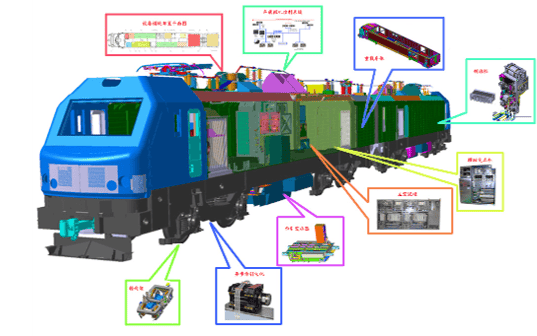
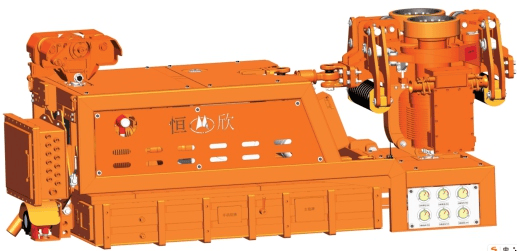
Explosion-proof lithium battery dispatching monorail crane locomotive (permanent magnet frequency conversion integrated machine)
Xiangtan Hengxin Industrial Co., Ltd.


One-Stop Steward Service for the Entire Logistics System Integration Chain
Zhongding Intelligent (Wuxi) Technology Co., Ltd.