US Pulse Space Develops Laser Orbital Power System Capable of Transmitting 30 Kilowatts
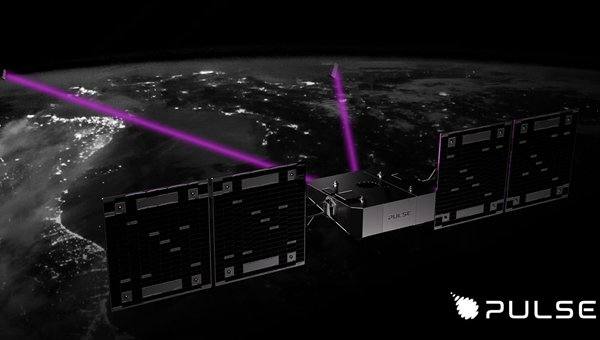
en.Wedoany.com Reported - US space technology company Pulse Space is developing a laser-based space power infrastructure designed to provide remote, on-demand power to satellites operating in Low Earth Orbit (LEO). As the number of deployed LEO satellites continues to grow, the power limitations faced by onboard solar panels and batteries are becoming increasingly prominent. The company calls this system the "Space Power Grid," aiming to achieve wireless generation, transmission, and delivery of energy in orbit. This technology is primarily targeted at commercial, civil, and defense missions requiring continuous, flexible, and scalable power.

At the core of Pulse Space's solution is a directed-energy laser power transmission system. This system first collects energy, converts it into a highly efficient laser beam, and wirelessly transmits available power to spacecraft on demand. Pulse Space positions this laser transmission method as an effective alternative to traditional onboard power generation methods, allowing satellites to obtain additional power without carrying larger capacity batteries or deploying larger solar arrays. This solution aims to meet the rapidly growing power demands expected from next-generation satellite constellations.
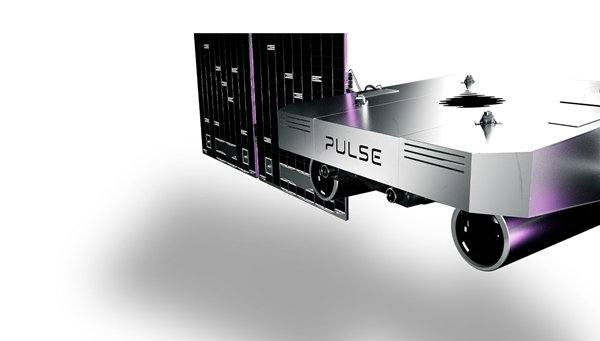
Pulse Space's flagship product, named Boost, is designed to transmit 30 kilowatts of power over distances of up to 1,000 kilometers. The receiving end, using a 3-square-meter receiver, can obtain approximately 20 kilowatts of usable power. Designed for 365-day, 24/7 operation anywhere in Low Earth Orbit, the system enables satellites to receive power remotely, thereby expanding mission capabilities without the need for additional onboard energy storage or dedicated propulsion resources.
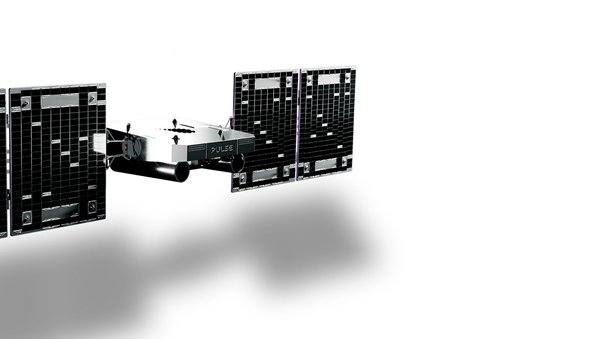
Pulse Space's power architecture is designed around three core phases: collecting ample solar energy in orbit; converting that energy into a tightly focused, highly efficient laser beam; and precisely redirecting the laser beam to satellites requiring additional power. This makes space-to-space energy transmission a reality, while also laying the groundwork for future ground-to-orbit power delivery. The system aims to enhance mission flexibility, increase spacecraft on-orbit endurance, and support high-power payloads in various orbital missions.
In addition to wireless power delivery, Pulse Space is expanding its orbital infrastructure to support space situational awareness and sustainable space operations. The company is developing capabilities for continuous tracking and characterization of space objects to improve operator situational awareness, assist in satellite maneuvering and docking, and help mitigate the risk of orbital debris. Combined with its power transmission technology, these services aim to support safer, more resilient, and more efficient operations throughout Low Earth Orbit.
By integrating laser-based power transmission, scalable orbital energy distribution, and space situational awareness capabilities, Pulse Space is developing infrastructure for next-generation space operations. Its technology is designed to provide continuous, on-demand power while meeting the growing needs of satellite constellations, commercial space stations, defense missions, and future on-orbit servicing requirements.
Related Products


ERW Welded Pipe (Black Pipe and Hot-dip Galvanized Steel Pipe)
Handan Zhengda Steel Pipe Co., Ltd.



"Shunyi 1600" Deep-submerging Bottom-sitting Multi-functional Wind Power Engineering Vessel
Zhengli Offshore Engineering Co., Ltd.

Pantograph-Catenary Comprehensive Detection Device (1C)
CHENGDU TANGYUAN ELECTRIC CO., LTD.
D12 Humanoid Robot
Automation Research Institute Co., Ltd. of China South Industries Group Corporation


Industrial and Commercial Point-Type Gas Detector
Jinan Benan Technology Development Co., Ltd.
WGQY Series Aircraft Tow Tractor-WGQY15, WGQY27
Weihai Guangtai Airport Equipment Co., Ltd.