EU Plans to Expand Carbon Emissions Coverage for Flights from Frankfurt to 5,000 km by 2029
en.Wedoany.com Reported - The European Commission plans to extend the scope of the aviation Emissions Trading System (ETS) from 2029 to flights departing from Frankfurt Airport with destinations within a 5,000-kilometer radius. This marks the EU's first attempt to include routes outside Europe in its carbon emission control framework.
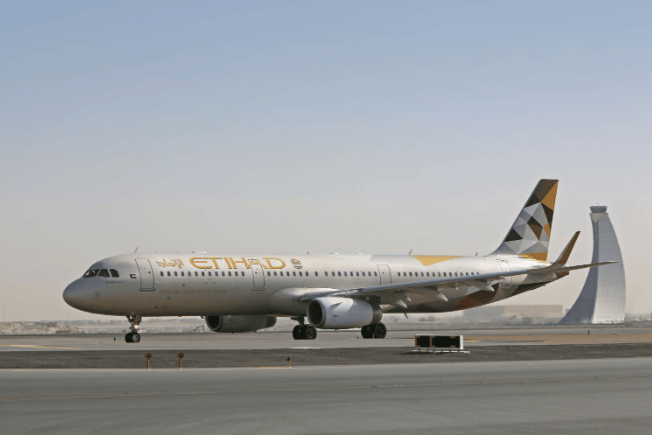
According to the European Commission's proposal, the ETS, currently applicable only to intra-EU flights, will cover all flights departing from Frankfurt with landing points within a 5,000-kilometer radius of the airport starting in 2029. This range covers numerous destinations in Africa and Asia but explicitly excludes key overseas markets such as the United States, China, and India.
A spokesperson for the Lufthansa Group expressed approval of the draft, stating that it is the first time the EU has addressed the competitive distortion between European and non-European airlines. The 5,000-kilometer radius is not arbitrarily chosen; it encompasses all major aviation hubs in the Persian Gulf region and the rapidly developing Istanbul Airport. Airlines headquartered in these areas, such as Turkish Airlines, Emirates, and Qatar Airways, have for years attracted transit passengers with favorable prices, capturing significant market share on Asian routes from European carriers.
In contrast, the United States, India, and China are excluded from the plan's scope. These countries strongly opposed the EU Emissions Trading System in 2012, arguing it infringed on their sovereignty and threatening retaliatory measures such as restricting traffic rights. At that time, the EU was forced to significantly scale back its global ETS plan, limiting it to intra-European flights.
Before the draft was released, German air transport lobbying group BDL warned that the EU's unilateral expansion of the international aviation emissions trading system would inevitably provoke strong backlash from other countries. The association expressed relief that the proposal did not extend the costly trading system to all flights departing from Europe. Currently, German airlines already spend approximately 630 million euros annually on purchasing emission allowances.
Aviation law expert Elmar Giemulla noted that if the proposal is approved by the European Parliament and EU member states, negotiations with affected countries (such as Turkey and the United Arab Emirates) would be extremely difficult. He believes that aviation agreements are always based on the principle of reciprocity, and the EU's plan to unilaterally modify treaties is bold, with affected countries unlikely to easily agree. The expert also mentioned that North African countries like Egypt and Morocco would be impacted by price increases for holiday flights, potentially weakening their tourism businesses.
The EU Emissions Trading System (ETS) is its core climate protection tool, designed to incentivize greenhouse gas emission reductions. According to European Commission data, the aviation sector accounts for approximately 4% of the EU's total CO2 emissions. The system issues CO2 emission allowances to affected companies and allows trading or additional bidding for allowances. The number of available allowances is continuously decreasing, driving up carbon prices and making climate protection investments more attractive. The Commission also proposed extending the system to all private jets arriving and departing.
In addition to the ETS, the International Civil Aviation Organization (ICAO) has established a voluntary global aviation climate protection tool (Corsia). The European Commission should submit a report on the operation of this global offset system by July 2032, at which point it may adjust the ETS scope, either narrowing it to fewer flights or expanding it to all international flights departing from the EU.
The International Air Transport Association (IATA) criticized the EU plan as repeating a "historic mistake" that would trigger numerous disputes. IATA Director General Willie Walsh stated that the plan would slow global decarbonization and harm European competitiveness. The head of the European Airlines Association (A4E), Ourania Georgoutsakou, called for ETS revenues to be fully reinvested in aviation emission reduction. Meanwhile, the European Federation for Transport and Environment (T&E) pointed out that the proposal only imposes a carbon price on 53% of European air transport, with the longest and most polluting flights still excluded. Anna Kominou of T&E Germany urged the German government to support the proposal and called for a gradual expansion of the scope so that the aviation sector pays for all its emissions.
Related Products



Industrial and Commercial Point-Type Gas Detector
Jinan Benan Technology Development Co., Ltd.
China - Alashankou/Khorgos - Europe Full Range Transportation (Mala/Hamburg/Duisburg/Budapest, etc.)
Shenzhen Neptune Logistics Co., Ltd.





"Shunyi 1600" Deep-submerging Bottom-sitting Multi-functional Wind Power Engineering Vessel
Zhengli Offshore Engineering Co., Ltd.