South Korean government invests 20 trillion won to promote two major AI projects
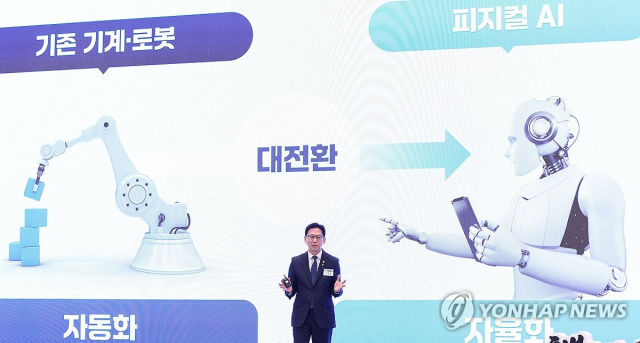
en.Wedoany.com Reported - South Korean President Lee Jae-myung (이재명) is promoting an AI pragmatism policy centered on two major projects: "AI for All (모두의AI)" and "Physical AI (피지컬AI)", with a planned investment of 20 trillion won. The Physical AI strategy has been incorporated into the government's "three mega projects". Through large-scale funding and stimulating private investment, the government aims to accelerate AI transformation (AX), ensuring that changes in services are tangibly felt by the public and industrial sectors. The funds will be allocated to areas with high initial investment and failure risks, such as graphics processing unit (GPU) resources, AI service operation costs, and manufacturing demonstration facilities.
Experts have reacted cautiously, noting that both "AI for All" and "Physical AI" projects bear a "supplier-driven" character. Historically, in the process of catch-up industrialization, the government often first selected technologies, industries, and topics before providing R&D funding and infrastructure. This approach may suffer from insufficient demand validation. Experts worry that if funds are invested in technology development without actual demand, it will be difficult to avoid massive fiscal waste.
The structure of "AI for All" involves using domestic models and GPUs to first create free universal services, then attract public usage. The sequence for "Physical AI" is to first determine regions, budgets, platforms, and demonstration facilities, and then seek manufacturing sites that fit these conditions. Experts point out that key questions—such as whether manufacturing companies will be willing to pay for services after government support ends, and whether the fundamental reasons for demand-side non-adoption of AI are cost, lack of application capability, or unverified demand—have not been adequately answered before project launch.
Since AI is more influenced by choices made by the private sector and corporate users compared to existing technologies, models and services that meet government evaluation standards are not guaranteed to be selected by the market. Experts suggest that the government should provide public infrastructure, safety standards, and public data, but must carefully consider which combinations of services and technologies can survive, and set more refined demand validation and exit strategies. Evaluation of project outcomes should not rely solely on quantitative indicators such as the number of facilities built, demonstration counts, and registered users. Instead, core performance indicators (KPIs) such as repeat usage rates, repeat purchases, private investment, and actual cost reductions should be continuously tracked after support ends.
Related Products




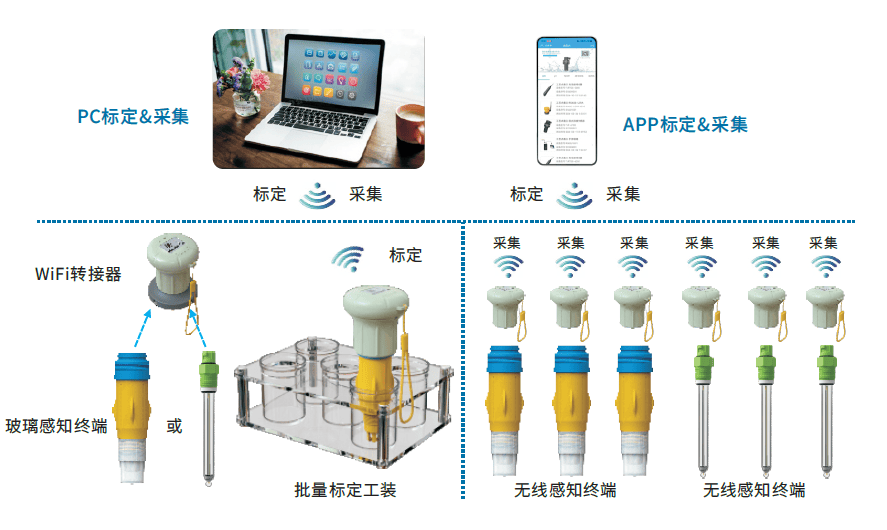


Comprehensive Mining Automation Control System
Beijing Tianma Intelligent Control Technology Co., Ltd.
TWP16 P-Band Tropospheric Wind Profile Radar
China Huayun Meteorological Technology Group Co., Ltd.
Automatic Aiming Laser Remote Obstacle Removal Robot
Pinggao Group Weihai High-Voltage Apparatus Co., Ltd.


GYTA Type Non-Self-Supporting Aerial/Duct Optical Cable
TONGDING INTERCONNECTION INFORMATION CO., LTD.