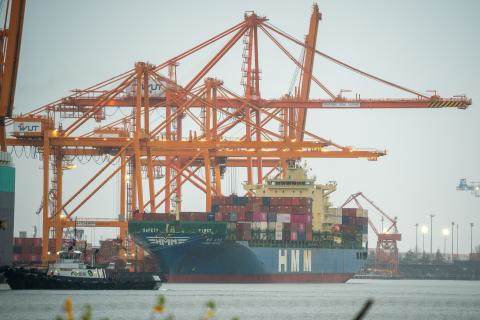
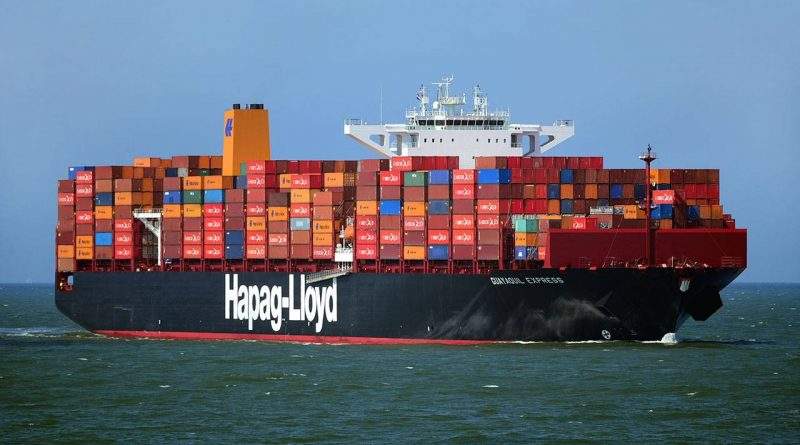
en.Wedoany.com Reported - In the first half of 2026, Klaipėda Port in Lithuania handled nearly 700,000 TEUs of container throughput, with total cargo volumes continuing to grow, maintaining its position among the leading ports in the Baltic Sea region.
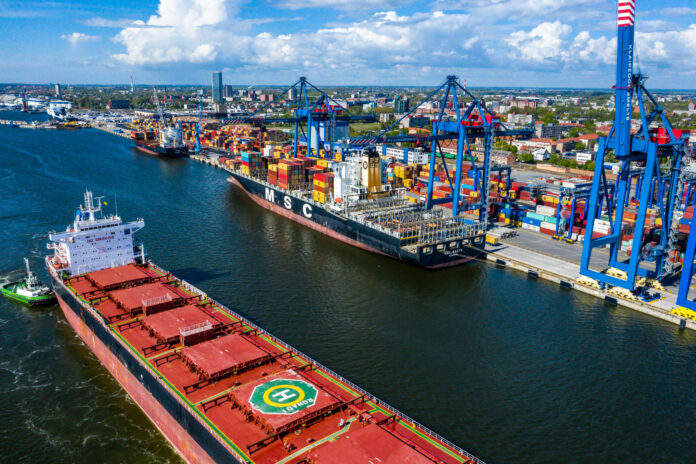
During the first half of the year, the port handled 7.2 million tons of container cargo, up 12% from the same period in 2025, with the container segment serving as the main driver of port growth. The port authority attributes this performance to rising transshipment volumes and the launch of direct deep-sea container routes connecting Klaipėda to Asia. Expanded short-sea shipping services and long-term infrastructure investments also supported the growth.
Algis Latakas, Director General of the Klaipėda State Seaport Authority, stated that the port's highly diversified operations are a key factor behind its success. He added that the port achieved strong cargo handling performance despite war, sanctions, tariffs, and broader market uncertainty.
In the ro-ro segment, ro-ro cargo transported by ferry reached nearly 3.4 million tons, up 4% year-on-year. The number of freight vehicles passing through Klaipėda Port increased to 173,505, compared to 169,280 in the same period of 2025. The most notable growth was recorded on ferry routes connecting Klaipėda with Germany and Sweden.
Oil and liquefied natural gas (LNG) volumes also rose in tandem. The port handled 2.3 million tons of petroleum products in the first half of the year, up 12% year-on-year, an increase of 242,000 tons, driven mainly by higher export volumes. LNG throughput grew by 37% to nearly 1.6 million tons, which the port authority attributes to stable regional demand and increased cargo volumes destined for Ukraine.
The fertilizer and vegetable oil segments showed a recovery. Fertilizer volumes rose 14% to 894,000 tons, an increase of 112,000 tons from the same period last year; vegetable oil and fat volumes grew 58% to 294,000 tons. Scrap metal shipments remained stable at 565,000 tons, unchanged from the first half of 2025.
Ship repair and conversion activities also supported the port's performance. In the first six months of 2026, a total of 46 vessels underwent repairs or modernization, up 31% from the same period last year.
Certain cargo categories saw declines. Grain exports approached 1.3 million tons, slightly below the 1.4 million tons recorded in the first half of 2025; timber volumes fell by 153,000 tons year-on-year; and construction materials and minerals dropped from over 1 million tons to 943,000 tons. The port authority stated that these declines reflect a normalization of market conditions—the first half of 2025 saw exceptionally strong demand driven by infrastructure projects in Lithuania.
In the first half of 2026, Klaipėda Port was the only seaport in the Baltic region to record cargo volume growth, with its share of the Baltic port market rising to 44%. When combining Klaipėda Port with the Būtingė oil terminal, Lithuania's share of cargo handled in the Baltic states exceeds 54%.