U.S. NSF Invests $30 Million to Establish Research Center for Human-Robot Co-Adaptation
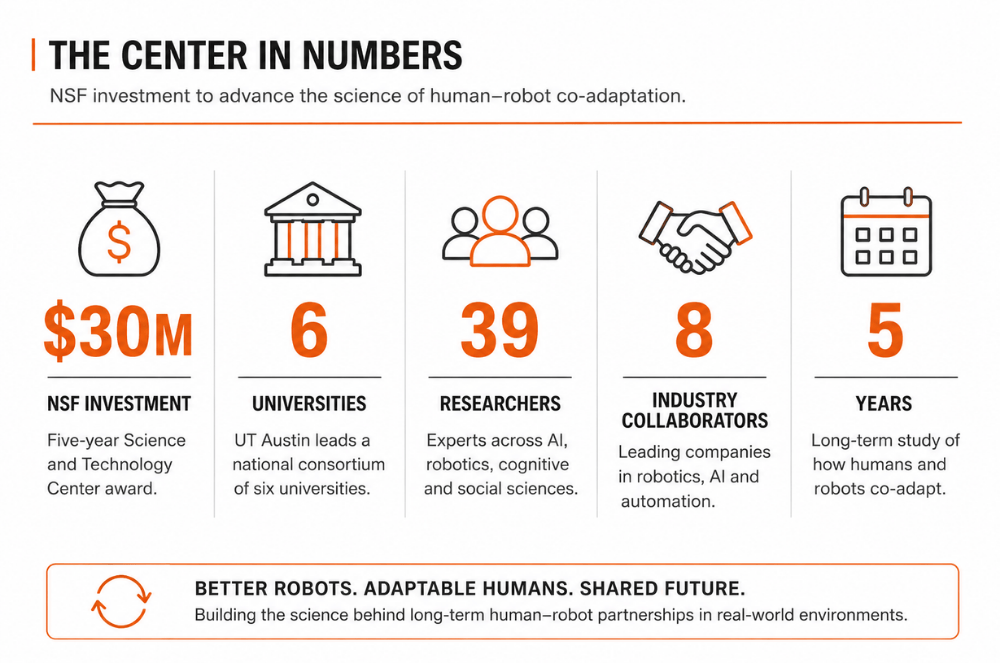
en.Wedoany.com Reported - The University of Texas at Austin (UT Austin) will lead the establishment of a five-year, $30 million National Science Foundation (NSF) research center focused on a challenge robots must tackle beyond factories and warehouses: human behavior is unpredictable and constantly evolving over time.
This research initiative, named the "Center for Human and Robot Co-Adaptation," brings together 39 researchers from six universities who focus on how humans and robots learn from and adjust their behaviors to each other during long-term interaction. The center examines not whether robots can successfully complete tasks in demonstrations, but what changes occur on both sides when the same group of people and robots interact over months or even years.
Companies including Amazon, Apptronik, Diligent Robotics, Google DeepMind, Hello Robot, MassRobotics, NVIDIA, and Robust AI are participating as industry partners, covering areas such as humanoid robots, mobile manipulation, artificial intelligence, and commercial robotics. Joydeep Biswas, center director and UT Austin associate professor of computer science, said: "The next leap in robotics isn't just about enabling robots to perform more tasks, but about having them understand the people around them—their needs, preferences, values, and constraints—while also recognizing that people adjust their own behavior when they bring robots into their environments."
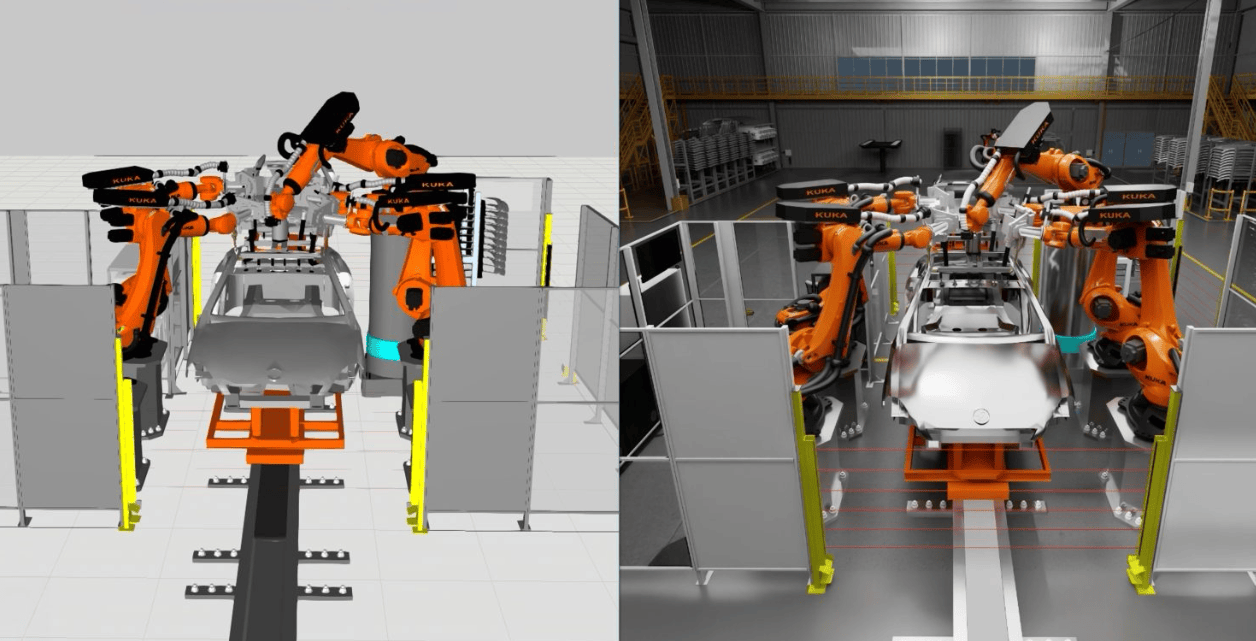
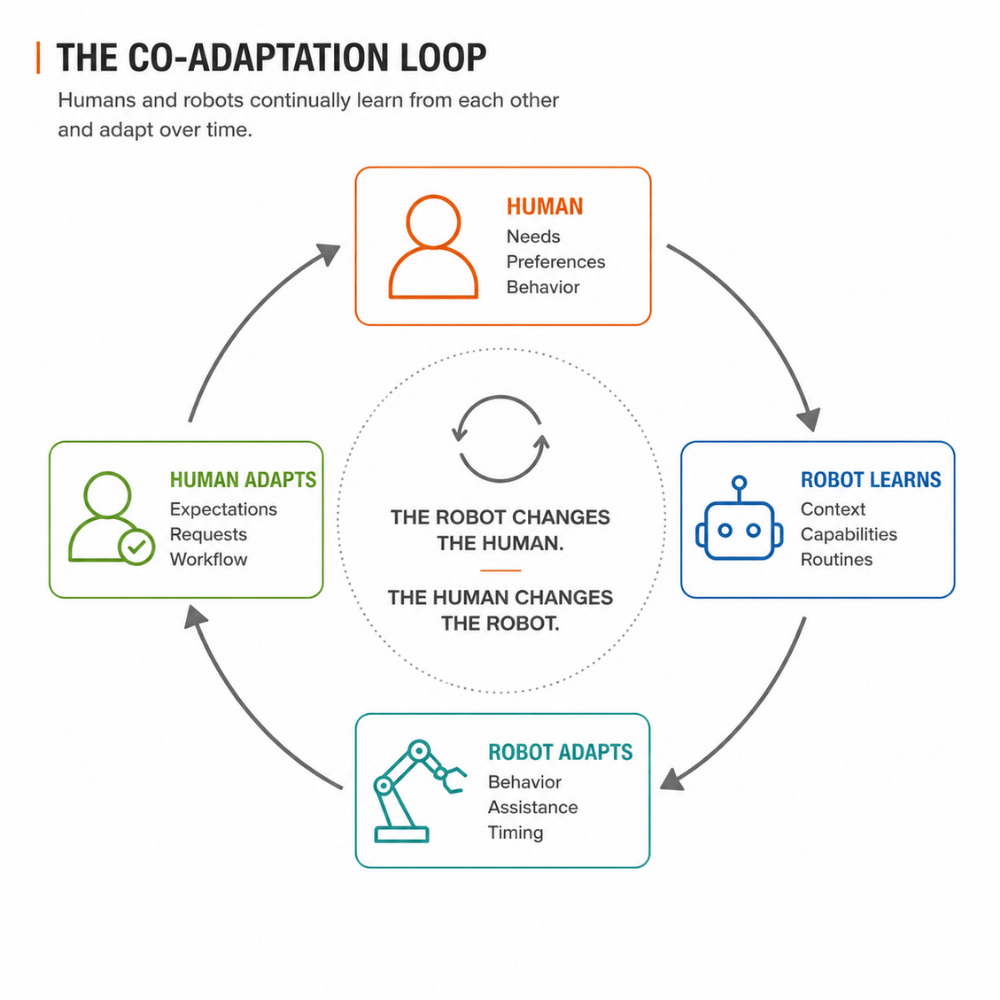
For much of its history, robotics has relied on minimizing environmental variables to ensure stable operation. Industrial robots work in carefully designed workstations, parts arrive at designated positions as expected, and barriers and sensors separate humans from potential hazards. While a new generation of collaborative robots and autonomous mobile robots can adapt to changing conditions, they remain constrained within well-defined workflows and environmental boundaries. Physical AI is pushing robots beyond these assumptions. Robots developed for healthcare, elderly care, hospitality, construction, and even homes will need to work in spaces that cannot be redesigned for machines, where the challenge is not only that the environment changes, but that the people within it change too—a patient's physical capabilities may vary week to week, an elderly person's needs may shift within a few years, and workers may develop new ways of collaborating once they learn a robot's strengths and weaknesses.
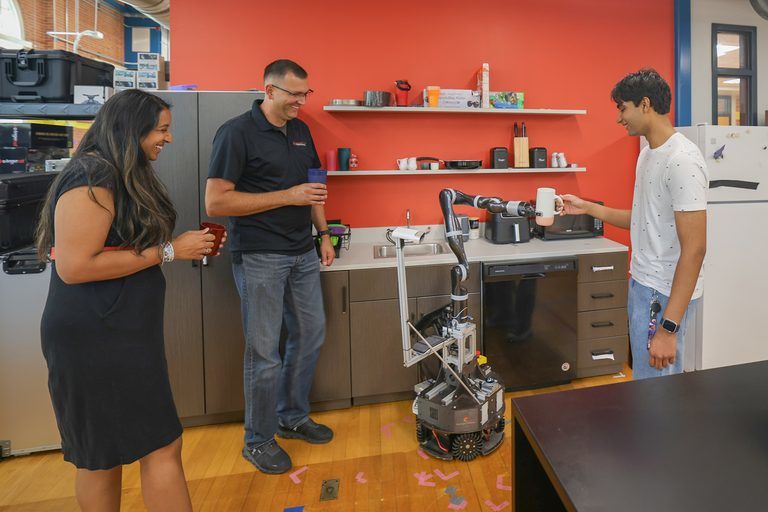
The center calls this two-way adjustment "human-robot co-adaptation." UT Austin illustrates the concept with a simple example: teaching a robot to set a table is not difficult, but having it notice that someone is cooking chili and proactively placing a spoon—without explicit instruction—requires a deeper understanding of context, behavior, and preferences. Healthcare scenarios are even more critical: an assistive robot can learn to adjust its reach based on a person's physical limitations to help them get a cup of water; in turn, people gradually learn what the robot can do and how to ask for its help, forming a feedback loop of mutual adjustment.
This dynamic introduces new evaluation criteria for robotics companies. Systems must not only reliably complete current tasks but also determine whether yesterday's successful actions remain appropriate today. Durable models of users and environments, enhanced contextual understanding, and the ability to learn amid unpredictable behavior are all necessary components—while also raising a host of questions around privacy, safety, and consent: how much autonomy should a robot that continuously adapts to people actually be granted? As robots move from controlled workshops into homes, hospitals, and assisted living facilities, the complexity of these issues will only increase.
The center plans to conduct research through a real-world deployment network called the "Human Environment with Robots (HERO) Facility Network." Sites will be located at UT Austin and its partner institutions—the Massachusetts Institute of Technology (MIT), Yale University, Indiana University Bloomington, the University of Utah, and Tufts University—spanning homes, dormitories, cafés, public museums, rehabilitation hospitals, and elderly care and assisted living residences. Long-term deployments will allow researchers to observe what happens after the novelty fades: residents may discover shortcuts, change how they communicate with machines, or find uses the developers never anticipated, while community members can also provide input on when, where, and how deployments take place.
The center also connects with several technologies currently driving investment in physical AI. UT Austin's Texas Advanced Computing Center (TACC) will provide computing power for simulation, machine learning, data storage, and digital twins across HERO sites, allowing researchers to test methods in virtual environments before deploying them to settings like dormitories or nursing homes. NVIDIA will provide accelerated computing, simulation, and robotics platforms for large-scale training and evaluation, while also examining foundation models that underpin human-robot collaboration. Deepu Talla, NVIDIA's vice president of robotics and edge AI, stated that for robots to become part of everyday life, they must remain useful as people's needs, tasks, and environments evolve over time.
Humanoid robot company Apptronik has deeper ties to UT Austin: the Austin-based firm was spun out of the university's Human Centered Robotics Lab in 2016, and researchers plan to incorporate its robot designs and computational models into explorations of safely deploying humanoid machines in human environments. Diligent Robotics, Hello Robot, and Robust AI bring experience in mobile manipulation and robots designed to work around people, while Amazon and Google DeepMind offer perspectives on large-scale automation and artificial intelligence. The involvement of these industry partners makes the center more than just an academic project—it bridges fundamental research on human behavior and commercial platforms seeking to bring physical AI into everyday environments.
The commercial value of co-adaptation ultimately comes down to utilization and return on investment. A robot designed for a single task creates value as long as the task occurs frequently enough to amortize the investment—a model already validated in highly repetitive settings like automobile manufacturing. Many of the markets physical AI companies are targeting do not work this way: tasks are diverse, environments are constantly changing, and customers may expect the same robot to take on more functions over time. Robots that can learn user preferences, adapt to process changes, and acquire new capabilities without extensive reprogramming have broader applicability and can more readily achieve the utilization needed to justify investment. Conversely, systems requiring manual intervention whenever the environment or workflow shifts—however technically impressive—may struggle to succeed commercially.
Looking back at most of robotics industry history, the sector's approach to variability has been to engineer it out of the environment: factories are built around robots because machines are extremely efficient when the surrounding world remains predictable. The new generation of robotics is attempting something harder. Physical AI aims to build machines that can perceive, reason, and act in environments designed for humans, not machines—with foundation models, simulation, more dexterous manipulation, and stronger hardware all part of the equation. But placing robots in human environments introduces a variable that cannot be engineered away: people. People will become familiar with how machines behave, change their workflows around them, or come to rely on them in ways developers never anticipated. The NSF's $30 million investment in human-robot co-adaptation is precisely about understanding how this relationship will unfold; for an industry that has poured billions into moving robots from controlled environments into the human world, the answer may determine which systems truly endure.
Related Products
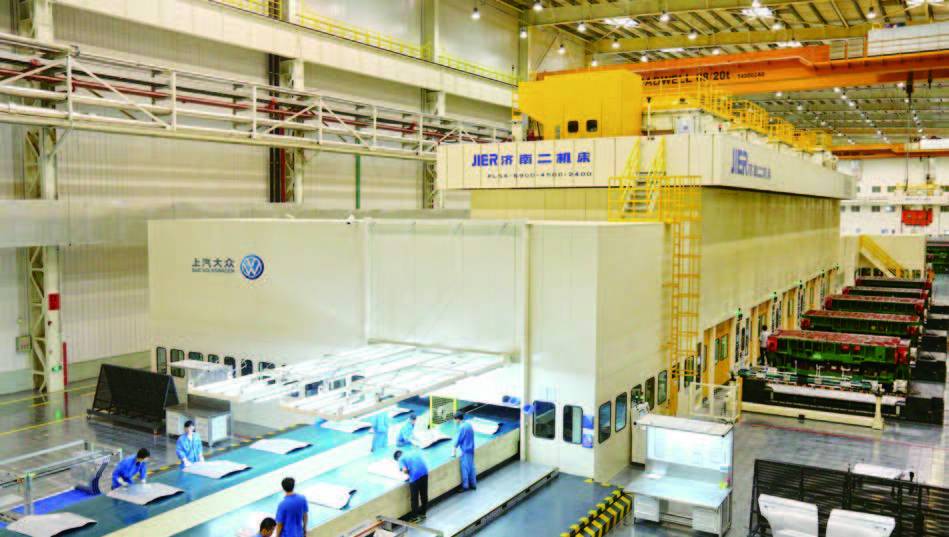

High-Speed Flexible Fully Automatic Stamping Production Line
JIER Machine-Tool Group Co., Ltd.
LBH4000 Batch Environmental Protection Asphalt Mixing Plant | Asphalt Batching Plant | Asphalt Mixing Plant
Jilin Province Road Construction Machinery Co., Ltd.

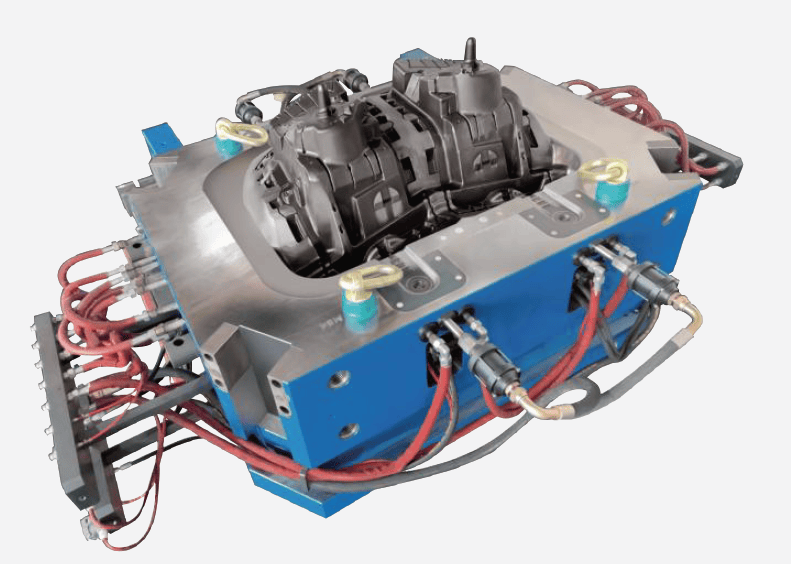
Aluminum-Magnesium Alloy High-Pressure Die-Casting Molds
NINGBO HELI TECHNOLOGY CO., LTD.
Pneumatic high-pressure wear-resistant ball valve
Zhejiang Deca Control Valve Meter Co., Ltd.
CAP1400 main feedwater flow nozzle flowmeter.
Jiangsu Hongda Instrument Technology Co., LTD.
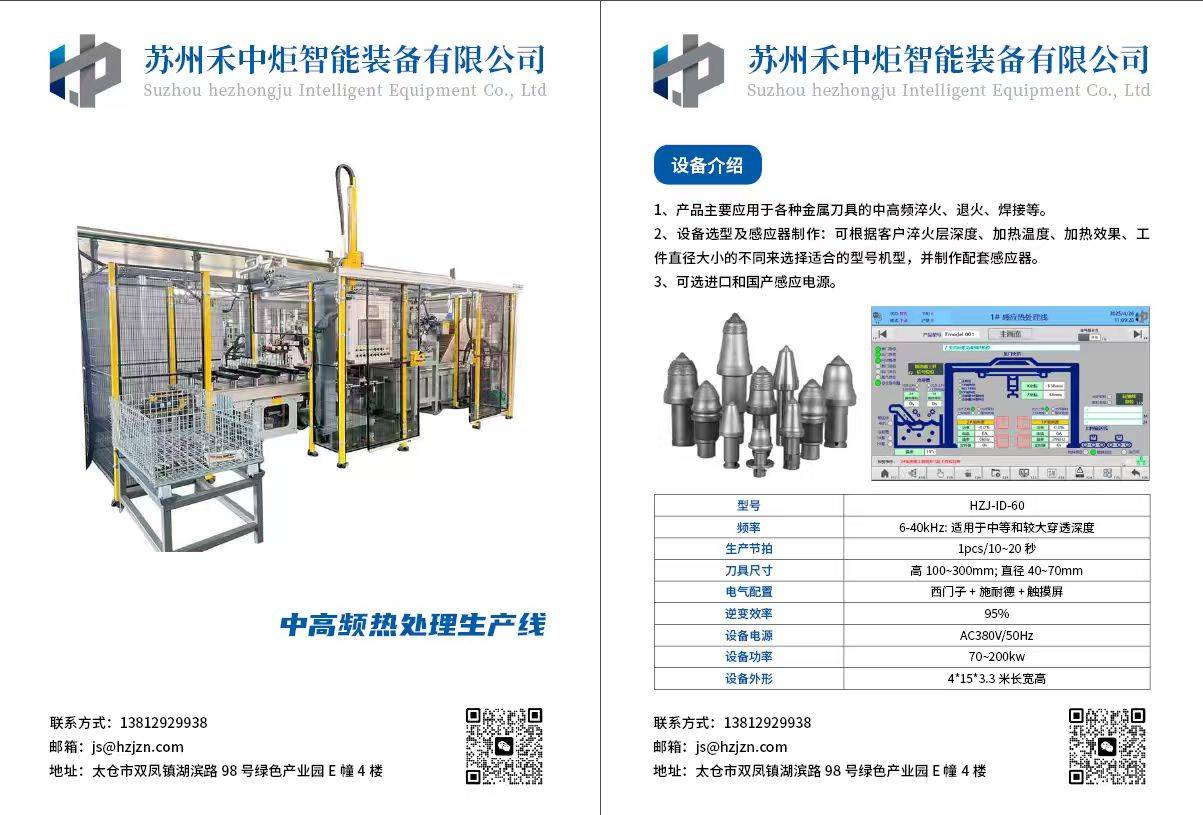
Excavator Bucket Teeth Heat Treatment Production Line
Suzhou Hezhongju Intelligent Equipment Co., Ltd.