Wedoany.com Report-Sept. 14, Naarea, a French company developing a molten salt fast neutron microreactor, has announced progress in fuel synthesis for its advanced modular reactor project. The company successfully demonstrated a pyrochemical method to produce sodium chloride-plutonium trichloride (NaCl-PuCl3) salt, which is designed to be proliferation-resistant. This achievement is regarded as an important step in validating the feasibility of the project.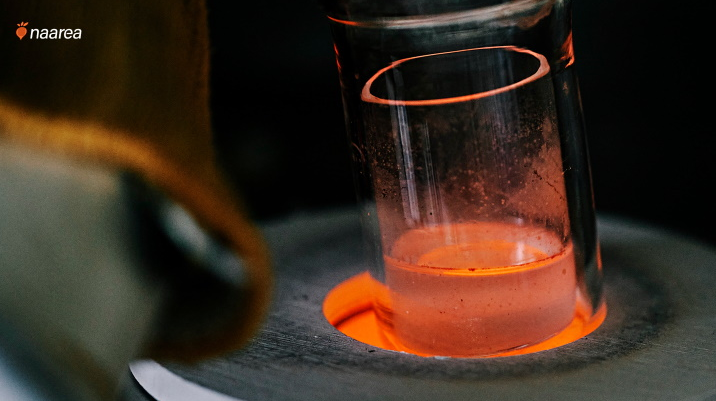
Naarea is currently developing the XAMR, a molten salt fast neutron microreactor capable of producing 40 MWe of electricity or 80 MWt of heat. The reactor is designed to use plutonium as fuel, while also reusing long-lived nuclear waste, contributing to closing the fuel cycle. The process relies on sodium chloride as the solvent in which actinides such as plutonium chloride and uranium chloride are dissolved. A reproducible and pure method of synthesizing this fuel salt is essential for advancing the project.
Since 2024, Naarea has been working through its Innovation Molten Salt Lab (IMSLab) with the French National Centre for Scientific Research (CNRS) and Paris-Saclay University. The collaboration also involves the European Commission’s Joint Research Centre (JRC), with a focus on validating the synthesis method for NaCl-PuCl3 salt using plutonium oxide (PuO2).
The process, proposed by Naarea, involves introducing gas into a mixture of sodium chloride and plutonium oxide at high temperature. This technique was implemented using experimental equipment developed and operated by the JRC. According to Naarea, tests at the laboratory scale confirmed that plutonium oxide could be quantitatively dissolved into a chloride-based salt through this method.
Naarea stated: "Additional characterisation stages will follow to confirm the purity of the fuel salt and determine its fundamental properties, which is vital to the development of the molten salt reactor industry." The company added: "This experimental validation work with plutonium represents an initial step in the fuel cycle strategy developed by Naarea, validating the synthesis method's feasibility and potential. Process engineering and scale-up tests will be carried out, in particular in the short term on simulants of radioactive materials in the experimental facilities of the I-Lab, Naarea's 2,400-square-metre test facility located in Cormeilles-en-Parisis."
Molten Salt Reactors (MSRs) typically operate at low pressure using molten fluoride salts as primary coolant. They can function with epithermal or fast neutron spectrums and accommodate various fuel types. Interest in MSRs has grown due to their ability to use thorium, which requires an initial fissile material such as plutonium-239 to begin operation. Although there are multiple MSR design concepts under development, challenges remain in the path to commercialization, particularly in scaling up thorium-based systems.