SAE International and EUROCAE Set Standards for Hydrogen Fueling at Airports
Wedoany.com Report-Nov 14, SAE International and EUROCAE have established comprehensive guidelines for hydrogen fueling stations at airports, marking a significant development in aviation fuel infrastructure.
SAE International and EUROCAE have jointly published comprehensive guidelines titled "Hydrogen Fueling Stations for Airports, in Both Gaseous and Liquid Form," marking a significant milestone in the adoption of hydrogen as a sustainable aviation fuel. These guidelines, detailed in SAE AIR8466 developed in collaboration with EUROCAE's ER034, address the crucial need for standardization in the burgeoning sector of hydrogen-fueled aviation.
Scope and Impact of the New Guidelines
The new SAE AIR8466 guidelines serve as an essential framework for establishing performance targets, safety limits, and fueling protocols necessary to integrate hydrogen fuel solutions across various types of commercial aircraft. This includes a broad spectrum from hydrogen electric vertical take-off and landing vehicles (eVTOLs) to regional, narrow-body, and wide-body aircraft, even encompassing lighter-than-air crafts.
These guidelines meticulously categorize the hydrogen fueling process, taking into account variables such as ambient temperature, fuel delivery temperature, and the initial pressure in the hydrogen storage system. Such detailed consideration ensures the development of robust fueling protocols that can adapt to diverse operational and environmental conditions.
Innovative Elements of the Guidelines
One of the standout features of SAE AIR8466 is the establishment of fueling process parameters for both gaseous and liquid hydrogen, addressing the unique requirements of stationary and mobile fueling stations at airports. This includes:
Definitions of hydrogen storage capacities tailored to specific aircraft types and usage scenarios.
Categorization of fueling speeds based on airline turnaround times, which further determines coupling size categories.
Detailed safety definitions and properties of hydrogen to ensure safe handling and storage.
Collaborative Efforts and Industry Consensus
The development of these guidelines was a collaborative effort involving international aircraft OEMs, Tier 1 suppliers, regulators, and hydrogen companies. Jesse Schneider, chair of the SAE AE-5CH Hydrogen Airport Taskgroup, highlighted the extensive coordination required to reach a consensus on these standards. He emphasized that the guidelines not only address safety and operational protocols but also serve as a foundational guidebook for the future development of hydrogen fueling infrastructure at airports.
Future Directions and Industry Adoption
With the publication of SAE AIR8466 and EUROCAE ER034, the aerospace industry is equipped with a critical tool to drive the implementation of hydrogen fueling facilities globally. These guidelines are expected to catalyze further innovations and investments in hydrogen technology within the aviation sector, supporting the industry’s goals for sustainability and reduced carbon emissions.
Related Products

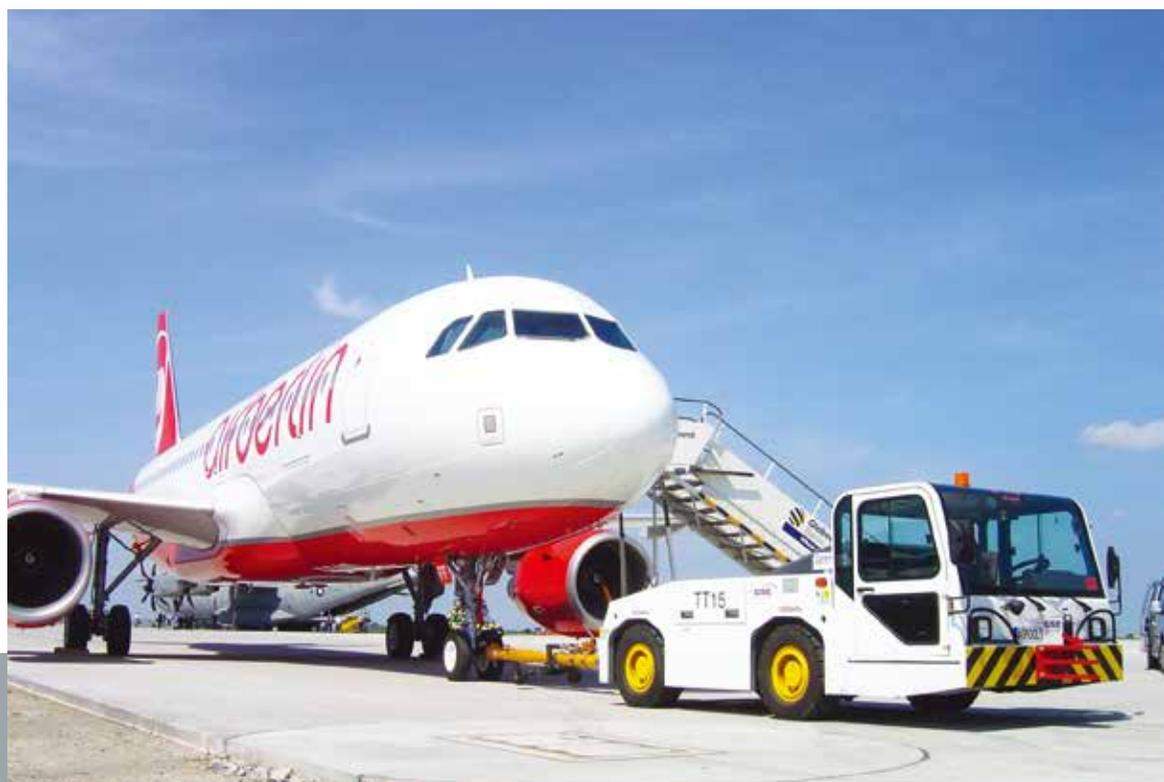
WGQY Series Aircraft Tow Tractor-WGQY15, WGQY27
Weihai Guangtai Airport Equipment Co., Ltd.![IVECO Cash-in-Transit [DMT5048XYCL3-AM] - Chongqing Dima Industry Co., Ltd](https://img.wedoany.com/2026/0911/20260911030157582.png)

Pantograph-Catenary Comprehensive Detection Device (1C)
CHENGDU TANGYUAN ELECTRIC CO., LTD.
GSR6-27.5kV SF6 Free Gas-insulated Metal-enclosed Switchgear
Zhejiang Juhonkia Intelligent Electric Co., Ltd.