Semiconductor Technology Innovation Drives Development of Humanoid Robots, Microelectronics, and AI Applications
Wedoany.com Report on Feb 9th, Current smartphone chips already integrate over 15 billion transistors, while semiconductors used in data centers contain hundreds of billions of transistors. Semiconductor technology is driving progress in multiple key fields such as robotics, consumer electronics, and artificial intelligence. As it continues to enhance convenience and safety in daily life, its influence will further increase.
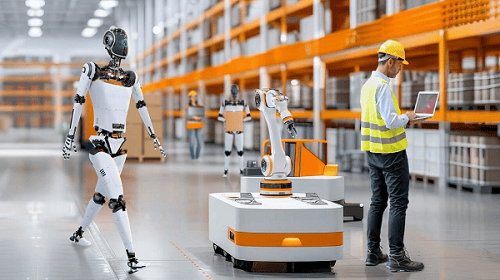
Giovanni Campanella, General Manager of Texas Instruments' Factory Automation Division, stated at a Computex event: "You might think it will take three to five more years for humanoid robots to become widespread, but in fact, such robots have already entered the practical application stage." Humanoid robots need to perform complex operations like household chores and industrial tasks in dynamic environments. This requires design engineers to use semiconductor technology to achieve coordinated work between actuator motion control, environmental perception, and central decision-making systems. Robots developed by Apptronik based on related technologies can already perform tasks safely in warehouse scenarios, indicating broader application prospects.
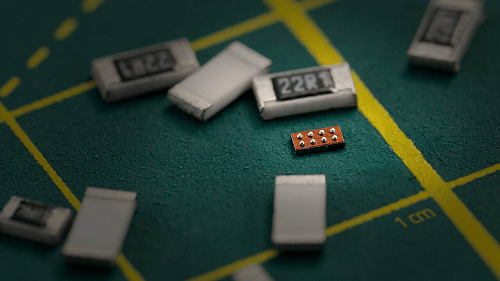
In the consumer electronics field, the trend of device miniaturization continues to accelerate. Texas Instruments' introduced microcontrollers achieve breakthroughs in packaging and energy efficiency, enabling devices like medical patches and smart rings to integrate health monitoring functions more portably. Vinay Agarwal, head of the company's microcontroller business, pointed out: "The addition of this miniature microcontroller creates new possibilities for us to achieve a smarter daily life experience."
The rapid development of artificial intelligence places higher demands on computing infrastructure. It is estimated that by 2033, the global AI market size will grow to $4.8 trillion, approximately 25 times the size of 2023. To support AI applications in areas like image processing and autonomous driving, the entire energy transmission chain from the power grid to processors needs optimization. Henrik Mannesson, Director of Texas Instruments' Energy Infrastructure Division, stated: "We will continue to develop application solutions with practical value while building a universal tool platform to support edge AI innovation." Currently, this technology is already applied in areas such as solar equipment fault detection.

These advancements in semiconductor technology reflect the industry's direction of continuous innovation, constantly pushing the evolution of electronic devices in terms of safety and intelligence through chip design and system collaboration. More technical details can be obtained through official channels.
Related Products


Multi-function Marine Monitoring Low-altitude Detection Radar Sea-air Boundary Ocean Dynamic Environment Measurement
Chengdu Dixin Technology Co., Ltd.
Comprehensive Mining Automation Control System
Beijing Tianma Intelligent Control Technology Co., Ltd.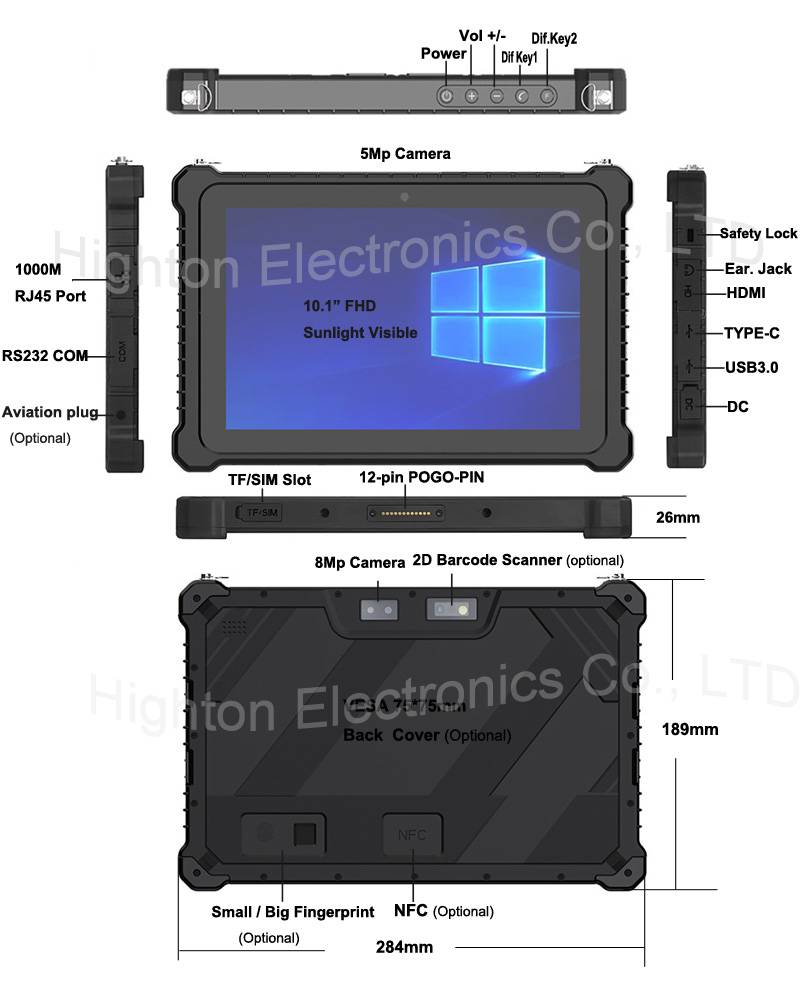
Hot Selling 10 Inch Intel N5100 I5 I7 FHD 8 +128GB 16+256GB Win10 Pro Win11 Pro 4G 5G Rugged Tablet PC Pad with NFC Barcode
Highton Electronics Co., Ltd.
MUX Series Communication Interface Device for Security and Stability Control System
Nanjing NR Electric Co., Ltd.
Mine Explosion-proof and Intrinsically Safe Industrial Ethernet Ring Network (10 Gigabit/Gigabit)
Chongqing Mas Sci&Tech Co., Ltd.



GYTA Type Non-Self-Supporting Aerial/Duct Optical Cable
TONGDING INTERCONNECTION INFORMATION CO., LTD.
Conveyor Belt Intelligent Monitoring System
LUO YANG WIRE ROPE INSPECTION TECHNOLOGY CO., LTD.