Hainan Island Officially Closes Customs, Where Are the Opportunities for the Light Industry?
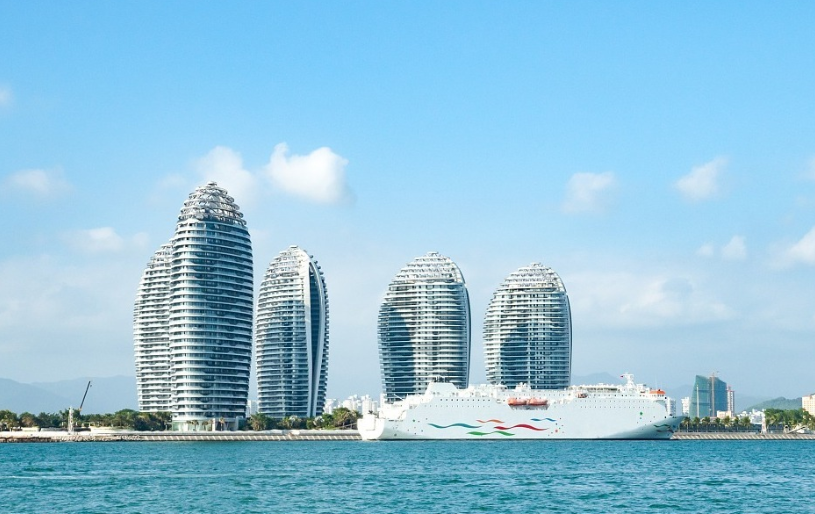
Wedoany.com Report on Feb 9th, the Hainan Free Trade Port officially launched island-wide customs closure operations, marking a new stage in China's opening up to the outside world. This institutional reform, centered on "opening up at the first line, controlling the second line, and freedom within the island," not only reshapes Hainan's economic ecosystem but also opens up unprecedented development opportunities for the light industry. From the expansion of "zero-tariff" goods to the upgrade of processing value-added policies, from the facilitation of cross-border trade to the upgrading of the consumer market, Hainan is using policy dividends as an engine to accelerate the light industry's leap towards high-end, international, and intelligent development.
"Zero-Tariff" Expansion:
Light Industry Manufacturing Costs Drop Directly, New Opportunities for Industrial Chain Layout
After the customs closure, Hainan's "zero-tariff" goods list has surged from over 1,900 tariff items to over 6,600, covering about 74% of commodity tariff items and encompassing almost all production equipment and raw materials. This policy directly reduces import costs for light industry enterprises, providing crucial support for the industry's transformation and upgrading.
Taking the household appliance industry as an example, high-end manufacturing enterprises can import core components like compressors and chips with "zero tariffs," significantly lowering production costs. According to statistics from the Hainan Provincial Department of Finance, after the customs closure, enterprises importing equipment are expected to save about 20% in tax costs. A person in charge of a smart home appliance enterprise in Hainan stated: "The tariff on an imported smart control chip has dropped from 15% to zero. This single item alone can reduce annual costs by several million yuan."
In the food industry, the "zero-tariff" policy also releases dividends. Hainan Zhengdaxinglong Coffee Industry Development Co., Ltd. imports Colombian coffee beans with "zero tariffs," processes them into coffee products, and exports them to Australia, saving over 20% in tariffs per shipment. The company's person in charge said: "The policy dividends allow us to dare to take larger orders. This year's export volume is expected to increase by 30%."
More notably, Hainan allows enterprises to include the value of self-produced goods in the processing value-added portion, further lowering the threshold for enjoying benefits. This adjustment encourages enterprises to extend their industrial chains and promotes the upgrade from "Made in Hainan" to "Intelligently Made in Hainan." For example, a nut processing enterprise in Hainan imports macadamia nuts from South Africa, processes them locally, and sells them to Guangdong. If the processing value-added exceeds 30%, tariffs are exempted, saving 12% in tariffs per shipment.
Upgraded Processing Value-Added Policy:
Light Industry Export Competitiveness Soars, Giving Rise to New "Front Store, Back Factory" Model
After the customs closure, Hainan's processing value-added duty-free policy has undergone three major upgrades: removing the income ratio restriction for encouraged industries, expanding the scope of imported materials and parts, and optimizing the value-added calculation formula. These adjustments open up a closed-loop industrial chain of "import-processing-export" for the light industry, helping enterprises deeply integrate into the global division of labor system.
In the biomedicine field, Hainan Weili Medical Technology Co., Ltd. imports vulcanized latex from Southeast Asia, manufactures catheters in Hainan, and sells them nationwide, accumulating tariff reductions of about 4 million yuan. The company's person in charge stated: "After the policy optimization, we plan to expand production capacity and build Hainan into an Asia-Pacific medical consumables production base."
The automotive parts industry also benefits. CRRC International Hainan Co., Ltd., mainly engaged in automotive transmission maintenance, added engine bonded maintenance services after the customs closure. Using "zero-tariff" imported used parts, repaired engines are exported to Southeast Asia, with annual maintenance volume exceeding 900 units. The company's general manager said: "Hainan's policy flexibility and cost advantages give us better cost-effectiveness than European enterprises."
Data shows that as of November 2025, the cumulative domestic sales value under Hainan Free Trade Port's processing value-added policy reached 11.42 billion yuan, with 878 million yuan in tariffs exempted. As policy dividends continue to be released, the light industry is expected to become a core growth driver for Hainan's processing trade.
Cross-Border Trade Facilitation:
Light Industry Product Export Channels Broadened, Cross-Border E-commerce Enters Golden Age
After the customs closure, Hainan implemented the "direct release" customs clearance mode. The declaration data for general import customs declarations was simplified from 105 items to 33 items, reducing cargo clearance time by over 30%. This change provides an efficient channel for light industry product exports, with cross-border e-commerce becoming a new engine for industry growth.
In Haikou Jiangdong New Area, a cross-border e-commerce enterprise, through the "offline display + fast delivery" model, directly supplies mainland consumers with cosmetics and health products imported into Hainan with "zero tariffs." Peak daily order volume exceeds 5,000 orders. The company's person in charge said: "Hainan's policy advantages allow us to reach the national market at lower costs."
The Southeast Asian market has also become a new blue ocean for light industry exports. The opening of Hainan to Southeast Asia all-cargo flight routes, coupled with the "cross-border air freight consolidation" policy, has driven a surge in exports of light industry products such as electronic products and household goods. According to Haikou Customs statistics, in the first 11 months of 2025, Hainan's import and export value with ASEAN increased by 4 times year-on-year, with light industry products accounting for over 60%.
Consumer Market Upgrade:
Light Industry Domestic Demand Potential Unleashed, High-End and Personalized Demand Explodes
After the customs closure, Hainan's duty-free quota for off-island purchases remains at 100,000 yuan per year, with duty-free categories expanding from 18 to 45, adding categories such as luxury furniture and high-end home appliances. This policy not only attracts global consumers to Hainan but also forces the light industry to improve product quality to meet high-end demand.
At the Sanya International Duty-Free Shopping Complex, in an international brand smart home experience store, consumers can experience "zero-tariff" imported products like smart locks and smart curtains on-site and take them away immediately through the "buy and pick up on the spot" service. The store manager said: "After the customs closure, sales of high-end light industry products have increased by 50%. Consumers are more willing to pay for quality and design."
The upgrade of the domestic demand market also drives innovation in the light industry. A local clothing brand in Hainan combines Li ethnic intangible cultural heritage elements to launch a "Li Brocade + Modern Design" series of clothing, selling it to European and American markets through cross-border e-commerce. Single product sales have exceeded 10 million yuan. The company's designer said: "Hainan's cultural diversity and policy openness allow us to dare to try cross-border integration."
Expert Opinion:
Hainan Will Become a Key Point for the Light Industry's Global Layout
Kuai Xianming, Vice President of the China (Hainan) Institute for Reform and Development, pointed out: "After Hainan's customs closure, with the policy combination of 'zero tariffs + low tax rates + simplified tax system,' it will become an ideal springboard for the light industry to lay out its global industrial chain. Enterprises can complete the entire chain of importing raw materials, processing, adding value to products, and exporting sales in Hainan, significantly reducing operating costs."
A relevant person in charge of the Hainan Provincial Department of Industry and Information Technology stated that Hainan is focusing on building a "4532" modern industrial system, prioritizing the development of light industry-related industries such as high-end food processing, smart consumer electronics, and biomedicine. In the next three years, Hainan will cultivate 30 light industry clusters with a scale of 10 billion yuan each, providing broad development space for the industry.
With the continuous implementation of the customs closure policy, Hainan is accelerating its transformation from a "tourism island" to a "global free trade hub." For the light industry, it is not only a "policy lowland" for reducing costs but also a "super interface" linking to the global market. By seizing the Hainan opportunity, the light industry is expected to climb to a higher position in the global value chain and write a new chapter of high-quality development.
Related Products

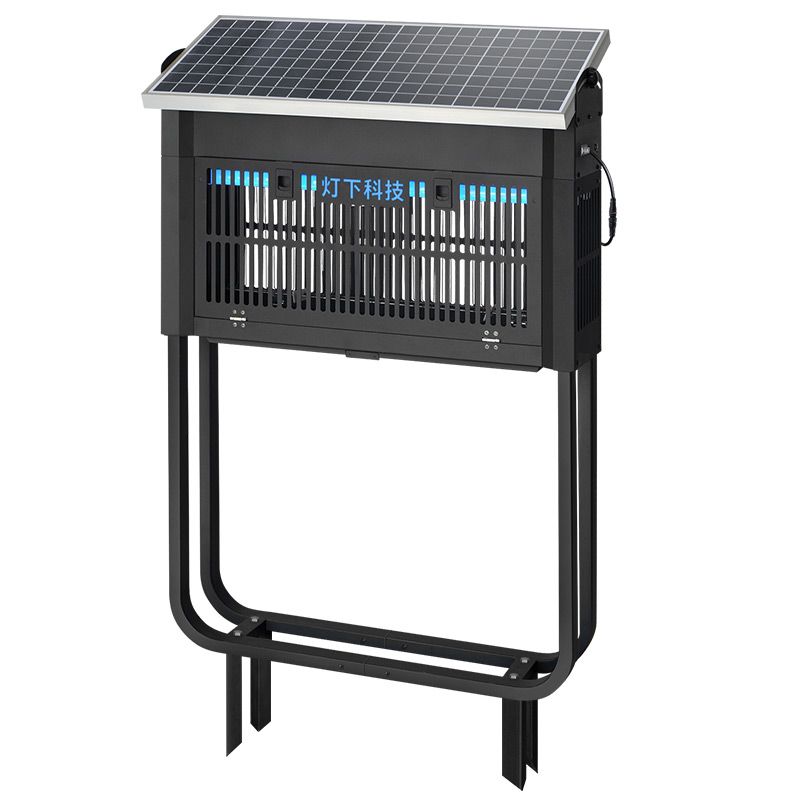
32000 MAh Large Capacity Luxury 365nm UVA LED Solar Mosquito Killer Lamp for Home Garden
Dengxia Technology (Guangdong) Co., Ltd.
Hongxing Steel Martensitic Stainless Steel Products
Gansu JISCO Group Hongxing Iron and Steel Co., Ltd.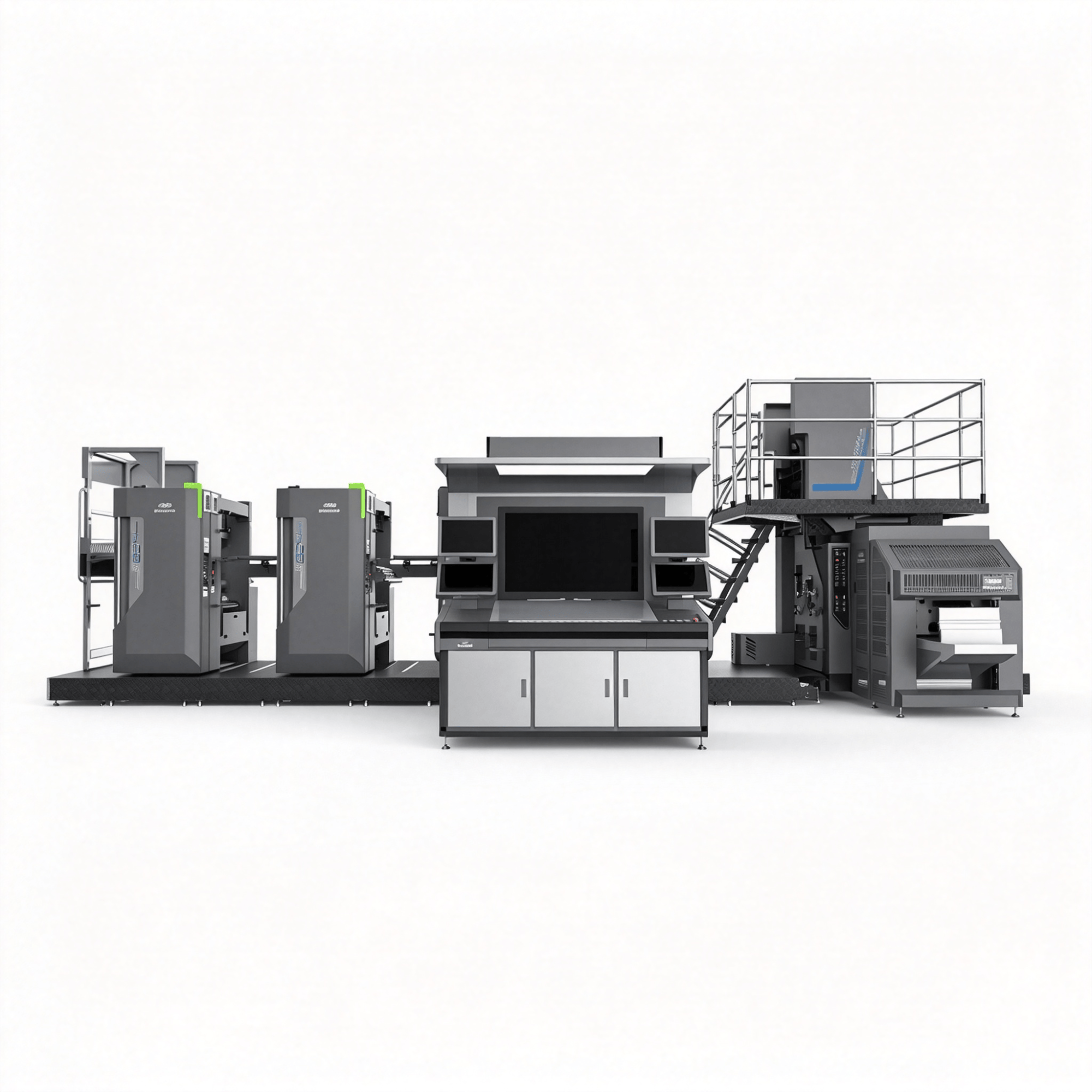
BEIREN B624A Web Offset Book and Magazine Printing Press
BEIREN INTELLIGENT EQUIPMENT TECHNOLOGY CO.,LTD.