
A Japanese research team has achieved a major breakthrough in the field of intelligent mRNA drugs. A collaborative team from Osaka University and the Tokyo Institute of Science recently published a paper in the journal NPG Asia Materials, detailing an intelligent mRNA drug system capable of real-time sensing of physiological changes in the human body and autonomously regulating therapeutic effects. This innovative research opens new pathways in precision medicine and is poised to fundamentally transform traditional drug treatment paradigms.
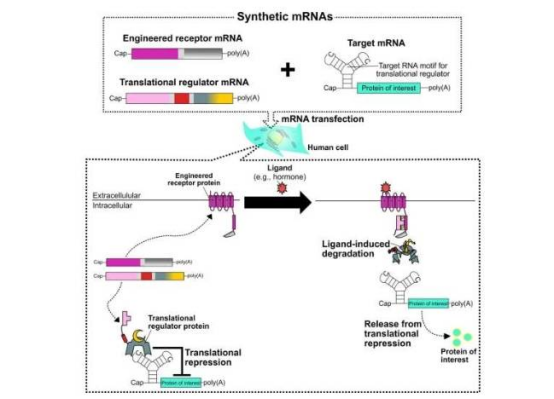
The core innovation of this intelligent mRNA system lies in its unique modular design. The research team meticulously constructed three interdependent functional modules: the first module encodes receptor proteins that specifically recognize disease biomarkers; the second module produces regulatory proteins responsible for controlling the entire system's translation process; and the third module encodes proteins with therapeutic functions. These three modules together form a complete biomolecular logic circuit, enabling intelligent responses to changes in the internal microenvironment.
In the experimental validation phase, the research team successfully demonstrated that the system can precisely identify multiple key disease biomarkers, including arginine vasopressin for regulating water balance, prostaglandin E2 as an inflammation marker, and bradykinin associated with pain responses. Notably, in an inflammation model, the system activated the expression of anti-inflammatory proteins only upon detection of inflammation markers, exhibiting exceptional targeting and specificity.
"This is a significant step toward precision mRNA therapy," emphasized project leader Professor Hideyuki Nakanishi. "The uniqueness of our system lies in its complete composition from mRNA components, allowing autonomous sensing and response functions without any external intervention." This endogenous regulatory mechanism not only greatly enhances treatment safety but also paves the way for truly personalized medicine.
Compared to traditional drugs, this intelligent mRNA system offers distinct advantages. Fixed-dose conventional drugs often face the dilemma of overdosing leading to side effects or underdosing impacting efficacy, whereas the new system dynamically adjusts drug expression levels based on the patient's real-time physiological state, fundamentally resolving this issue. This characteristic makes it particularly suitable for treating chronic diseases with fluctuating symptoms, such as rheumatoid arthritis and chronic pain syndromes.
The researchers highlighted that the technology's application prospects are vast. Beyond direct applications in chronic disease management, this modular design concept can be extended to other therapeutic areas. In vaccine development, the sensing module can be adjusted for precise immune response regulation; in tumor therapy, intelligent systems can be designed to recognize tumor microenvironment-specific biomarkers; and for metabolic diseases, treatment solutions responsive to changes in blood sugar or lipids can be developed.
This study not only demonstrates the immense potential of mRNA technology in the medical field but also provides entirely new ideas for future drug development. With further research and optimization, this intelligent mRNA platform is expected to become a core technology for next-generation biomedicine, driving the transformation of medical models from a "one-size-fits-all" approach to truly personalized care.