
A research team led by Professor Li Xianfeng from the Dalian Institute of Chemical Physics, Chinese Academy of Sciences, has achieved a significant breakthrough in the field of energy materials by successfully developing an ultra-thin polymer membrane material with precise sieving capabilities. This research result was recently published in the prestigious international journal Nature Chemical Engineering, providing an innovative solution to the long-standing performance bottlenecks in polymer membrane materials. The team employed a unique interfacial polymer crosslinking strategy to prepare a novel polymer membrane with a thickness of only 3 micrometers, which demonstrated excellent performance in vanadium redox flow battery tests.
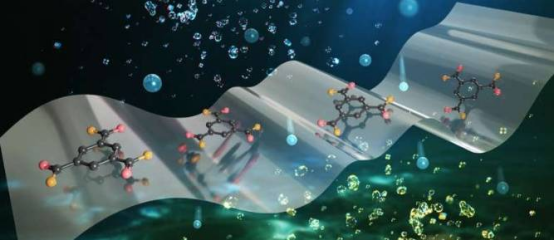
Traditional polymer membrane materials are typically prepared via phase separation methods, resulting in disordered internal pore structures that lead to insufficient selectivity when separating ions or molecules of similar sizes. Compared to inorganic nanoporous materials like metal-organic frameworks and covalent organic frameworks, which feature periodic ordered channels, traditional polymer membranes exhibit clear limitations in precise separation. Professor Li Xianfeng's team successfully constructed a nanoscale crosslinked separation layer on a polymer support layer by precisely controlling crosslinking time and crosslinking agent types, forming cavity structures ranging from 1.8 to 5.4 angstroms and achieving angstrom-level precision in ion sieving.
In practical application tests, this novel ultra-thin polymer membrane performed outstandingly. When applied to vanadium redox flow battery systems, the material achieved an energy efficiency of 82.38% under a high current density of 300mA/cm², significantly enhancing battery performance. Professor Li Xianfeng stated, "Our interfacial crosslinking strategy effectively reduces membrane thickness, substantially decreasing ion transport resistance while maintaining excellent selectivity." This breakthrough design not only resolves the traditional trade-off between selectivity and permeability in polymer membrane materials but also opens new possibilities for future energy storage technologies.
This research outcome holds important theoretical value and practical application prospects. By constructing a quasi-ordered network structure, the team successfully achieved synergistic optimization of high ion selectivity and low resistance, providing a completely new approach to polymer membrane design. Professor Li Xianfeng noted, "This study overcomes long-standing technical challenges in the polymer membrane field, bringing substantial progress to membrane-based separation and energy storage technologies." In the future, this technology is expected to play a significant role in multiple fields such as new energy storage, chemical separation, and environmental protection, driving technological upgrades in related industries.