
A research team from the University of Texas Southwestern Medical Center has recently achieved a major breakthrough in gene therapy, successfully developing a novel multi-organ targeted gene editing delivery system. Published in Nature Biotechnology, this research provides an innovative solution for treating complex genetic diseases such as α-1 antitrypsin deficiency (AATD). Led by Dr. Daniel Siegwart, the study builds on deep optimization of his team's "Selective Organ Targeting" (SORT) technology platform developed in 2020.
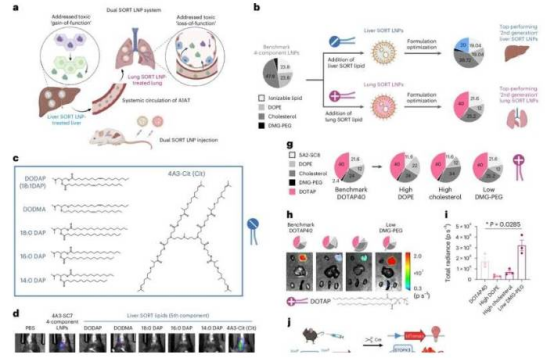
By carefully designing the components and structure of lipid nanoparticles, the researchers achieved simultaneous precise delivery of gene editing tools to the liver and lungs. Dr. Siegwart stated: "Multi-organ diseases may require treatment in multiple locations. The development of multi-organ targeted therapy opens the door to treating such diseases and others." In an AATD disease model, a single administration achieved approximately 40% gene editing in hepatocytes and 10% in lung cells, with therapeutic effects lasting over 32 weeks, reducing mutant protein levels in the liver by 80% and inhibiting 89% of harmful enzyme activity in the lungs.
The innovation of this technology is reflected in three main aspects: achieving simultaneous targeting of multiple organs with a single treatment for the first time; breaking through the limitations of traditional gene therapies that can only target single organs; and providing new ideas for treating over 300 genetic diseases affecting multiple organs. The research team accomplished this breakthrough through multiple technological innovations, including designing novel lipid nanoparticle carriers, optimizing gene editing tool loading efficiency, developing organ-specific targeting ligands, and establishing precise dosing protocols.
The technology has now entered the clinical translation phase through ReCode Therapeutics, showing broad application prospects. This achievement not only advances gene editing technology but also brings new possibilities to the field of precision medicine. It is expected to improve treatment efficacy for genetic diseases, reduce the number of treatments and side effects, lower long-term treatment costs, and promote progress in nucleic acid drug delivery technology.