
To reduce reliance on lithium-ion energy storage and natural gas peaker plants, California is preparing to test a non-traditional battery system that provides clean energy for days rather than hours.
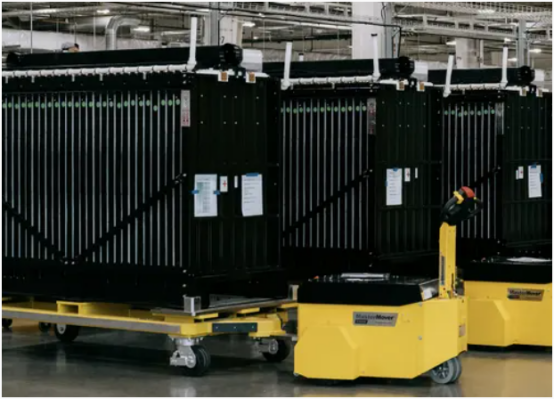
In the coming months, a modular battery system developed by Massachusetts-based company Form Energy will be installed near a Pacific Gas & Electric substation in Mendocino County, Northern California. This 1.5-megawatt solar system is expected to go online in early 2026 and has received $30 million in funding from the California Energy Commission. The system is designed to generate up to 150 megawatt-hours, enough to power about 1,500 homes for four days.
The core of this novel power system is Form Energy's iron-air battery, which relies on a process called reversible rusting. Unlike lithium-ion batteries that store energy through ion movement between electrodes, iron-air batteries generate power by oxidizing iron—essentially letting iron rust. Form Energy spokesperson Sarah Bray told the North Bay Business Journal: "This battery works on reversible rusting: During discharge, metallic iron in the battery reacts with oxygen in the air and water in the electrolyte to form iron hydroxide—essentially rust. During charging, excess grid current flows back into the battery, reversing the reaction: Oxygen and water separate from the iron, restoring it to its original metallic state. The reversible rusting process can be repeated indefinitely, delivering power to the grid when and where it's most needed."
Although iron-air batteries have lower round-trip efficiency, around 60% compared to over 90% for lithium-ion batteries, they offer key advantages. They significantly reduce fire risk, minimize performance degradation over time, and can operate continuously for 100 hours—over 20 times longer than typical lithium-ion battery systems.
Currently, California relies on 16 gigawatts of battery storage, with lithium-ion batteries accounting for 99%. However, due to concerns over cost, performance, and fire hazards, the state is actively exploring alternative storage solutions. Michael Gravely, senior electrical engineer at the California Energy Commission, stated: "We believe some of these long-duration storage systems can provide 8 to 12 hours of storage time, and they're much cheaper than lithium-ion batteries."
Form Energy's battery modules are being built in a 550,000-square-foot factory in West Virginia, formerly a steel mill. This demonstration project is part of California's long-duration energy storage initiative, which supports various emerging technologies, including a 70-megawatt-hour storage project on tribal land and a 48-megawatt-hour system at a Marine Corps base.