
A research team from the National University of Singapore recently published a breakthrough study in Nature Communications, successfully developing a novel rapid detection technology called NAPTUNE. This innovative technology can precisely detect trace amounts of disease-related genetic material, including nucleic acids and protein markers, within 45 minutes, without relying on laboratory equipment or complex operational processes.
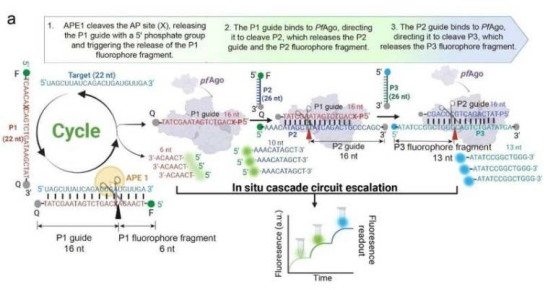
The research was led by Assistant Professor Hu Chunyi from the Department of Biological Sciences at the National University of Singapore, in collaboration with Dr. Chen Chuanxia from the University of Jinan in China and Dr. Xu Chunning from Lingang Laboratory in Shanghai. The core innovation of NAPTUNE technology lies in its dual-enzyme cascade reaction system: the first stage utilizes the human DNA repair enzyme APE1 to identify specific sites and release DNA guide fragments; the second stage achieves signal amplification through the thermostable Argonaute protein (PfAgo). This unique design elevates detection sensitivity to the attomolar (10⁻¹⁸ M) level, setting a new standard for amplification-free detection.
"By linking two natural nucleases in an orthogonal circuit, we achieved PCR-level detection sensitivity while eliminating the need for a thermocycler," explained Assistant Professor Hu Chunyi. "This technology has the potential to bring laboratory-grade diagnostic capabilities to community healthcare settings."
The research team has successfully integrated this technology into a portable detection device. This palm-sized device weighs less than 200 grams, equipped with a battery-powered heater and Bluetooth fluorescence reader, allowing detection results to be directly transmitted to a mobile application. Currently, researchers are validating the NAPTUNE technology for tuberculosis sputum detection and wastewater monitoring, while developing lyophilized kits suitable for tropical environments.