
Researchers at Queensland University of Technology have developed a novel robotic navigation system inspired by neural processes in the human brain, significantly reducing energy consumption. This innovative achievement is detailed in a study published in Science Robotics, with the system named "LENS" (Location Encoding with Neuromorphic Systems).
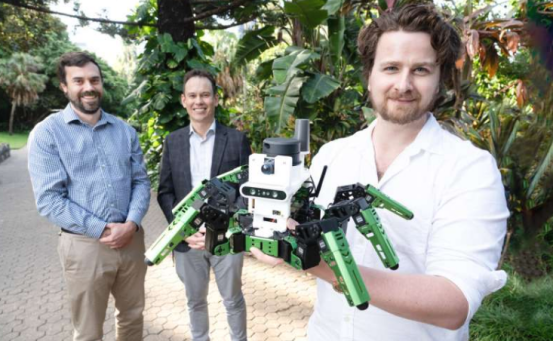
The LENS system, by mimicking the brain's computational approach, sets a new low-energy standard for robot localization. The research team, led by neuroscientist Dr. Adam Hines, Professor Michael Milford, and Dr. Tobias Fischer, utilized neuromorphic computing techniques, enabling the system to learn like humans and process information in the form of electrical spikes.
"Energy constraints are a major challenge in real-world robotics," Dr. Hines noted. "By using neuromorphic computing, our system reduces the energy demand for visual localization by 99%, thereby extending robots’ operational time and coverage distance."
In the study, the LENS system demonstrated outstanding performance. It could accurately identify locations over an 8km journey while using only 180KB of storage space, nearly 300 times less than other systems. The system integrates brain-like spiking neural networks with specialized cameras and low-power chips, implemented on a small robot, achieving real-time, energy-efficient localization tracking.
Dr. Fischer emphasized that the key innovation of the LENS system lies in its new algorithm, which leverages two bio-inspired hardware components: an event camera and a neuromorphic chip. Event cameras continuously detect changes and motion rather than capturing complete images, closely resembling how humans and the brain process visual information.
Professor Michael Milford, Director of the QUT Centre for Robotics, stated that this research represents a significant breakthrough for the center in energy-efficient robotic systems. He highlighted that impactful robotics technology requires not only groundbreaking research but also ensuring it meets the expectations and needs of end-users.