
Researchers at the University of São Paulo State (UNESP) have identified a set of reliable genetic markers related to meat quality in the genome of Nelore cattle (Bos taurus indicus), laying the foundation for substantial progress in the genetic improvement of Zebu breeds (which account for about 80% of Brazil's beef herd). The research results were published in the journal Scientific Reports, directly impacting the productivity and quality of Brazilian beef and consolidating Brazil's position as a major beef exporting country.
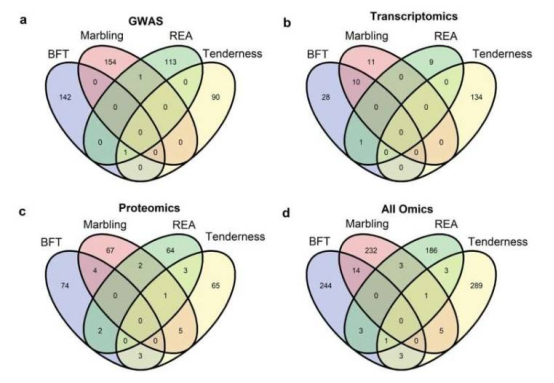
Previously, although the team had made some progress using different "omics" methods such as genomics, transcriptomics, and proteomics, they found that a single technology was insufficient to understand the complexity of the biological systems controlling differences in meat and carcass quality. In this study, the researchers integrated multiple technologies and used data from 6,910 Nelore bulls from four commercial genetic improvement projects to detect various traits. Since biological materials were collected immediately after slaughter, a comprehensive and detailed assessment of traits directly affecting meat quality was possible.
"By integrating these omics technologies, we can not only elucidate isolated genes but also the biological networks involved in certain animal phenotypic variations," said the study's first author Gabriela Frezarim, whose advisor is Professor Lucia Galvão de Albuquerque from FCAV-UNESP, who is coordinating the project "Genetic Factors for Quality, Efficiency, and Sustainability in Nelore Beef Production."
The results of this study provide researchers with a series of precise molecular data, which the production sector can use in the future to select animals that produce better meat quality, better carcasses, and higher commercial yields. In 2024, Brazil's meat exports reached 2.89 million tons, ranking first in the world, but the tenderness of Nelore Zebu beef is inferior to that of European Angus breeds. In recent years, other research groups have made progress in developing chips to identify genetic variations related to Nelore cattle traits, while this study not only delves into individual genes but also explores complex molecular networks associated with extreme expressions of meat quality traits (high and low), focusing on genes and metabolic pathways that explain individual differences, thereby expanding the possibilities for genetic selection.
"When studying at the DNA level, it is impossible to guarantee that a specific variation in the genome will necessarily lead to the production of a specific RNA or protein, as these stages involve complex biological processes. Our study aims to understand these pathways and determine the molecular basis for the expression of meat and carcass traits," explained Larissa Fonseca, a postdoctoral researcher at FCAV-UNESP and co-mentor of the study.
"Understanding the molecular mechanisms affecting meat quality and carcass traits is crucial for explaining the phenotypic variations observed in Nelore cattle. This study provides a comprehensive perspective on biological pathways related to these traits and identifies genes and proteins that directly impact tenderness, marbling, and subcutaneous fat thickness," said another co-author of the study, Lúcio Mota, who is conducting postdoctoral research at FCAV-UNESP.
For example, the researchers found that genes related to growth, cell cycle regulation, and heat shock proteins are directly related to meat tenderness. These proteins maintain muscle structure and control fiber degradation after slaughter, and differences in the expression levels of these genes and proteins between breeds help explain why some Nelore beef is more tender. In addition, genes, transcripts, and proteins involved in tissue cytoskeleton and programmed cell death directly affect muscle development, thereby influencing the international indicator for muscle quality and carcass yield—longissimus eye area (LEA). Regarding marbling, the researchers identified proteins related to fatty acid synthesis and composition, as well as proteins involved in actin binding and microtubule formation; the regulation of these proteins may directly affect intramuscular fat deposition, thereby influencing the sensory quality of meat. Finally, genes related to regulating energy metabolism and muscle tissue remodeling were identified as important for subcutaneous fat thickness, which is a correlated measure of carcass mass.
"This is a preliminary study, but it provides important guidance for genetic improvement programs and the development of more effective selection strategies for Nelore beef and carcass traits," Albuquerque noted. The researchers are currently planning to expand the scope of the analysis to improve accuracy and more precisely screen animals that can directly enhance the quality of Brazilian beef.