
A research team led by Professor Won Do Heo from the Department of Biological Sciences at the Korea Advanced Institute of Science and Technology (KAIST) has developed a novel RNA-targeted modification technology capable of precisely regulating the acetylation process of specific RNA molecules. The research findings were published in the journal Nature Chemical Biology, opening new pathways for RNA therapeutics.
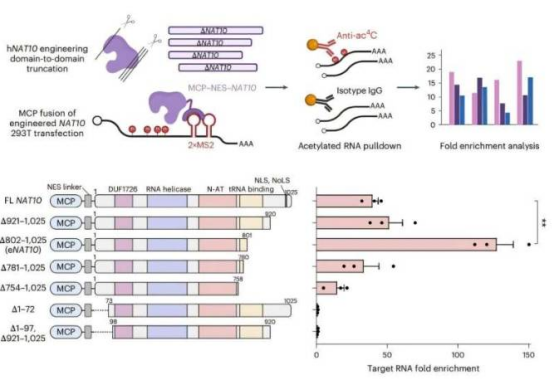
The team combined the CRISPR-Cas13 gene-editing system with a modified NAT10 enzyme (eNAT10) to construct the dCas13-eNAT10 targeted acetylation system. This system can accurately locate target RNA in cells and introduce acetylation modifications, achieving, for the first time, spatiotemporal-specific control of RNA chemical modifications.
"Existing studies on RNA chemical modifications have faced challenges in achieving specific control," said Professor Heo. "This new technology provides a precise tool for in-depth studies of RNA acetylation functions." Experiments confirmed that acetylation modifications not only enhance protein expression from mRNA but also affect the transport of RNA from the nucleus to the cytoplasm.
Using adeno-associated virus (AAV) vectors, the research team successfully achieved targeted RNA acetylation in the livers of mice, marking the first extension of RNA chemical modification technology to in vivo applications. This technology holds promise for providing new solutions for viral RNA clearance and regulation of pathogenic genes.